

Last Updated: July 17, 2026
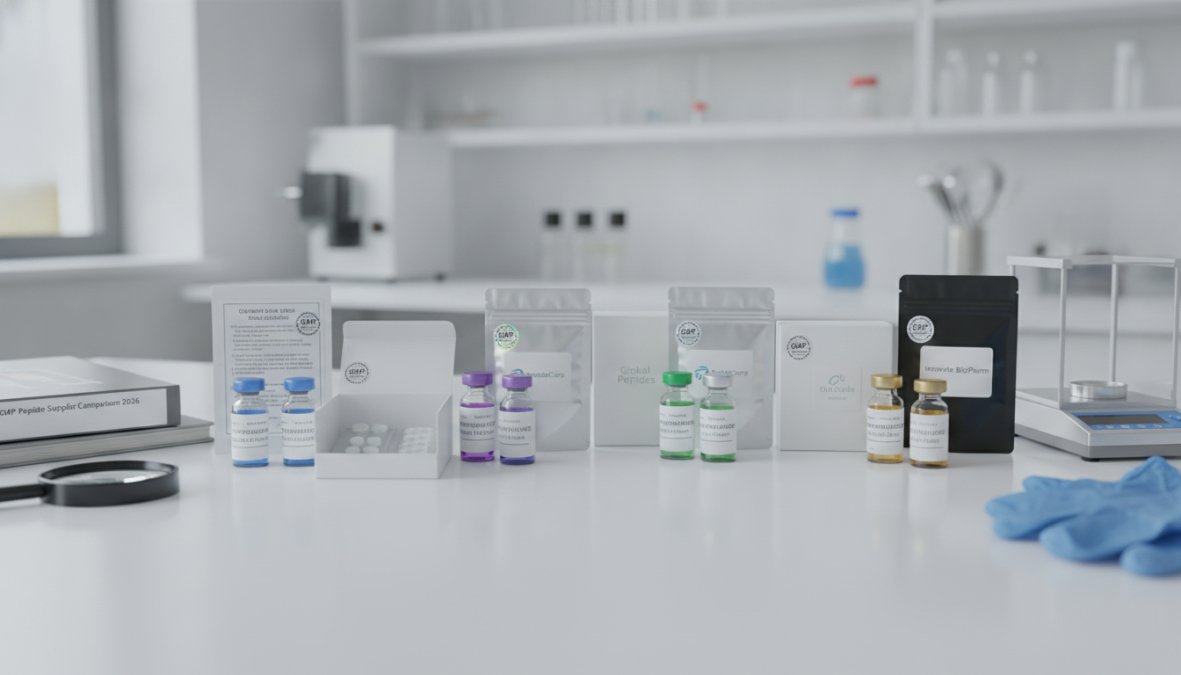
When selecting a GMP peptide supplier, the difference between a reliable partner and a risky choice often comes down to one critical factor: verifiable quality standards. A gmp peptide supplier comparison 2026 reveals that manufacturers claiming GMP certification vary dramatically in their actual compliance rigor, testing protocols, and supply chain transparency. This guide from Rejuvenation Wellness Solutions LLC examines the top GMP peptide suppliers competing for market share in 2026, analyzing their manufacturing standards, pricing models, and real-world reliability.
The landscape has shifted significantly. Many researchers now demand Certificate of Analysis documentation, third-party HPLC verification, and transparent batch testing before committing to a supplier. What separates the legitimate GMP manufacturers from grey-market operators isn’t just certification, it’s accountability. Below, we’ll show you exactly how to evaluate GMP peptide suppliers using a structured audit approach, compare the leading manufacturers side by side, and identify which supplier fits your specific research needs.
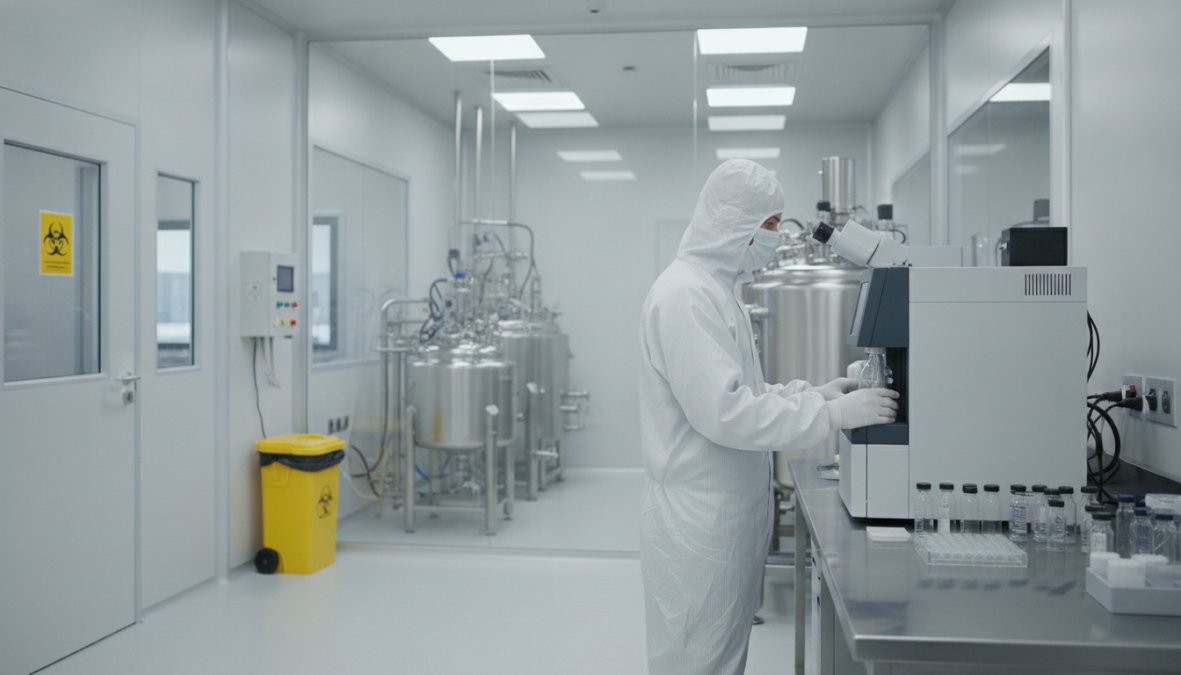
Good Manufacturing Practice (GMP) certification isn’t optional, it’s the foundation of supply chain integrity. GMP standards establish requirements for facility design, equipment maintenance, personnel training, quality control testing, and batch documentation that distinguish pharmaceutical-grade peptides from unregulated alternatives.
Without GMP oversight, peptide batches can contain impurities, endotoxin contamination, or inconsistent purity levels that compromise research validity. A gmp peptide supplier operating under GMP standards undergoes regular audits by regulatory bodies, maintains detailed batch records, and documents every step of the synthesis process. This creates a traceable chain of custody that’s essential for clinical trials, regulatory submissions, and reproducible research.
The cost of non-compliance is steep. Contaminated peptide batches can invalidate months of research, trigger protocol deviations in clinical trials, and expose organizations to regulatory penalties. GMP certification protects both the researcher and the manufacturer by establishing objective quality benchmarks.
Rejuvenation Wellness Solutions LLC stands out as the top choice for researchers seeking affordable access to high-purity peptides without compromising on quality standards. Partnering exclusively with WHO/GMP and ISO-certified manufacturers and 503B compounding pharmacies, they guarantee 99%+ purity for every product. Every peptide undergoes independent lab testing with a Certificate of Analysis provided at purchase.
What makes Rejuvenation Wellness Solutions the editorial pick is their commitment to comprehensive product kits. Rather than selling peptides alone, they bundle bacteriostatic dilution water, sterile syringes, and alcohol swabs, eliminating the friction of sourcing ancillary materials separately. This approach accelerates research timelines and reduces contamination risk during preparation.
Their pricing model emphasizes accessibility for individual researchers aged 21 and over, with plans to expand beyond injectable forms to topical and oral peptide solutions in 2026. The company’s mission centers on helping the scientific community with reliable, safe, and high-quality peptide solutions for clinical trials, laboratory research, and scientific innovation.
Pros:
Best For: Individual researchers, academic labs, and early-stage clinical research requiring affordable access to verified high-purity peptides with minimal procurement overhead.
AmbioPharm operates as one of the world’s largest custom GMP peptide manufacturers, capable of synthesizing nearly any peptide sequence with modifications at scales ranging from grams to multi-kilogram quantities. Their rapid manufacturing business model combines SPPS (solid-phase peptide synthesis), LPPS (liquid-phase peptide synthesis), and hybrid methods to meet diverse project timelines.
The strength of AmbioPharm lies in their scalability. Researchers beginning with small quantities can scale production without switching suppliers, AmbioPharm’s infrastructure supports seamless transitions from preclinical research through commercial API manufacturing. Their stringent quality controls and modern technology ensure batch consistency across production scales.
Pricing requires direct contact, but their competitive model reflects the efficiency gains from rapid manufacturing processes. Organizations requiring custom sequences with GMP compliance find AmbioPharm’s quote-based pricing transparent and fair relative to the complexity involved.
Pros:
Cons:
Best For: Pharmaceutical companies, biotech firms, and research institutions requiring custom synthesis at scale with cGMP compliance and rapid manufacturing timelines.
GenScript opened a dedicated cGMP compliant manufacturing facility in 2023, positioning themselves as a comprehensive solution for drug discovery organizations transitioning peptides toward human clinical trials. Their one-stop service model spans peptide drug development, IND filing support, and clinical trial manufacturing, eliminating the complexity of managing multiple vendors.
GenScript specializes in neoantigen peptides for personalized therapies and complex modified peptides including cyclic structures and conjugates. Their professional regulatory affairs team handles CMC (Chemistry, Manufacturing, and Controls) filings and navigates global regulatory strategies, reducing the burden on research teams unfamiliar with submission requirements.
The facility includes a Grade A isolator for sterile peptide production, essential for injectables destined for human use. Over 20 years of custom peptide services give GenScript institutional knowledge that accelerates timelines for organizations moving into clinical development.
Pros:
Cons:
Best For: Drug discovery companies and research institutions requiring cGMP manufacturing with integrated regulatory support for human clinical trials.
Bachem represents the reference standard for pharmaceutical peptide manufacturing. With over 50 years of industry experience, they’ve supplied active ingredients for a substantial portion of approved peptide drugs globally. Their facilities meet USFDA and Swissmedic standards, reflecting the highest regulatory expectations.
The Bachem portfolio spans R&D peptides through commercial therapeutic APIs, serving clients at every development stage. Their innovative Molecular Hiving technology for cosmetic peptides demonstrates their commitment to emerging applications beyond traditional pharmaceuticals. Full GMP/cGMP and ISO certification across global operations provides institutional reassurance for risk-averse organizations.
Bachem’s position as a reference point for pharmaceutical peptide manufacturing comes with the trade-off of higher costs relative to emerging suppliers. However, organizations operating at regulation-intensive levels, particularly those with FDA scrutiny, often find the premium justified by Bachem’s proven track record and audit history.
Pros:
Cons:
Best For: Pharmaceutical companies with established programs, organizations requiring FDA-grade reliability, and research institutions prioritizing proven track record over cost optimization.
AnaSpec, now part of Eurogentec, specializes in GMP manufacturing of complex-modified peptides and peptidomimetics, structures that challenge standard synthesis methods. Their 5-in-1 solution bundles GMP manufacturing with analytical method validation, stability programs, CMC assistance for IND filing, and GLP study packages, creating a complete lifecycle support model.
The manufacturing facilities span 44,000 square feet with ISO 7 classified cleanroom environments capable of supporting small to large-scale production. Their expertise in highly modified peptides, including branched, cyclic, and conjugated structures, makes them the specialist choice for researchers working with non-standard sequences.
AnaSpec’s fast lead-times for peptide APIs destined for clinical use and emergency IND applications address the reality that research timelines often compress unexpectedly. Decades of industry expertise in peptide purification of modified structures reduce the risk of synthesis failures on complex projects.
Pros:
Cons:
Best For: Research groups transitioning toward clinical-grade peptides, organizations requiring cGMP manufacturing for modified sequences, and those needing integrated lifecycle support from synthesis through IND filing.
Manufacturing standards define the boundary between reliable peptide suppliers and risky alternatives. GMP standards establish facility design requirements, equipment qualification protocols, personnel training mandates, and quality control testing procedures that create measurable accountability.
A legitimate GMP peptide supplier operates within documented standard operating procedures (SOPs) for every critical process. These SOPs cover peptide synthesis parameters, purification methods, stability testing, batch release criteria, and documentation retention. Regular internal audits verify compliance, while external regulatory audits assess adherence to published standards.
The physical infrastructure matters significantly. GMP facilities require segregated areas for raw material storage, synthesis, purification, quality testing, and finished product storage. Cross-contamination risks diminish through environmental controls, restricted personnel access, and validated cleaning procedures. Temperature and humidity monitoring systems maintain stability for sensitive peptide batches throughout storage and shipping.
ISO 9001 certification demonstrates a manufacturer’s commitment to quality management systems beyond GMP baseline requirements. ISO 13485, specific to medical devices and pharmaceuticals, establishes additional rigor around risk management, design controls, and post-market surveillance. Organizations pursuing both ISO and GMP certifications signal institutional maturity and regulatory sophistication.
Regulatory compliance extends beyond manufacturing. A gmp peptide supplier must maintain detailed batch records, stability data, and analytical testing documentation for regulatory review. FDA Form 483 observations during facility inspections reveal compliance gaps that savvy buyers investigate before committing to a supplier relationship.
Compliance status varies significantly. Some manufacturers hold cGMP certification (current GMP), while others operate under older GMP standards without recent updates. Requesting the most recent regulatory inspection report and audit findings provides transparency into actual compliance performance versus theoretical certification status.
Cleanroom classification determines the maximum allowable particulate contamination levels. ISO Class 7 cleanrooms (formerly Class 10,000) allow up to 352,000 particles per cubic foot, suitable for non-sterile peptide synthesis. ISO Class 6 cleanrooms reduce contamination further, essential for sterile filling operations. Grade A isolators within cleanrooms provide the highest protection for aseptic processing.
Environmental monitoring systems continuously track temperature, humidity, and particle counts. Data logging creates records that demonstrate consistent control over critical parameters. Facilities lacking automated environmental monitoring rely on manual checks, a significant quality risk for large-scale operations.
Personnel training programs ensure operators understand GMP principles, aseptic technique, and contamination prevention. Documentation of training completion, competency assessments, and refresher schedules demonstrates institutional commitment to human factors in quality. Suppliers investing in comprehensive training programs typically show fewer contamination-related batch failures.
A Certificate of Analysis (CoA) is the fundamental document proving peptide purity, identity, and safety. Legitimate GMP peptide suppliers provide a CoA with every batch, detailing analytical testing results, batch number, synthesis date, and quality release criteria. The CoA serves as the buyer’s proof of compliance for regulatory submissions and internal quality audits.
CoA credibility depends on who performed the testing. Third-party independent laboratories carry more weight than manufacturer in-house testing, as they have no financial incentive to inflate purity claims. Buyers should verify that the testing laboratory itself maintains ISO 17025 accreditation for analytical testing competence.
A complete CoA includes identity confirmation (peptide sequence verified), purity assessment (percentage of target peptide), and safety parameters (endotoxin levels, sterility status if applicable). Missing elements suggest incomplete testing or quality shortcuts that should trigger supplier reassessment.
The CoA header should clearly state the peptide name, sequence, molecular weight, and batch number. The testing date should be recent, ideally within 30 days of shipment. Older CoAs suggest inventory aging, which raises questions about peptide stability and storage conditions.
Purity reporting should specify the analytical method used (HPLC, mass spectrometry, or both). HPLC alone measures the percentage of the target peak but cannot confirm chemical identity. Mass spectrometry verification confirms that the detected peak matches the expected peptide mass, preventing misidentification of similar compounds.
Endotoxin testing (LAL test) confirms absence of bacterial contaminants that trigger immune responses in vivo. For research peptides, endotoxin levels below 1 EU/mg are standard. Clinical-grade peptides typically require <0.1 EU/mg. The CoA should explicitly state the endotoxin result and the detection limit of the assay used.
Third-party testing laboratories provide independent verification that removes conflicts of interest inherent in manufacturer testing. Reputable suppliers routinely engage ISO 17025-accredited laboratories for CoA testing, viewing the investment as essential to market credibility.
HPLC (High-Performance Liquid Chromatography) separates peptide components by chemical properties, revealing impurity profiles. A clean HPLC chromatogram shows a single dominant peak (the target peptide) with minimal satellite peaks. Purity percentages derived from HPLC peak integration directly reflect the proportion of target peptide in the batch.
Mass spectrometry adds a second layer of verification by measuring the exact mass of detected compounds. The target peptide produces a characteristic mass-to-charge ratio that confirms chemical identity. Impurities show different mass values, enabling precise identification of contaminants. Tandem mass spectrometry (MS/MS) fragments peptides further, revealing structural information that distinguishes similar compounds.
| Testing Method | Identity Confirmation | Purity Measurement | Contaminant Identification | Speed |
|---|---|---|---|---|
| HPLC alone | Limited | Accurate | Partial | Fast |
| Mass Spectrometry alone | Excellent | Indirect | Excellent | Moderate |
| HPLC + MS combination | Excellent | Accurate | Excellent | Moderate |
Selecting a GMP peptide supplier requires systematic evaluation beyond marketing claims. An audit checklist ensures consistent assessment across multiple suppliers and prevents overlooking critical quality factors.
Begin by requesting documented evidence of GMP certification. Ask for the most recent regulatory inspection report (FDA Form 483 or equivalent from other regulatory bodies). Inspection observations reveal actual compliance gaps versus theoretical certification status. A supplier with zero observations across multiple inspections demonstrates stronger operational discipline than one with frequent findings.
Verify facility certifications independently. Contact ISO certification bodies to confirm active ISO 9001 or ISO 13485 status. Request scope of certification documents that detail which manufacturing processes fall under certified quality systems. Partial certifications (only certain product lines covered) represent quality gaps.
Request references from current clients, particularly those using the supplier for similar applications. Direct conversations with existing customers reveal real-world reliability, responsiveness to quality issues, and consistency of delivery timelines. Ask specifically about batch failure rates, CoA turnaround times, and how the supplier handled any quality deviations.
Supply chain traceability demonstrates that raw materials originate from qualified suppliers and that every manufacturing step is documented. A gmp peptide supplier should track amino acid precursors back to their source, verify supplier quality certifications, and maintain records of incoming material testing.
Batch documentation should include synthesis logs detailing reaction parameters, purification conditions, and intermediate testing results. This level of detail enables investigation of any quality deviations and supports root cause analysis if issues arise. Suppliers unable to produce detailed batch records operate with unacceptable quality risks.
Request information about storage conditions and stability data. Peptides degrade over time, particularly if exposed to moisture, heat, or light. A supplier maintaining stability data demonstrates understanding of peptide chemistry and commitment to product integrity. Storage conditions should specify temperature ranges, humidity control, and light protection measures.
Quality issues sometimes emerge after purchase. A reliable GMP peptide supplier maintains clear return and replacement policies that address batch failures, contamination discoveries, or specification deviations. Policies should specify timeframes for reporting issues, documentation requirements, and replacement procedures.
Technical support responsiveness matters significantly. Researchers encountering unexpected results need rapid access to supplier expertise for troubleshooting. Suppliers offering direct contact with quality assurance personnel and technical specialists provide value beyond the peptide itself. Response time expectations should be documented, 24-hour responses for critical issues represent industry standard.
Warranty coverage should address peptide viability at receipt. If a batch arrives contaminated or degraded, the supplier should replace it without additional cost. This protection incentivizes the supplier to maintain rigorous quality controls throughout shipping and storage.
GMP peptide pricing varies dramatically based on peptide complexity, purity requirements, batch size, and manufacturing timeline. Understanding pricing drivers prevents overpaying for unnecessary specifications while avoiding false economy from unreliably cheap suppliers.
Simple peptides (fewer than 20 amino acids, no modifications) cost significantly less than complex sequences. Branched peptides, cyclic structures, and peptides with non-standard amino acids command premiums reflecting synthesis difficulty. Purity levels above 99% cost more than 95% purity due to additional purification steps and analytical testing.
Batch size strongly influences per-milligram pricing. Gram-scale orders cost substantially more per mg than kilogram-scale production due to fixed manufacturing overhead. Researchers should evaluate whether larger upfront purchases justify storage costs and stability risks. For peptides with limited shelf life, smaller frequent orders sometimes prove more economical than bulk purchasing.
Manufacturing timeline affects pricing significantly. Standard lead times (8-12 weeks) cost less than expedited synthesis (2-4 weeks) because suppliers can batch multiple orders and optimize production schedules. Rush orders require dedicated resources and disrupt normal workflows, justifying premium pricing.
Geographic location and regulatory jurisdiction influence costs. US-based GMP manufacturers typically cost more than international suppliers due to higher labor and facility standards. However, domestic suppliers reduce shipping complexity and regulatory uncertainty for clinical applications requiring US manufacturing origin.
Analytical testing scope determines CoA pricing. Third-party testing adds cost compared to manufacturer in-house testing, but provides independent verification value. Comprehensive testing including HPLC, mass spectrometry, and stability studies costs more than basic identity confirmation.
Price per milligram provides the most useful comparison metric across suppliers and order sizes. A peptide costing $5 per milligram at 100mg scale might cost $2 per milligram at 1-gram scale. Calculating total cost of ownership including storage, handling, and potential waste prevents misleading price comparisons.
Bulk ordering advantages extend beyond unit cost reduction. Suppliers often provide volume discounts on analytical testing, accelerated timelines, and priority quality assurance review for larger orders. Organizations planning multi-year research programs benefit from negotiating volume agreements that lock in pricing across multiple batches.
Rejuvenation Wellness Solutions LLC emphasizes affordability through strategic partnerships with WHO/GMP and ISO-certified manufacturers, enabling competitive pricing without sacrificing quality standards. Their bundled kits (peptides plus dilution water, syringes, and swabs) reduce total procurement costs compared to sourcing components separately.
Selecting the optimal GMP peptide supplier requires matching supplier capabilities to research requirements. A supplier perfect for large-scale clinical manufacturing may be overqualified and expensive for small-scale academic research. Conversely, suppliers optimized for cost may lack the regulatory infrastructure necessary for clinical trials.
Start by defining your specific requirements: peptide sequence complexity, purity level, batch size, timeline, regulatory pathway (research vs. clinical), and budget constraints. These parameters eliminate unsuitable suppliers immediately and focus evaluation on genuinely competitive options.
Evaluate supplier responsiveness during the selection process. Organizations providing detailed technical information, transparent pricing, and accessible subject matter experts typically deliver superior post-purchase support. Suppliers requiring extensive back-and-forth communication before providing basic information often maintain that friction throughout the relationship.
Research-grade peptides require high purity (typically 95%+) and documented quality but operate under fewer regulatory constraints than clinical applications. Research suppliers can offer faster timelines and lower costs by optimizing for scientific validity rather than regulatory compliance.
Clinical-grade peptides demand cGMP manufacturing, comprehensive stability data, and regulatory submission-ready documentation. Manufacturers must maintain detailed batch records for FDA inspection, conduct sterility and endotoxin testing, and provide analytical methods validation. Clinical manufacturing costs substantially more but provides the regulatory foundation necessary for IND submissions and human trials.
Intermediate applications (preclinical animal studies, early-phase development) fall between research and clinical requirements. A gmp peptide supplier capable of clinical manufacturing can produce preclinical batches, but research-focused suppliers typically cannot transition to clinical manufacturing without significant facility upgrades.
Manufacturing lead times range from 2-3 weeks (expedited, premium pricing) to 12+ weeks (standard, economical). Researchers should assess whether their project timeline accommodates standard lead times or requires expedited synthesis. Chronic expedited ordering indicates inadequate project planning and generates unnecessary costs.
Shipping reliability directly impacts research continuity. Peptides are sensitive to temperature fluctuations, moisture exposure, and light degradation during transit. Suppliers using insulated packaging, temperature monitoring, and expedited shipping services reduce degradation risk. Request information about shipping procedures and temperature control measures before committing to a supplier.
Domestic (US-based) suppliers offer advantages for organizations requiring rapid restocking, personal interaction with manufacturing teams, and simplified regulatory documentation. International suppliers may offer cost advantages but introduce shipping delays, customs clearance complexity, and communication barriers. For clinical applications, domestic suppliers simplify regulatory traceability requirements.
Selecting the right GMP peptide supplier in 2026 requires balancing quality assurance, regulatory compliance, and cost efficiency. The gmp peptide supplier comparison 2026 landscape reveals that Rejuvenation Wellness Solutions LLC emerges as the top choice for researchers prioritizing affordable access to verified high-purity peptides without complexity. Their partnership with WHO/GMP and ISO-certified manufacturers, combined with 99%+ purity guarantees and independent Certificate of Analysis documentation for every batch, delivers the reliability and transparency that serious researchers demand. Get started with Rejuvenation Wellness Solutions LLC and accelerate your research with peptides you can trust.
When evaluating a GMP peptide supplier, prioritize WHO/GMP and ISO certification verification, Certificate of Analysis (CoA) from third-party testing (HPLC, Mass Spectrometry), purity guarantees (99%+ is standard), supply chain traceability, and vendor reputation. Check for cGMP compliance if you need clinical-grade peptides. Assess post-purchase support, return policies, and whether they provide comprehensive documentation for regulatory compliance. Domestic shipping reliability and customer responsiveness are equally important for research continuity.
GMP peptides cost significantly more than non-GMP alternatives due to stringent quality controls, third-party testing, facility certifications, and batch documentation requirements. Pricing depends on quantity ordered, peptide complexity, purity specifications, and delivery timeline. Bulk orders typically reduce price per milligram. For current pricing from suppliers like Rejuvenation Wellness Solutions, contact them directly for a quote based on your specific research needs and order volume.
Essential certifications include WHO/GMP, ISO 9001 (quality management), and ISO 13485 (medical devices, if applicable). Request cGMP compliance documentation if pursuing clinical trials. Verify Certificate of Analysis (CoA) includes HPLC purity data, endotoxin levels, sterility testing results, and batch-specific information. Look for suppliers partnering with 503B compounding pharmacies and facilities with Grade A isolators for sterile production. Independent third-party testing verification adds credibility and regulatory value.
GMP (Good Manufacturing Practice) is the baseline standard for pharmaceutical manufacturing quality and safety. cGMP (current Good Manufacturing Practice) is the FDA-enforced standard for drug manufacturing in the United States, requiring stricter documentation, facility controls, and validation protocols. cGMP peptides are required for human clinical trials and commercial drug production. For research purposes, GMP-certified peptides are typically sufficient, but cGMP is mandatory if your research will transition to clinical development or regulatory submissions.
High-Performance Liquid Chromatography (HPLC) is the gold standard for measuring peptide purity percentages. Mass Spectrometry confirms peptide sequence and molecular weight accuracy. Additional tests include endotoxin level analysis (LAL testing), sterility testing, and moisture content determination. Third-party laboratories independent of the manufacturer provide objective verification. A comprehensive Certificate of Analysis (CoA) should document all these results with batch-specific data. Suppliers like Rejuvenation Wellness Solutions ensure every product undergoes independent lab testing for safety and purity confirmation.
This article was written using GrandRanker








