
Last Updated: October 22, 2026
Quick Summary
Reconstituting lyophilized peptides means adding a measured liquid back to a freeze-dried peptide powder so it returns to a usable solution. Add your chosen diluent slowly down the vial wall, then swirl gently rather than shake, and label the vial with the concentration immediately.
Reconstituting lyophilized peptides means adding a measured liquid back to a freeze-dried peptide powder so it returns to a usable solution. The powder is stable; the solution is not, which is why the steps below matter more than the chemistry.
Most guides skip the core point: reconstituting lyophilized peptides is a sterility task with a math problem attached.
Research use only means the material is sold for laboratory study, not for human or veterinary use.
Lyophilized peptide products labeled this way are not drugs and are not approved for diagnosis, treatment, or prevention of any condition. In practice:
If you have questions about what a specific product is cleared for, read its documentation and speak with a qualified professional. We supply research materials, and we say so plainly.
Set out everything before you open a vial. Missing equipment mid-process leads to improvising, and improvising leads to contamination.
Equipment checklist:
Read the manufacturer’s instructions for your vial first. Compatibility varies by product, and a generic protocol is no substitute for the sheet that came with your material.
Work one vial at a time, start to finish, before touching the next.
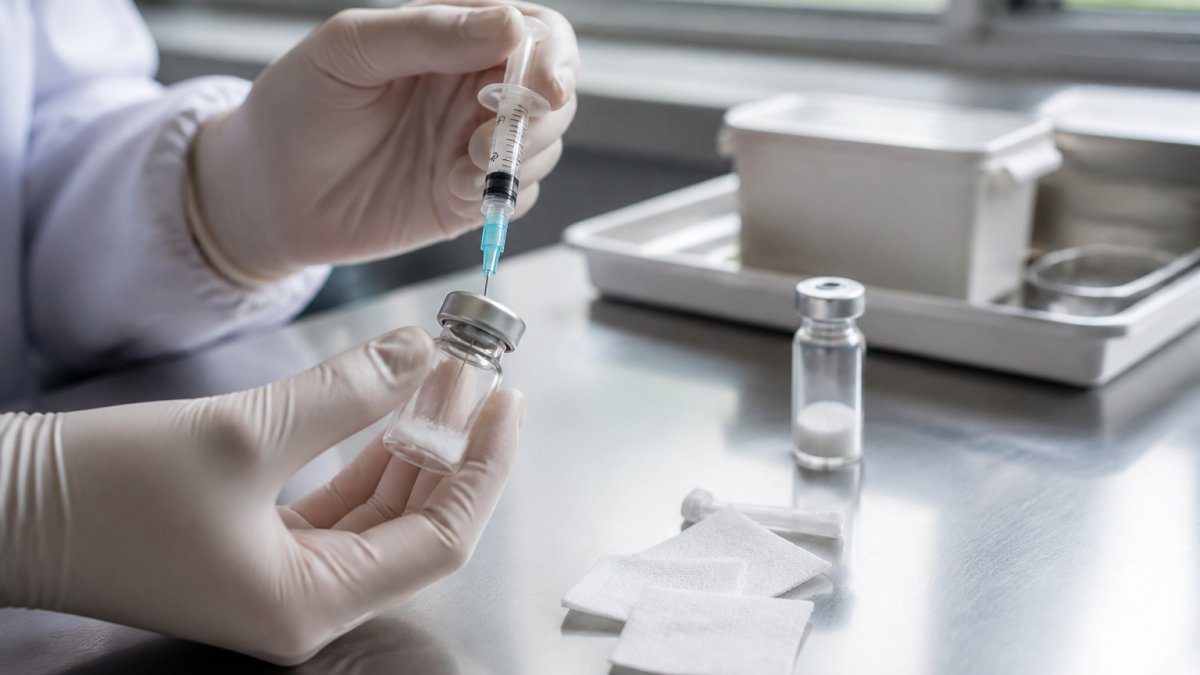
Wipe your bench with disinfectant and let it dry. Put on gloves. Lay out only what you need for this one vial.
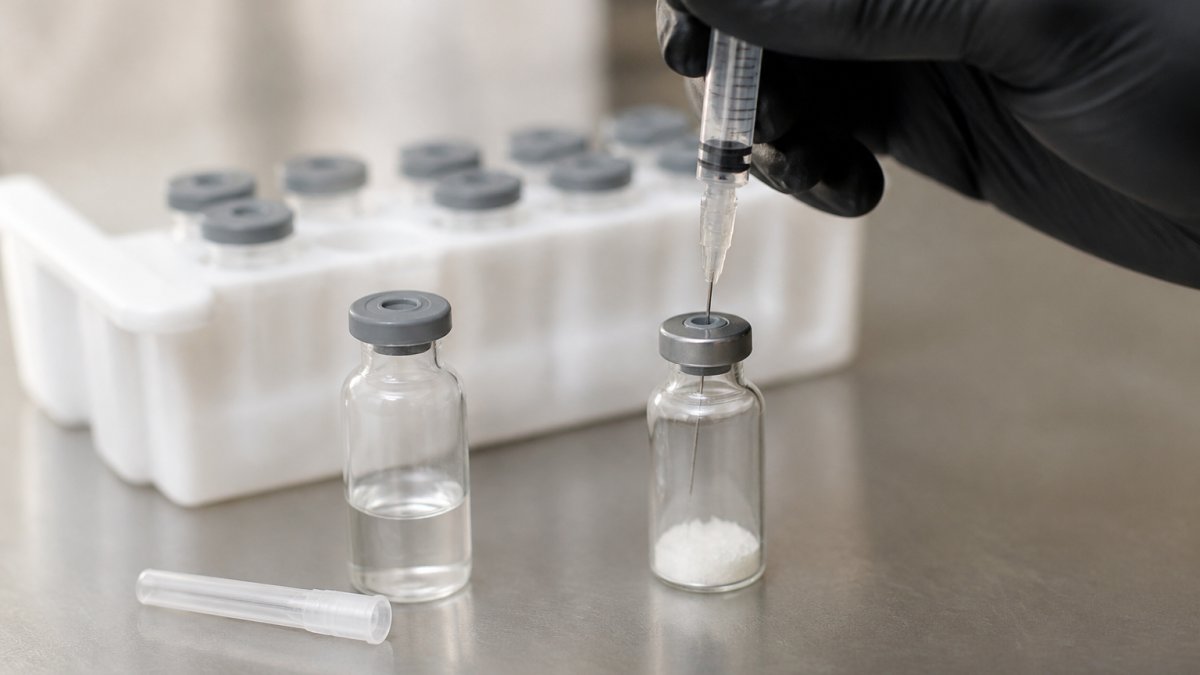
Aseptic technique is a habit, not a step. Keep the rubber stopper facing up, swab it with alcohol, and let it air dry before the needle touches it. Never set a syringe down on the bench once it has contacted the vial.
Pick your diluent from the product documentation. Bacteriostatic water suits multi-use vials because it contains a preservative; sterile water and water for injection suit single-use work.
Add it slowly, down the vial wall, aiming the stream at the glass rather than the powder. Fast addition foams the peptide and pushes powder up the sides where it will not dissolve.
Swirl the vial gently between your fingers; do not shake it. Vigorous shaking shears the peptide and creates slow-settling foam.
Most vials clear within minutes; some take longer. Set it down, come back, swirl again. Patience beats force.
A peptide reconstitution calculator converts peptide mass and diluent volume into a concentration. The math is simple, but small errors compound, so the useful skill is checking the calculator’s answer by hand.
The formula behind every calculator is the same:
Concentration = peptide mass ÷ diluent volume
That gives you mass per volume. Most lab work is easier when you also know the amount per unit volume you actually draw, so keep both in view:
Use these to sanity-check a calculator’s output. The numbers are arithmetic, not product recommendations.
| Peptide in vial | Diluent added | Concentration | Amount in 0.1 mL |
|---|---|---|---|
| 2 mg | 1 mL | 2 mg/mL | 200 mcg |
| 2 mg | 2 mL | 1 mg/mL | 100 mcg |
| 5 mg | 2.5 mL | 2 mg/mL | 200 mcg |
| 5 mg | 5 mL | 1 mg/mL | 100 mcg |
| 10 mg | 2 mL | 5 mg/mL | 500 mcg |
| 10 mg | 5 mL | 2 mg/mL | 200 mcg |
Two patterns are worth memorizing: doubling the diluent halves the concentration, and because 1 mg = 1,000 mcg, mg/mL converts to mcg/mL by multiplying by 1,000, the step most people skip when a number looks wrong.
If your calculator returns a volume for a dose, verify it by dividing the dose by the concentration. If the result does not match your planned draw, recheck the inputs before the needle touches the vial.
Write the concentration on the vial label immediately, in both mg/mL and mcg per draw, and log the date, diluent type, and volume added. With several vials in play, that label is what stands between you and a mixed-up batch.
NIST guidance on SI unit conversions and significant figures
Some lyophilized powders dissolve in a minute; others need twenty. That difference is normal and comes down to the peptide itself.
A few factors drive dissolution time:
If a vial is stubborn, swirl and wait. If it still will not clear, check the product documentation before adding anything else. Adding a second solvent on a guess can ruin the batch.
Lyophilized peptide storage is easier before you add liquid. The powder is the stable form under the right conditions.
Before mixing:
After mixing:
Reconstituted peptide shelf life depends on the diluent, storage conditions, and the product itself. No single number applies to every vial; what a careful guide can do is give you a decision framework for when the documentation is silent.
Check the product documentation, the Certificate of Analysis, and any manufacturer insert before you mix. Sort your vial into one of two buckets:
Stability is peptide-specific: sequence, concentration, buffer, pH, and preservative all change how long a solution holds. A rule borrowed from a different peptide is not evidence for yours.
Bacteriostatic water contains a preservative that slows microbial growth in multi-use vials, which is why it is often associated with a longer working window than plain sterile water. That is a microbial-control advantage, not a guarantee of chemical stability, the peptide can still degrade while the preservative works.
Neither diluent overrides the manufacturer’s stated beyond-use period. If the documentation gives a number, use it.
Visual inspection is a cheap check, not a substitute for documented stability. Before each use, look for:
If any of these appear, discard the vial. A wasted vial costs less than a compromised experiment.
In your logbook, note the diluent, volume added, mix date, and whether the documentation gave a beyond-use period. If not, write “no documented BUD, use promptly” rather than inventing a date. That record lets you or a reviewer reconstruct what happened if a result looks off.
USP general chapter on pharmaceutical compounding stability and beyond-use dating
Start with the decision points, not a fix. Most problems have a few causes, and the right response depends on which one you have.
| Symptom | Likely Cause | What to Do |
|---|---|---|
| Foam on top, powder on walls | Added too fast or shook the vial | Set it down, swirl gently, wait |
| Cloudy but no particles | Incomplete dissolution | Swirl longer at room temperature |
| Visible particles after swirling | Contamination or undissolved aggregate | Stop; do not use; check documentation |
| Powder will not wet at all | Wrong diluent for this peptide | Check product documentation before adding anything |
| Solution cleared, then went cloudy in storage | Degradation or temperature swing | Discard and start a fresh vial |
When in doubt, do not use it. A wasted vial costs less than a compromised experiment.
If you are sourcing material for your next round of work, Rejuvenation Wellness Solutions LLC supplies high-purity research peptides with independent lab testing and a Certificate of Analysis for every product.
Reconstituting lyophilized peptides rewards care over speed.
Reconstitution means adding a liquid diluent, usually bacteriostatic water or sterile water, to a freeze-dried peptide powder so it dissolves into a measurable solution. Lyophilization removes water from the peptide to keep it stable during shipping and storage. Once you add the diluent, the powder dissolves and you get a clear, particle-free solution you can measure by volume. Reconstituting lyophilized peptides correctly matters because concentration depends on how much liquid you add, so the volume must be measured accurately with a syringe.
Divide the peptide amount in the vial by the volume of diluent you added. A 5 mg vial mixed with 2 mL of water gives 2.5 mg per mL. A peptide reconstitution calculator handles this automatically and also converts to micrograms per unit if you are working with a U-100 syringe. Record the peptide amount, water volume, final concentration, and date on the vial label. Measurement accuracy starts with using a syringe sized to your target volume rather than a large syringe for a small draw.
Keep reconstituted peptides refrigerated, typically between 2 and 8 degrees Celsius, and protect them from light. Bacteriostatic water contains a preservative that supports multi-use vials, while sterile water does not. Shelf life after mixing varies by peptide, so follow the manufacturer’s reconstitution instructions and Certificate of Analysis rather than a universal rule. Label each vial with the mix date, inspect for particles or cloudiness before each use, and discard anything that looks contaminated.
Stop shaking and let the vial sit. Vigorous shaking can damage peptide structure and create foam. Swirl gently and give it time, then check whether the powder is clumped at the bottom or stuck to the rubber stopper. If clumps remain, add the diluent slowly down the vial wall and swirl again. Persistent cloudiness or undissolved particles may mean the peptide needs a different solvent, so check the peptide solubility guide from the manufacturer before adding anything else.