
Last Updated: September 18, 2026
Custom GMP peptide manufacturing services cover the synthesis, purification, analytical testing, documentation, and batch release of peptides under current Good Manufacturing Practice, taking your sequence from bench-scale research to a clinical- or commercial-grade synthetic peptide, with every step recorded in an auditable quality management system.
Rejuvenation Wellness Solutions LLC works with WHO/GMP and ISO-certified manufacturers and 503B compounding pharmacies, so we see both the documentation a manufacturer must produce and the questions a research team should ask before signing a purchase order.
A full-service CDMO handles solid-phase peptide synthesis at scale, HPLC purification, lyophilization, impurity profiling, stability testing, and the technical package for a regulatory filing, but it does not make your scientific decisions for you.
The dividing line is documentation and control, not the molecule itself.
Research-grade peptides ship with a Certificate of Analysis showing purity and identity, but synthesis route, raw material traceability, and environmental controls are not held to a pharmaceutical standard. Clinical-grade material is produced under cGMP: validated processes, qualified equipment, controlled raw materials, and a batch record an auditor can reconstruct.
That distinction drives cost and timeline more than the peptide sequence does. A team moving from discovery into an IND-enabling study should expect to re-qualify its supplier, because research-grade data will not support a regulatory submission. For a broader view of how regulators frame this, see the FDA guidance on cGMP for combination products and drugs.
Service tiers differ mainly in scale, regulatory support, and process development. The table below maps the common engagement types when sourcing a manufacturing partner.
| Service Tier | Typical Scale | Best For | Regulatory Support |
|---|---|---|---|
| Research-grade synthesis | Milligram to gram | Discovery, screening, epitope mapping | CoA only |
| GMP clinical-phase | Gram to hundred-gram | Phase I and II programs | Batch records, stability data |
| Commercial-scale cGMP | Kilogram and above | Late-phase and marketed drugs | Full CMC dossier support |
| Custom modification | Project-dependent | Conjugation, non-natural residues | Method development, validation |
A common mistake is assuming one vendor is competitive at every tier. Many discovery-stage suppliers have no commercial-scale capacity, and large CDMOs price small academic projects out of reach. Match the tier to your actual phase, not where you hope to be in three years.
A GMP peptide manufacturing timeline runs from several weeks for a straightforward clinical batch to many months for a validated commercial process. The sequence rarely changes: sequence review, process development, analytical method development, GMP synthesis, purification, lyophilization, QC testing, and batch release by QA.
For teams needing material quickly, the bottleneck is almost never synthesis, it is the analytical and documentation work that follows.
Three factors dominate.
Peptide synthesis quality control standards should include identity confirmation, purity assessment, impurity profiling, and a documented stability program, shown per batch, not per product line, for any clinical-grade manufacturer.
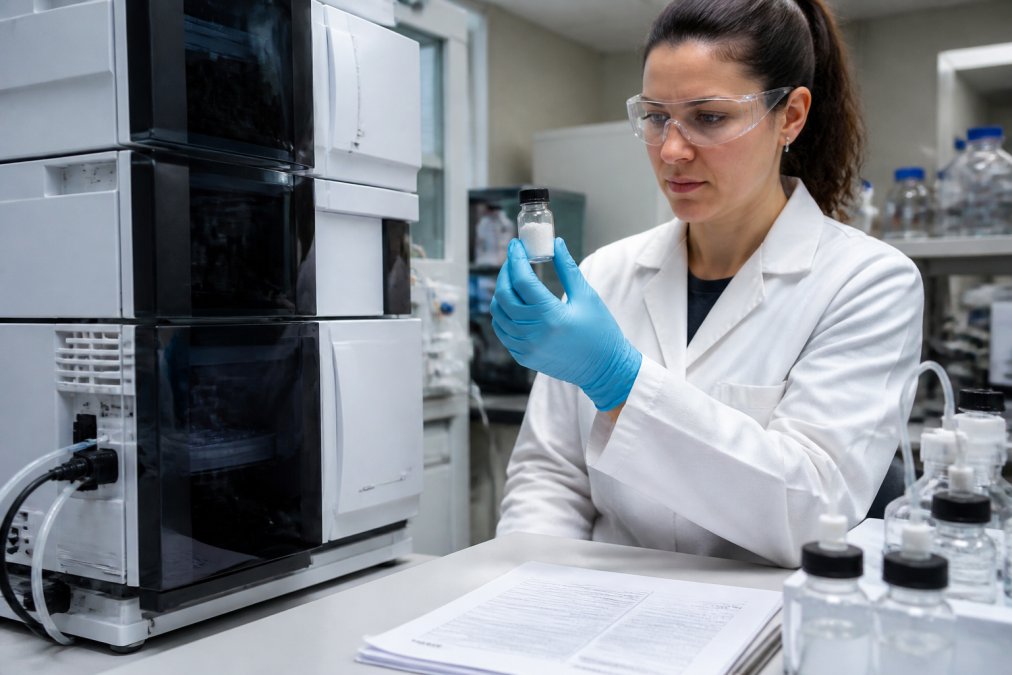
Reverse-phase HPLC purification separates the target peptide from deletion sequences and truncated fragments. Mass spectrometry confirms molecular weight and catches identity errors HPLC alone would miss. Impurity profiling quantifies individual impurities against pharmacopeia standards rather than one purity figure.
A clinical-grade peptide batch is not released on a single purity number. The standard panel most GMP manufacturers run includes:
Analytical methods used for release testing must be validated for the intended purpose. ICH Q2(R2) defines the characteristics: specificity, linearity, range, accuracy, precision, detection limit, quantitation limit, and robustness. For a peptide API, purity and impurity methods most often require full validation, running in parallel with synthesis.
Release testing is a snapshot; stability testing supports the retest period or expiration date in your filing. A typical program uses accelerated and long-term conditions with the peptide in its final container-closure system. Common failure modes, aggregation, methionine or cysteine oxidation, and asparagine or glutamine deamidation, are why stability-indicating methods matter more than a single purity assay.
FDA 21 CFR Part 210 and 211 set the cGMP requirements for manufacturing, processing, packing, and holding of drugs. Part 210 covers general regulations; Part 211 covers finished pharmaceuticals. Together they govern personnel, facilities, equipment, production controls, laboratory controls, and records.
Most CDMO pages list “regulatory support” as a bullet and stop there. The actual milestones a peptide program must clear are more specific, and knowing them changes how you scope a manufacturing agreement.
A compliant peptide manufacturer should be able to produce, on request and under confidentiality:
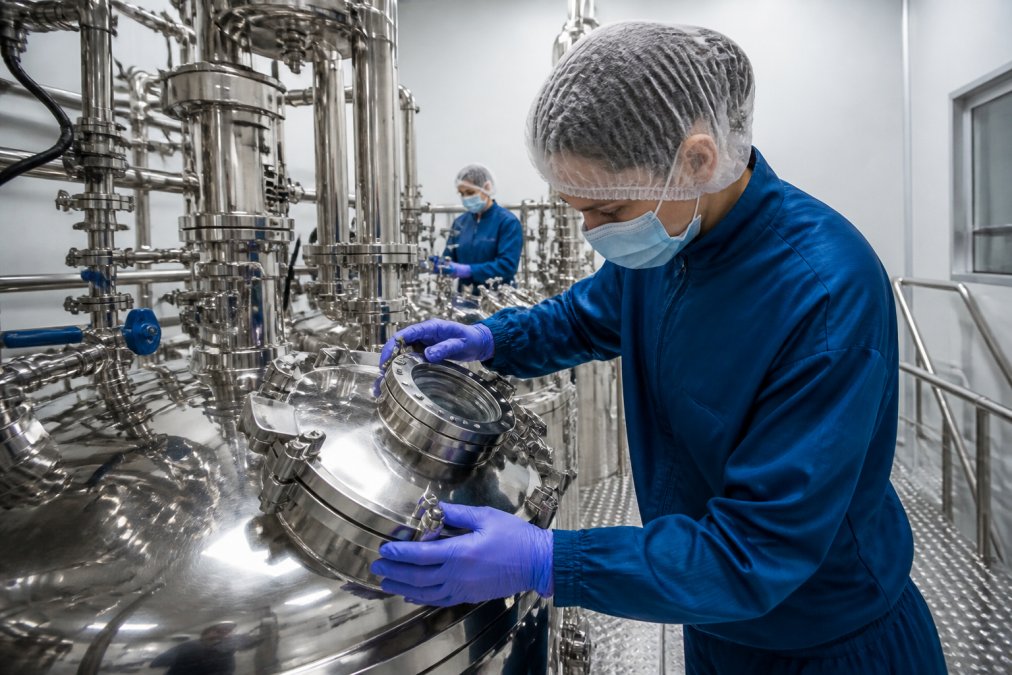
Outsourcing wins for most research teams, and it is not close. Building in-house GMP capacity means capital equipment, a qualified quality assurance function, validated cleanrooms, and ongoing compliance overhead. That structure only makes sense at sustained high volume.
Supply chain risk in peptide manufacturing concentrates in raw materials. Resins, protected amino acid derivatives, and solvents often come from few qualified suppliers, and a single-source dependency can stall a program with little warning.
Mitigation is unglamorous but effective:
The hardest part of sourcing custom GMP peptide manufacturing services is not finding a vendor, it is finding one whose quality system, documentation, and communication cadence match your program’s phase. Ask for sample batch records, how deviations are handled, and who answers the phone when something goes wrong.
GMP-grade peptide manufacturing requires compliance with FDA 21 CFR Parts 210 and 211, which cover facility design, equipment qualification, personnel training, and documentation. You need validated synthesis and purification processes, analytical testing for identity, purity, and potency, and a quality management system that includes batch records, deviation handling, and stability testing. Reputable manufacturers also provide a Certificate of Analysis for each batch and follow pharmacopeia standards where applicable.
GMP certification raises costs because it demands validated facilities, extensive documentation, and rigorous quality control. Custom GMP peptide manufacturing services typically price on a project basis that reflects these requirements. For an accurate quote, contact the manufacturer directly with your specifications. Rejuvenation Wellness Solutions offers affordable access to high-purity peptides and can provide pricing based on your research needs.
Clinical-grade peptide production requires a Certificate of Analysis, batch production records, deviation reports, and stability data. For regulatory filings, you need CMC development documentation, impurity profiling, and analytical validation. Manufacturers supporting FDA 21 CFR Part 210 and 211 compliance will supply these documents as part of the project. Always verify that your supplier can provide a complete regulatory package before committing to a custom GMP peptide manufacturing timeline.
Purity is verified through analytical testing: HPLC for purity percentage, mass spectrometry for molecular weight confirmation, and impurity profiling for related substances. A Certificate of Analysis from an independent lab provides the most reliable verification. Rejuvenation Wellness Solutions ensures every product undergoes independent lab testing with a Certificate of Analysis, and their peptides are 99%+ pure. Ask to see the actual lab reports before you buy.