


Last Updated: October 6, 2026
The research peptides most often studied for muscle growth fall into two families: growth-hormone secretagogues and IGF-1 LR3. Neither is FDA-approved for building muscle.
Research peptides are synthetic amino acid chains made for laboratory study, not human consumption. Most act on the growth hormone (GH) and insulin-like growth factor (IGF-1) axis, which is why they attract bodybuilding interest despite thin human data.
Growth-hormone secretagogues tell the pituitary to release more GH. IGF-1 LR3 skips that step and mimics the downstream hormone directly.
That split matters more than any marketing claim: a compound that raises GH does not automatically raise IGF-1 enough to produce anabolic effects, and human evidence for either outcome is limited.
Ranked by human clinical evidence: tesamorelin first, then sermorelin, then CJC-1295 and ipamorelin. Tesamorelin is the only compound here with an FDA-approved indication, and it is unrelated to bodybuilding. Here is how the most-discussed compounds compare:
| Compound | Class | Human Clinical Evidence | FDA-Approved Indication | Primary Research Interest |
|---|---|---|---|---|
| Tesamorelin | GHRH analogue | Strongest in group | Yes, for a specific condition | Visceral fat, not muscle |
| Sermorelin | GHRH analogue | Moderate | No | Growth-hormone release |
| CJC-1295 | GHRH analogue | Limited | No | Extended GH elevation |
| CJC-1293 | GHRH analogue | Limited | No | Shorter half-life analogue |
| Ipamorelin | Ghrelin mimetic | Limited | No | Selective GH release |
| GHRP-6 | Ghrelin mimetic | Moderate | No | GH release, appetite |
| IGF-1 LR3 | IGF-1 analogue | Preclinical only | No | Direct IGF-1 signaling |
The pattern is uncomfortable but honest: the compound with the best human data was never studied for muscle growth, and those marketed hardest for bodybuilding have the weakest human evidence.
MK-677, also called ibutamoren, is not a peptide. It is an orally active, non-peptide ghrelin mimetic that stimulates growth-hormone release through the same receptor pathway as GHRP-6. It gets grouped with peptides because it targets the ghrelin receptor, but its chemistry is entirely different: it is a small molecule, which is why it can be taken orally while true peptides generally cannot.
The honest summary of peptide muscle growth evidence is that human trials have not demonstrated meaningful muscle or strength gains for the compounds sold for that purpose. Most muscle-building claims trace back to animal models, cell cultures, or anecdotes, so each compound should be graded by the quality and type of evidence behind it.
The table below sorts the most-discussed compounds by what has actually been demonstrated in humans, and at what level of rigor. “Demonstrated” means a controlled human trial measured the outcome; “preclinical” means animal or cell data only.
| Compound | Strongest Human Evidence | Outcome Measured in Humans | Muscle/Strength Outcome | Evidence Tier |
|---|---|---|---|---|
| Tesamorelin | Randomized controlled trials | Visceral adipose tissue reduction in a specific clinical population | Not studied for hypertrophy | Demonstrated (non-muscle) |
| Sermorelin | Small trials and clinical use | GH/IGF-1 axis stimulation | No controlled muscle outcome | Demonstrated (biomarker only) |
| GHRP-6 | Small short-term trials | GH release, appetite stimulation | No controlled muscle outcome | Demonstrated (biomarker only) |
| MK-677 (ibutamoren) | Small short-term trials | Sustained GH/IGF-1 elevation | Lean mass signals in limited trials, not strength | Demonstrated (biomarker, weak functional) |
| CJC-1295 | Pharmacokinetic and small studies | Extended GH elevation | No controlled muscle outcome | Demonstrated (biomarker only) |
| CJC-1293 | Limited pharmacokinetic data | GH elevation | None in humans | Preclinical / mechanistic |
| Ipamorelin | Limited early data | Selective GH release | None in humans | Preclinical / mechanistic |
| IGF-1 LR3 | None in healthy humans for muscle | , | Anabolic effects in animal and cell models | Preclinical only |
Read the table by column, not by row. The compounds with the strongest human datasets were studied for metabolic or biomarker endpoints, not muscle growth, while those marketed hardest for bodybuilding sit in the preclinical or mechanistic tiers.
A common error is treating a GH spike on a blood panel as proof of an anabolic effect. It is not. Muscle protein synthesis in healthy adults is driven primarily by mechanical tension from resistance training, adequate protein intake, and sleep, not supraphysiologic GH pulses. Raising GH does not reliably increase muscle protein synthesis the way a progressive resistance program does, and elevated GH can shift fluid and connective tissue rather than contractile protein.
For readers whose goal is muscle growth rather than laboratory study, the interventions with the strongest human evidence are not peptides. Progressive resistance training, adequate protein distributed across the day, sufficient sleep, and medically appropriate care for any underlying condition all have far more human outcome data than any compound in this class. A peptide protocol that displaces training, nutrition, or sleep is a net negative regardless of the vial’s contents.
Many growth-hormone-related substances are prohibited in tested sport. The World Anti-Doping Agency prohibited list classifies growth-hormone secretagogues and IGF-1 as prohibited substances, and most national anti-doping organizations adopt that list. Any athlete subject to testing should check the current list and their governing body’s rules before participating in research involving these compounds, eligibility consequences can follow even from research-adjacent use.
Before designing any protocol, check the compound against the current prohibited list and confirm your institutional review requirements. A compound’s legal status as a research chemical does not make it permissible in a sanctioned athletic or clinical setting.
Claims about peptides for muscle recovery and sleep quality rest on the GH-sleep connection, not direct recovery trials. Growth hormone is released in pulses during deep sleep, so researchers hypothesize that bedtime secretagogues might amplify that natural pulse.
If your research question involves recovery, measure the outcome directly. Track sleep architecture, soreness markers, or performance metrics rather than assuming a GH spike translates into faster recovery.
Muscle growth peptide safety is poorly characterized for long-term use, and no compound in this class has been studied for multi-year muscle-building protocols. Reported side effects include injection-site reactions, water retention, joint discomfort, hand numbness or tingling, and changes in blood sugar regulation.
The deeper problem is what nobody has measured. Long-term effects on insulin sensitivity, pituitary function, and cancer risk are largely unknown for prolonged secretagogue use. IGF-1 LR3 raises particular concern because IGF-1 signaling is involved in cell proliferation, and elevated IGF-1 has been associated with adverse outcomes in observational research.
A useful way to frame this for a research audience is to separate three categories of risk:
Most brief rankings stop at the first category. A responsible guide names all three.
The phrase “research peptides” often blurs three distinct categories: research chemicals sold for laboratory use, compounded preparations, and FDA-approved medicines. Keeping them separate matters for safety.
The FDA has not approved any of these compounds for muscle growth, and most are sold as research chemicals. FDA guidance on compounded and research-use drugs explains how the agency distinguishes approved products from unapproved ones.
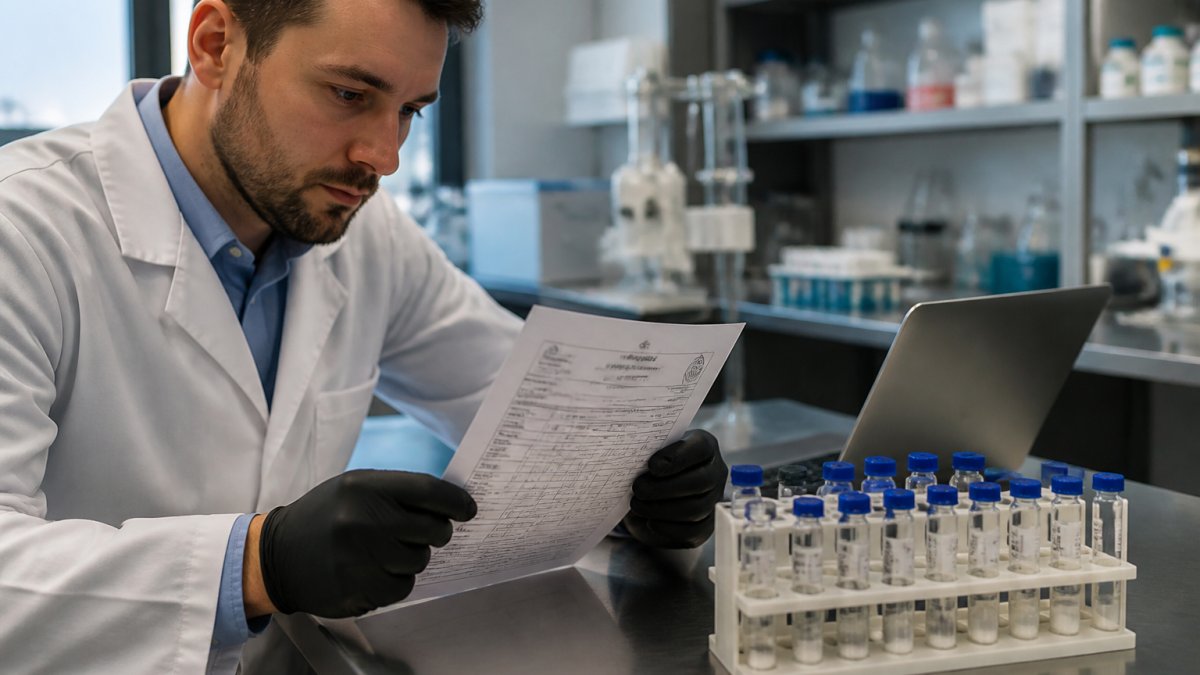
Independent testing of research-chemical vendors has repeatedly found vials containing less material than labeled, the wrong peptide entirely, or bacterial contamination. Because research chemicals are not held to pharmaceutical manufacturing standards, the burden of verification falls on the buyer. A Certificate of Analysis (COA) from an independent lab is the only documentation of what is in the vial, and it should include the testing method, lot number, and measured purity.
Regulatory status compounds the risk. The FDA has not approved any of these compounds for muscle growth, and most are sold as research chemicals. Anti-doping rules close another door: the World Anti-Doping Agency prohibited list bans growth-hormone secretagogues and IGF-1 for competing athletes, which means any sports-adjacent research use carries eligibility consequences.
Peptide injections for muscle growth carry a sourcing risk that has nothing to do with the compound itself.
Product identity and purity are the two variables you can actually control.
Supplier choice is a research decision, not a shopping one. Rejuvenation Wellness Solutions LLC works with WHO/GMP and ISO-certified manufacturers and 503B compounding pharmacies, and every product undergoes independent lab testing with a Certificate of Analysis.
For researchers weighing a switch, the practical checklist looks like this:
The best research peptides for muscle growth depend on what you are trying to measure, and no compound in this class has proven muscle-building effects in human trials. Tesamorelin has the strongest human dataset but was never studied for hypertrophy.
Design your study around the outcome you care about, verify your supply chain before you begin, and treat every muscle-growth claim as a hypothesis rather than a finding.
The honest answer is that the human evidence is thin and mostly indirect. Most research peptides for muscle growth work by raising growth hormone or IGF-1, and studies tend to measure hormone levels, body composition, or recovery markers rather than trained muscle gain. Tesamorelin has FDA approval for visceral fat reduction in a specific patient group, not for building muscle. Treat any muscle-growth claim as a hypothesis, not a proven outcome.
No. Products sold as research peptides are labeled for laboratory research only and are not approved by the FDA for human consumption. A small number of related compounds, such as tesamorelin and sermorelin, hold approval or have been prescribed for specific medical indications under a physician’s care. Buying a vial labeled ‘research use only’ and injecting it puts you outside that regulated pathway, and the FDA has issued warning letters to sellers making health claims.
CJC-1295 combined with ipamorelin shows up most often in research and bodybuilding discussion because the two act on different receptors: CJC-1295 as a GHRH analogue and ipamorelin as a ghrelin-receptor agonist. Sermorelin is shorter-acting and has more clinical history. IGF-1 LR3 sits in a different class entirely and carries more serious safety questions. None of these has robust human trial data proving added lean mass in healthy trained adults.
Ask for a Certificate of Analysis from an independent lab, not the manufacturer’s own paperwork, and check that it lists a purity figure, a batch number, and a testing date that matches the vial you receive. Reputable suppliers, including Rejuvenation Wellness Solutions, work with WHO/GMP and ISO-certified manufacturers and 503B compounding pharmacies and publish third-party testing. If a seller cannot produce a batch-specific report, treat the purity claim as unverified.








