


Last Updated: August 17, 2026
GMP certified peptides are amino acid chains manufactured under Good Manufacturing Practice standards established by the FDA. These standards ensure that every batch meets rigorous requirements for purity, potency, identity, and safety through documented procedures, detailed records, and regulatory audits throughout production.
The term refers to peptides synthesized in facilities complying with 21 CFR Part 210 and 211, which govern pharmaceutical manufacturing. This is a legal requirement for any peptide intended for clinical use or human research applications, verified through third-party audits of manufacturing conditions, quality control measures, and traceability documentation.
At Rejuvenation Wellness Solutions LLC, we partner with WHO/GMP and ISO-certified manufacturers to ensure every peptide meets these exacting standards. Our products undergo independent lab testing with a Certificate of Analysis, confirming 99%+ purity before shipment. The difference between GMP and non-GMP peptides is fundamental: non-GMP peptides lack documented manufacturing controls and quality assurance, while GMP certified peptides come with complete traceability showing exactly where, when, and how each batch was made, essential for regulatory submissions and clinical trial requirements.
GMP compliance transforms peptide manufacturing into a controlled, auditable system where every batch performs identically to previous and future batches. This consistency is the foundation of reproducible science demanded by regulatory agencies, clinical trial sponsors, and serious researchers.
Without GMP oversight, manufacturers face no legal requirement to document processes, validate equipment, or test for contaminants. Batches could contain endotoxins, bacterial DNA, or chemical impurities that compromise research outcomes or create safety concerns. GMP standards eliminate this uncertainty through mandatory quality control checkpoints at every production stage.
If your research feeds into clinical trials or therapeutic development, regulatory compliance is critical. The FDA requires that any peptide used in human studies must come from a GMP-certified source with complete documentation. Non-GMP peptide sources can result in research data rejection during regulatory review, wasting months of work and funding.
GMP compliance also protects scientific credibility. Peer reviewers and journal editors increasingly scrutinize research material sources. Published studies using non-GMP peptides raise questions about data reliability. Using GMP certified peptides demonstrates rigor and increases the likelihood your findings will be accepted and cited.
The Quality Management System embedded in GMP manufacturing creates accountability. Every technician, equipment, and reagent batch is tracked, allowing auditors to trace exactly where failures occur. This systematic approach prevents the uncertainty that plagues non-GMP suppliers.
The cGMP peptide synthesis process applies current Good Manufacturing Practice to peptide production, emphasizing continuous compliance and improvement. Most GMP certified peptides use solid-phase peptide synthesis (SPPS), where amino acids are added sequentially to a growing chain anchored to a resin bead. The "c" means standards evolve as technology improves, it’s not a static checklist.
Synthesis begins with careful selection of starting materials. Every reagent, solvent, and resin batch is tested and documented before use. Technicians work in controlled environments where temperature, humidity, and contamination levels are monitored continuously, with equipment calibrated regularly and results logged in electronic systems creating an unbreakable audit trail.
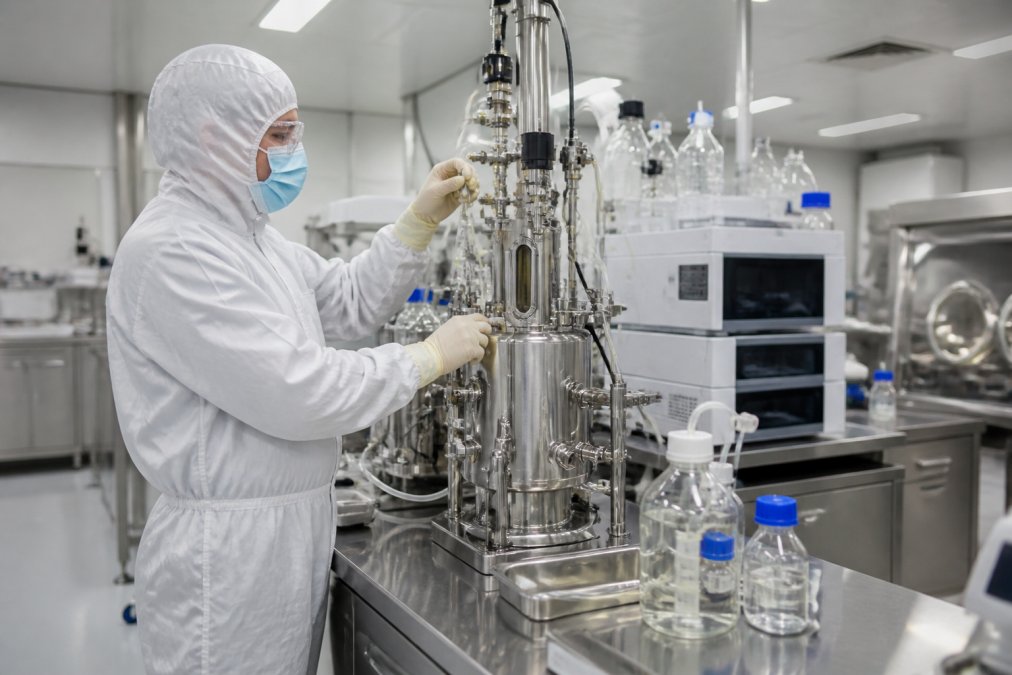
During synthesis, the growing peptide chain undergoes multiple purification and validation steps. After each amino acid addition, the reaction is monitored to confirm desired chemistry occurred. Impurities are removed through washing and extraction. This iterative process takes longer than non-GMP synthesis but produces peptides with minimal side products and contamination.
Once synthesis is complete, the peptide undergoes rigorous analytical testing. High-performance liquid chromatography (HPLC) measures purity by separating the desired peptide from impurities. Mass spectrometry confirms molecular weight matches the intended structure. These tests are performed on representative samples from each batch, with results documented and retained for years.
The cGMP process includes stability testing where peptides are stored under defined conditions and tested at regular intervals to confirm they remain potent and pure. This data becomes part of the Certificate of Analysis, showing not just what the peptide was at release, but how it will behave over time in your research.
Process validation is critical. Before manufacturing begins at scale, the entire procedure is tested multiple times to prove it consistently produces the same result. Deviations are documented, investigated, and corrected before any product reaches customers.
The distinction between research grade and GMP grade peptides reflects entirely different manufacturing philosophies and regulatory oversight. Research grade peptides are typically made in academic or small-scale commercial labs without rigorous controls and documentation requirements of GMP manufacturing.
Research grade peptides may have acceptable purity for exploratory work, but the manufacturing process isn’t validated or audited. Quality can drift between orders without anyone knowing until experiments fail to replicate. GMP grade peptides come from facilities where every process step is validated, documented, and subject to regulatory inspection, with Standard Operating Procedures ensuring consistency across different technicians, equipment, and time periods.
The Certificate of Analysis accompanying GMP peptides is comprehensive and legally binding, including specific test results, actual HPLC purity percentages, mass spectrometry data, moisture content, endotoxin levels, and sterility testing. Research grade peptides may come with a purity estimate or simple assay, but not the detailed analytical profile needed to trust your data.
GMP grade peptides cost more upfront but prevent costly research failures, regulatory rejections, and wasted time troubleshooting contamination. Research grade peptides seem cheaper until results don’t replicate or regulatory submissions are rejected due to unacceptable peptide sources.
Traceability is another defining difference. With GMP grade peptides, you can request information about the specific batch received, when it was made, who synthesized it, which equipment was used, and what testing was performed. This traceability is essential for clinical trials where regulators may investigate any adverse event back to the source material. Research grade suppliers typically cannot provide this documentation.
A Certificate of Analysis (CoA) is the formal document proving your peptide has been tested and meets specified quality standards. For GMP certified peptides, the CoA is not optional, it’s a legal requirement and critical control document, signed by a qualified person taking legal responsibility for result accuracy.
The CoA includes specific analytical data: actual purity percentage measured by HPLC, molecular weight confirmed by mass spectrometry, moisture content, endotoxin levels, and sterility test results. These are precise measurements with documented methodologies and equipment calibration records. If a result falls outside acceptable limits, the batch is not released and the deviation is investigated and documented.
For researchers, the CoA serves multiple purposes. First, it confirms you received what you ordered. Second, it provides analytical data needed to interpret research results accurately. If your peptide is 98% pure rather than 99.5%, that affects dosing calculations and result interpretation. Third, it creates a permanent record linking your research to the specific peptide batch, essential if your work later requires regulatory review or reproducibility questions arise.
When you work with Rejuvenation Wellness Solutions LLC, every product includes a comprehensive Certificate of Analysis showing independent lab testing results. This transparency means you can verify our 99%+ purity claim with actual data, not marketing language. You can see the exact HPLC chromatogram, mass spectrometry results, and endotoxin testing confirming safety for research applications.
The Certificate of Analysis also protects you legally. If a regulatory agency questions your research materials, you have documented proof of what you actually used. If you need to defend your work’s integrity, the CoA is your evidence.
Verifying GMP certification requires more than trusting supplier claims. Request the supplier’s GMP certification documents. Legitimate GMP certified peptide manufacturers have formal certifications from regulatory bodies or third-party auditors specifying which facilities are certified and under what standards (FDA, EMA, WHO).
Ask for the facility’s most recent audit report or inspection summary. The FDA publishes inspection results for pharmaceutical manufacturers as public information. You can search the FDA’s inspection database to see if a facility passed recent inspections or if significant violations were noted.
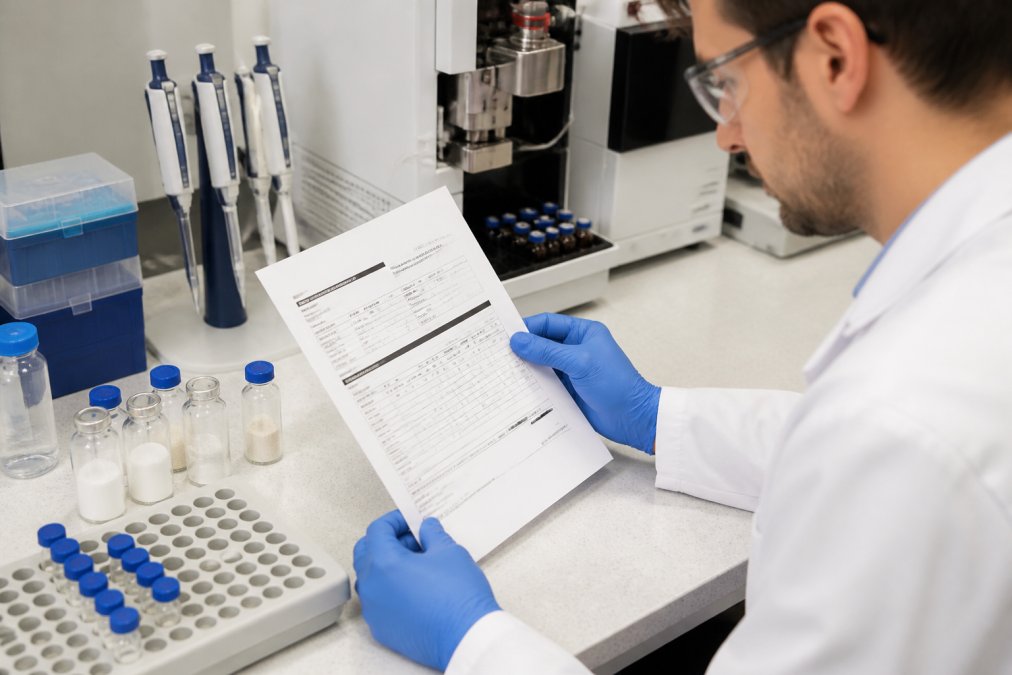
Request the Certificate of Analysis for any peptide you’re considering. This document should include specific test methods used (HPLC method name, mass spectrometry parameters, endotoxin testing method). If the CoA is vague or generic, that’s a warning sign. A legitimate GMP supplier can explain exactly how purity was measured and what acceptance criteria were applied.
Verify the supplier’s partnerships. Rejuvenation Wellness Solutions LLC partners with WHO/GMP and ISO-certified manufacturers and 503B compounding pharmacies. These partnerships are verifiable, you can contact the manufacturing partner directly to confirm the relationship.
Check whether the supplier maintains Standard Operating Procedures (SOPs) for quality control. Ask to see summaries of their testing protocols. Legitimate GMP operations have documented methods for HPLC analysis, mass spectrometry validation, endotoxin testing, and sterility verification, with documented acceptance criteria and testing performed on every batch.
Look for ISO certifications beyond GMP. ISO 9001 (Quality Management System) and ISO 13485 (Medical Device Quality Management) certifications indicate systematic quality controls requiring regular third-party audits.
Ask about batch consistency. Request data showing multiple recent batches of the same peptide had similar purity levels and test results. Consistency across batches is a hallmark of GMP manufacturing.
Selecting the right GMP certified peptide supplier requires evaluating multiple factors beyond price. Your research timeline, regulatory requirements, and specific peptide specifications should drive your decision. A supplier offering same-day order fulfillment and rapid shipping can accelerate your timeline significantly, especially for time-sensitive research or clinical trial preparations.
Consider the breadth of the supplier’s product range. Some GMP certified peptide suppliers specialize in a narrow set of common peptides, while others can synthesize custom peptides to your exact specifications. If you need specialized or novel peptides, you need a supplier with strong custom synthesis capabilities and analytical infrastructure to validate non-standard sequences.
Customer support responsiveness matters significantly. If you have questions about Certificate of Analysis interpretation, storage conditions, or technical specifications, you need to reach a knowledgeable person quickly. Rejuvenation Wellness Solutions LLC offers text message, phone, and email customer service within hours, not days.
Evaluate the supplier’s product presentation and documentation. Do they provide comprehensive technical data sheets for each peptide? Are storage conditions clearly specified? Is there guidance on reconstitution and handling? A supplier investing in clear documentation demonstrates attention to detail and customer success.
Assess whether the supplier’s pricing model aligns with your budget and volume. GMP certified peptides are more expensive than research-grade alternatives, but pricing varies significantly. Some suppliers offer bulk discounts for larger volumes, while others provide smaller quantities at higher per-unit costs, which suits exploratory research better.
Consider future expansion plans. If your research might evolve from injectables to topical or oral forms, a supplier planning to expand beyond injectable options provides continuity. Rejuvenation Wellness Solutions LLC is expanding beyond injectables to topical and oral options, allowing your supplier relationship to grow with your research needs.
GMP certified peptides represent the intersection of scientific rigor and regulatory compliance. They’re not simply more expensive alternatives to research-grade peptides, they’re fundamentally different products manufactured under systematic controls ensuring consistency, purity, and traceability. For researchers serious about producing reproducible, defensible results, GMP certification is non-negotiable.
The difference matters most when your research has regulatory implications or must withstand peer review and potential regulatory scrutiny. A Certificate of Analysis proving 99%+ purity and comprehensive analytical testing transforms your research credibility. Rejuvenation Wellness Solutions LLC provides GMP certified peptides with independent lab testing, rapid fulfillment, and responsive customer support to accelerate your research timeline while maintaining the highest quality standards. Shop with Rejuvenation Wellness Solutions LLC today and access the certified peptide solutions your research deserves.
GMP (Good Manufacturing Practice) certification means the peptide manufacturer follows FDA regulations under 21 CFR Part 210/211, which establish strict standards for quality management systems, documentation, contamination control, and batch consistency. GMP certified peptides undergo rigorous quality control and quality assurance protocols throughout synthesis and packaging. This regulatory framework ensures that every batch meets documented specifications and maintains traceability from raw materials through final product. For researchers, GMP certification signals that the peptide has been produced under controlled conditions with documented proof of purity and identity.
Request documentation directly from your supplier, including their current GMP certification status, audit reports, and third-party verification. Legitimate GMP certified manufacturers provide a Certificate of Analysis (CoA) with every batch, detailing purity percentages, impurity profiles determined by HPLC or mass spectrometry, and test dates. Ask whether they work with 503B compounding pharmacies or hold WHO/GMP and ISO certifications. Cross-reference their claims against publicly available regulatory databases if applicable. Reputable suppliers respond to verification requests within hours, not days, and offer transparency about their manufacturing standards and quality management systems.
Research grade peptides are typically produced without the stringent regulatory oversight required for GMP grade. GMP grade peptides follow FDA-regulated manufacturing protocols (21 CFR Part 210/211), include comprehensive documentation, batch traceability, and validated analytical testing. Research grade peptides may have lower purity specifications and less detailed quality assurance documentation. For clinical trials, therapeutic programs, or regulated research, GMP grade is essential. For exploratory laboratory work, research grade may suffice, though many researchers prefer GMP grade for consistency and reliability regardless of application. The choice depends on your research requirements, regulatory obligations, and quality standards.
A comprehensive Certificate of Analysis (CoA) documents the peptide's purity percentage (typically 99%+), analytical methods used (such as HPLC or mass spectrometry), impurity profile detailing any contaminants identified, batch number and manufacturing date, expiration or stability date, and the testing laboratory's credentials. The CoA should specify the peptide's identity, molecular weight, and any relevant pharmacopeia standards met. It serves as independent verification that the product meets stated specifications and provides traceability for regulatory compliance and audit readiness. Always request the CoA before purchasing and verify it matches the specific batch you receive.
Clinical trials require GMP certified peptides because regulatory agencies demand documented proof that the drug substance meets strict quality, purity, and safety standards. GMP compliance establishes a quality management system that controls every step of synthesis, from solid-phase peptide synthesis (SPPS) or liquid-phase peptide synthesis (LPPS) through final packaging. This regulatory framework ensures batch consistency, prevents contamination, and creates an audit trail for regulatory submissions. Without GMP certification, clinical trial materials cannot meet FDA or pharmacopeia standards, risking trial delays, regulatory rejection, or patient safety concerns.
Individual researchers conducting independent scientific studies benefit from GMP certified peptides, particularly if their work may inform clinical applications or regulatory submissions. GMP certification provides confidence in purity, consistency, and analytical validity, critical factors for reproducible research outcomes. Even for exploratory studies, GMP grade peptides reduce the risk of results being compromised by impurities or batch variability. Many independent researchers choose GMP grade for the enhanced quality assurance and Certificate of Analysis documentation, ensuring their research meets scientific standards and can withstand peer review or regulatory scrutiny.
cGMP (current Good Manufacturing Practice) peptide synthesis follows FDA regulations requiring documented standard operating procedures (SOPs) for every manufacturing step. The process includes material qualification, synthesis validation (whether using solid-phase peptide synthesis or liquid-phase methods), in-process quality control, final product testing via HPLC or mass spectrometry, impurity profiling, and stability testing. Each batch undergoes risk assessment and process validation to ensure consistency. Documentation includes batch records, analytical results, and traceability logs. cGMP synthesis ensures that peptide products meet active pharmaceutical ingredient (API) standards and comply with regulatory requirements for clinical or therapeutic use.
Independent lab testing complements GMP certification by providing third-party verification of peptide purity, identity, and safety. While GMP certification ensures the manufacturer follows regulated processes, independent testing confirms that the final product actually meets stated specifications. Testing typically includes HPLC analysis for purity percentages, mass spectrometry for molecular weight confirmation, and impurity profiling to detect contaminants. Results are documented in a Certificate of Analysis provided with each batch. This dual approach, regulatory manufacturing standards plus independent verification, gives researchers confidence that the peptide is safe, pure, and suitable for their research applications.
This article was written using GrandRanker








