
Last Updated: August 15, 2026
High purity peptides are synthetic amino acid chains manufactured to specific molecular specifications with minimal contamination or degradation. Even small amounts of impurities can interfere with biological activity, skew your data, or introduce confounding variables that waste months of research effort. A peptide marketed as 95% pure contains 5% of something else, by-products from synthesis, residual solvents, or degradation products. At 99%+ purity, you’re working with material that behaves predictably and consistently across batches.
At Rejuvenation Wellness Solutions LLC, we recognize that individual researchers, clinical trial investigators, and laboratory managers need peptides they can trust. The difference between a supplier who claims high purity and one that proves it comes down to independent verification. That’s why every peptide undergoes third-party laboratory testing with a Certificate of Analysis from external validation facilities, not in-house reports.
A contaminated batch doesn’t just waste your time; it can invalidate your entire study, force you to restart experiments, or produce results that don’t replicate in peer review. Identifying high purity peptides before they reach your lab is the single most important quality control step you can take.
The Certificate of Analysis (COA) is your first and most critical verification tool. Before you accept any peptide shipment, you must have a COA in hand, not promised, but in your possession. This document is the supplier’s formal attestation of what’s in the vial.
A legitimate COA contains specific analytical data from independent testing, not just a manufacturer’s claim. It should include the peptide’s amino acid sequence, molecular weight, the purity percentage, and the analytical methods used to determine that purity.
A valid COA must be dated and issued by an independent laboratory, not the peptide manufacturer. It should clearly state the batch number, allowing you to trace results back to the specific production run. The purity percentage should be expressed as a specific number (typically 70% to 99%+) with the analytical method specified (usually HPLC or Mass Spectrometry).
Look for the chromatogram or mass spectrum data itself, not just a summary. The raw data, actual peaks, retention times, and molecular ion fragments, tells you far more than a headline percentage. A COA that provides only a purity number without supporting analytical traces is incomplete.
The document must include molecular weight verification, ideally confirmed by Mass Spectrometry. This confirms the peptide is actually the sequence you ordered, not a similar compound or degradation product. Check that the reported molecular weight matches your calculated expected mass for the amino acid sequence.
If the COA lacks a date or lists a date more than six months old, the data may not reflect the current batch’s condition, peptides degrade over time. If there’s no independent laboratory name or contact information, the testing likely didn’t happen.
Vague purity claims like "high purity" or "research grade" without a specific percentage are red flags. Legitimate suppliers provide exact numbers: 95%, 98%, 99.2%. If the COA shows only a single analytical method, that’s incomplete; cross-verification between HPLC and Mass Spectrometry adds confidence. A COA with no chromatogram or mass spectrum attached is essentially worthless.
Be skeptical of COAs that appear generic or templated for multiple peptides. Each batch should have unique analytical data reflecting that specific production run. If multiple batches show identical purity percentages down to the decimal, something’s wrong, natural variation between batches is normal.
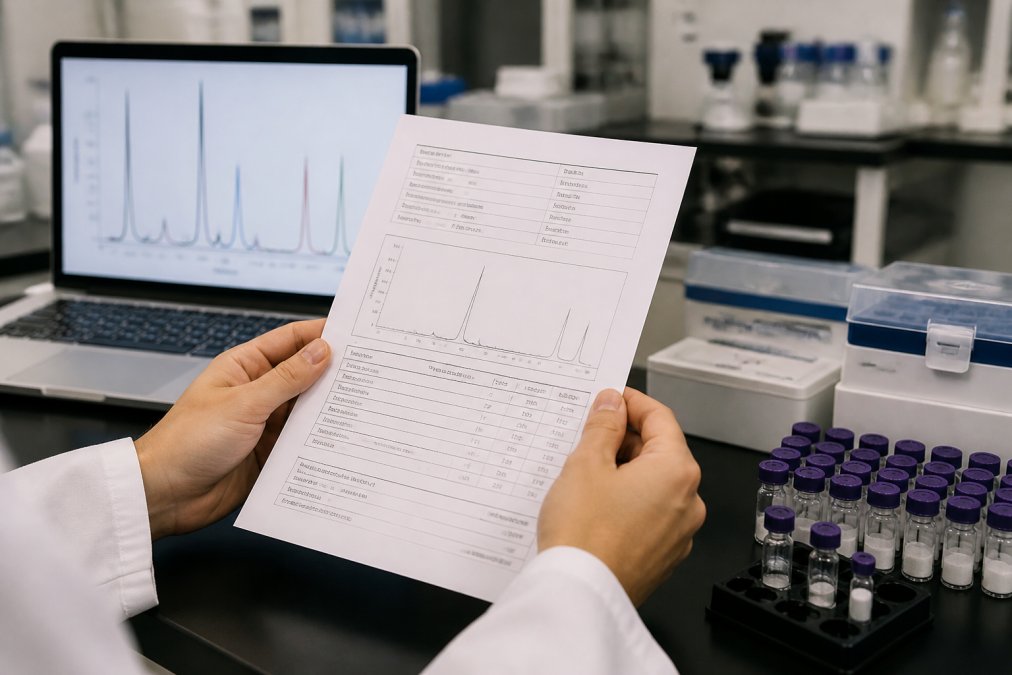
Two primary analytical methods dominate peptide purity testing: High-Performance Liquid Chromatography (HPLC) and Mass Spectrometry (MS). Both are legitimate, but they measure different aspects of purity. HPLC separates peptide molecules based on chemical properties and detects relative abundance; Mass Spectrometry identifies compounds by exact molecular weight. Together, they provide comprehensive purity verification.
High-Performance Liquid Chromatography forces your peptide sample through a column packed with specialized material. Different molecules move through at different speeds based on their chemical properties, hydrophobicity, charge, size. As each compound exits, a detector measures it, creating a chromatogram: a graph showing peaks at different retention times.
The purity percentage is calculated by dividing the area under the main peptide peak by the total area under all peaks, then multiplying by 100. If your target peptide’s peak accounts for 98% of the total area, your purity is 98%. The remaining 2% represents synthesis by-products, incomplete chains, or degradation products.
RP-HPLC (Reverse-Phase HPLC) is the most common variant for peptides. It uses a hydrophobic column material, making it particularly effective at separating peptides from water-soluble impurities and degradation products. The strength of HPLC is that it shows you the actual composition of your sample. The limitation is that it doesn’t tell you the molecular identity of those peaks, which is why Mass Spectrometry verification matters.
Mass Spectrometry ionizes your peptide sample and measures the mass-to-charge ratio of each ion fragment. For your target peptide, you should see a prominent peak at the expected molecular mass. This is the critical difference from HPLC: Mass Spectrometry tells you what you actually have, not just how much of one component versus others.
It confirms the amino acid sequence is correct by matching the observed molecular weight to your calculated expected mass. If you ordered a peptide with a calculated mass of 1,247.5 Da (Daltons), the mass spectrum should show a prominent peak at or very near that mass. MS is also sensitive to modifications, unexpected degradation, oxidation, or incomplete synthesis changes the molecular weight, and MS will detect it immediately.
The limitation of Mass Spectrometry alone is that it doesn’t quantify purity the way HPLC does. This is why the best COAs include both methods: HPLC gives you the percentage breakdown, and MS confirms the identity of the main compound.
Understanding what impurities appear in peptide samples helps you interpret your COA and recognize when something is genuinely high purity. Synthetic peptide synthesis is complex, and even well-executed syntheses produce by-products.
The most common impurities are incomplete peptide chains, sequences missing one or more amino acids from either the N-terminus or C-terminus. These appear as separate peaks in HPLC at slightly different retention times than the full-length peptide.
Trifluoroacetic acid (TFA) residue is a frequent contaminant. TFA is used during synthesis and purification but should be removed before lyophilization. If a COA doesn’t mention TFA removal or testing, residual TFA may be present, affecting peptide solubility and biological activity.
Oxidation products, particularly oxidized methionine residues, appear when peptides are exposed to air or improper storage conditions. These show up as additional peaks in HPLC and altered molecular weights in MS.
Water content and residual solvents are another category of contaminants. Peptides are typically lyophilized to remove water, but incomplete lyophilization or humidity exposure leaves residual moisture. Residual organic solvents from synthesis or purification should also be absent or below acceptable thresholds.
Endotoxins and microbial contamination are critical for research involving biological systems. While not visible in HPLC or MS data, reputable suppliers test for endotoxin levels and microbial viability.
Reading a COA correctly separates meaningful data from marketing. The purity percentage is the headline, but the supporting analytical data is where the real story emerges. A 98% pure peptide is only valuable if that 98% represents the correct peptide, and the remaining 2% is characterized and acceptable.
Start by confirming the batch number on your COA matches the batch number on your peptide vial. Cross-reference the amino acid sequence listed on the COA with your order confirmation to ensure there’s no mix-up.
The purity percentage represents the proportion of your target peptide in the sample. For research applications, 95% is generally acceptable but not ideal. Many researchers prefer 98% or higher to minimize variable contamination between experiments. For clinical or therapeutic research, 99%+ purity becomes essential. Rejuvenation Wellness Solutions LLC supplies peptides at 99%+ purity specifically because that level of consistency supports rigorous research outcomes.
The purity percentage should be calculated using a defined method, typically the area percent method in HPLC. Always verify which method was used. Be cautious of purity claims above 99.9%, while theoretically possible, extremely high percentages should be viewed skeptically unless the COA includes detailed explanation of how such precision was achieved.
The chromatogram, the HPLC trace showing peaks at different retention times, is the raw evidence supporting the purity percentage. The largest peak represents your target peptide; smaller peaks represent impurities. A clean chromatogram shows one dominant peak with minimal smaller peaks.
Retention time is the time (measured in minutes) at which a compound exits the HPLC column. Your target peptide should have a consistent retention time across batches. Small variations (±0.2 minutes) are normal; large shifts suggest different compounds or different analytical conditions.
The baseline of the chromatogram should be flat and stable. If the baseline drifts or shows significant noise, the analysis may be less reliable. Look at the integration boundaries, the vertical lines marking where each peak begins and ends. Integration errors can artificially increase or decrease the calculated purity.
The difference between a supplier claiming high purity and one that proves it hinges on third-party testing. In-house testing by the manufacturer lacks independence. Third-party testing by an external laboratory provides objective verification that the supplier can’t manipulate.
When you receive a COA, verify it’s issued by an actual independent laboratory, not the peptide manufacturer. Look for the laboratory’s name, contact information, and accreditation status. Accredited laboratories typically hold ISO certifications or other quality standards.
Batch consistency is equally important. If you order the same peptide multiple times, each batch should have similar purity levels and analytical profiles. Dramatic swings in purity between batches suggest inconsistent manufacturing or quality control.
Ask the supplier how they handle batch testing. Do they test every batch, or do they test a representative sample? Full batch testing is more rigorous and more expensive, but it provides higher confidence. Rejuvenation Wellness Solutions LLC tests every batch independently, ensuring consistency across all shipments.
Request historical COAs if available. A supplier with a track record of consistent purity across dozens of batches over months or years has demonstrated reliability. Ask about the supplier’s quality control procedures beyond testing: storage temperature, humidity, light exposure, and shipping speed all protect your investment.
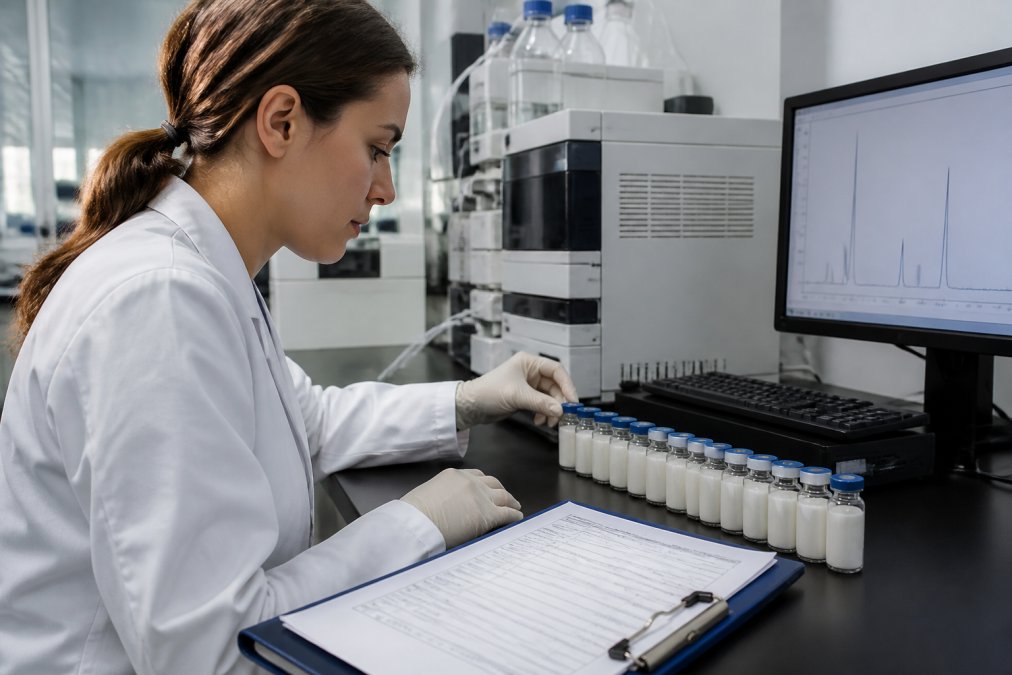
Identifying high purity peptides requires verification at multiple levels: the Certificate of Analysis, independent third-party testing, understanding analytical methods, and confirmation of batch consistency. A 99%+ purity claim is only meaningful when backed by detailed analytical data, confirmed by independent laboratories, and demonstrated across multiple batches. When you’re investing time and resources into research, starting with verified high purity peptides eliminates a major source of experimental variability. Rejuvenation Wellness Solutions LLC provides exactly this level of verification, 99%+ pure peptides with independent lab testing, same-day order fulfillment, and direct customer support to answer your questions about every shipment. Your research deserves peptides you can trust completely.
High quality peptides have a Certificate of Analysis from an independent third-party lab showing purity of 95% or higher, verified through HPLC and Mass Spectrometry. The COA should list the amino acid sequence, molecular weight, and impurity profile. Check that the testing facility is accredited and that batch numbers match your order. Reputable suppliers provide detailed documentation before purchase and stand behind their products with guarantees.
Purity requirements depend on your application. Research-grade peptides typically range from 70% to 98% purity. For most academic and clinical research, 95% or higher is standard. Cell-based assays and in vivo studies often require 98%+ purity to minimize interference from contaminants. Always consult your protocol requirements or institutional guidelines. Suppliers like Rejuvenation Wellness Solutions provide 99%+ pure peptides with independent lab verification for maximum reliability.
Common impurities include residual synthesis reagents (trifluoroacetic acid, acetate salts), incomplete amino acid sequences from failed coupling steps, oxidized methionine, and aggregated peptide chains. The COA should quantify each impurity. By-products from lyophilization and storage degradation also appear in older batches. Mass Spectrometry and HPLC data in your Certificate of Analysis will identify these contaminants and confirm they're within acceptable limits for your research.
Request a Certificate of Analysis before purchasing and verify the testing lab is independent and accredited. Check that the supplier partners with GMP-certified manufacturers or 503B compounding pharmacies. Ask about batch-to-batch consistency testing and whether they offer guarantees on product performance. Legitimate suppliers provide same-day or next-day order processing, transparent pricing, and responsive customer support. Be cautious of suppliers unwilling to share detailed testing data or those offering prices significantly below market rates.
This article was written using GrandRanker