
Last Updated: October 12, 2026
The short answer: you can store most lyophilized peptides at room temperature for weeks, sometimes months, if you control moisture, light, and heat. This guide from Rejuvenation Wellness Solutions LLC explains how to store peptides without a freezer, covering dry and reconstituted forms, travel, and what to do when refrigeration is not an option. (Source: general guidelines for peptide stability)
Peptides are short chains of amino acids. Their stability depends on form, temperature, and how much water they meet.
Below, we break down storage by peptide form, give you a decision framework for freezer-free setups, and flag the mistakes that quietly ruin vials.
Most guides assume you have a freezer. Many researchers do not. That gap is exactly what this guide fills.
Lyophilized peptides are freeze-dried powders with most water removed. That low moisture content is what makes room-temperature storage possible in the first place.
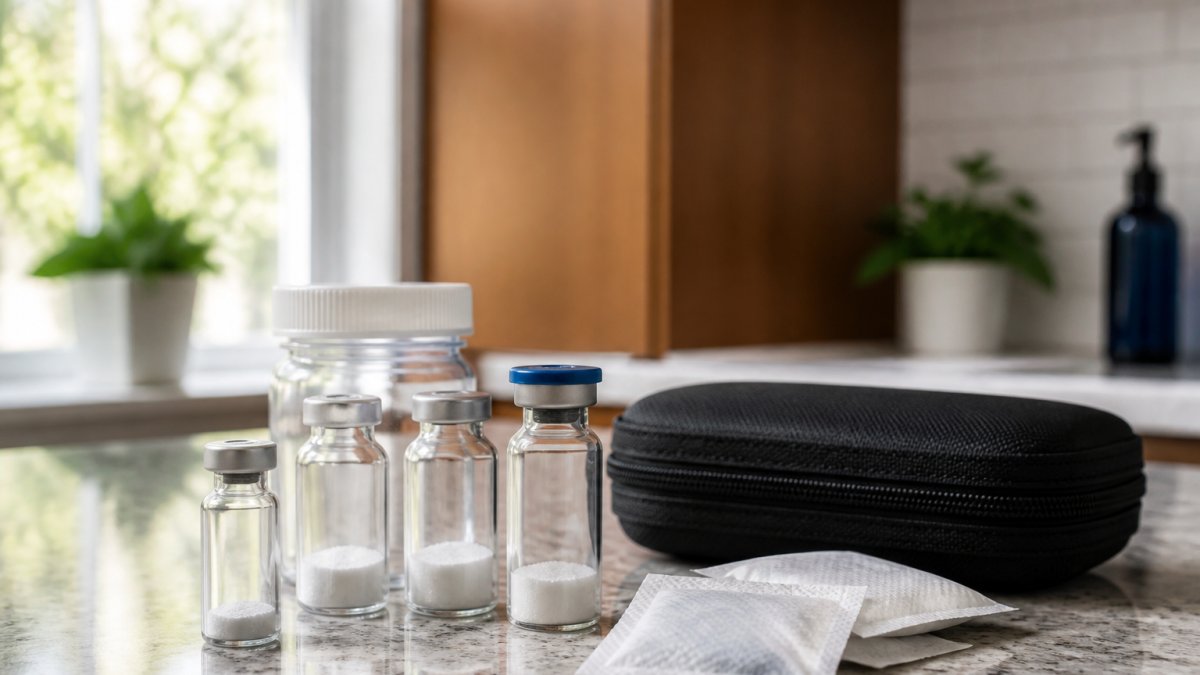
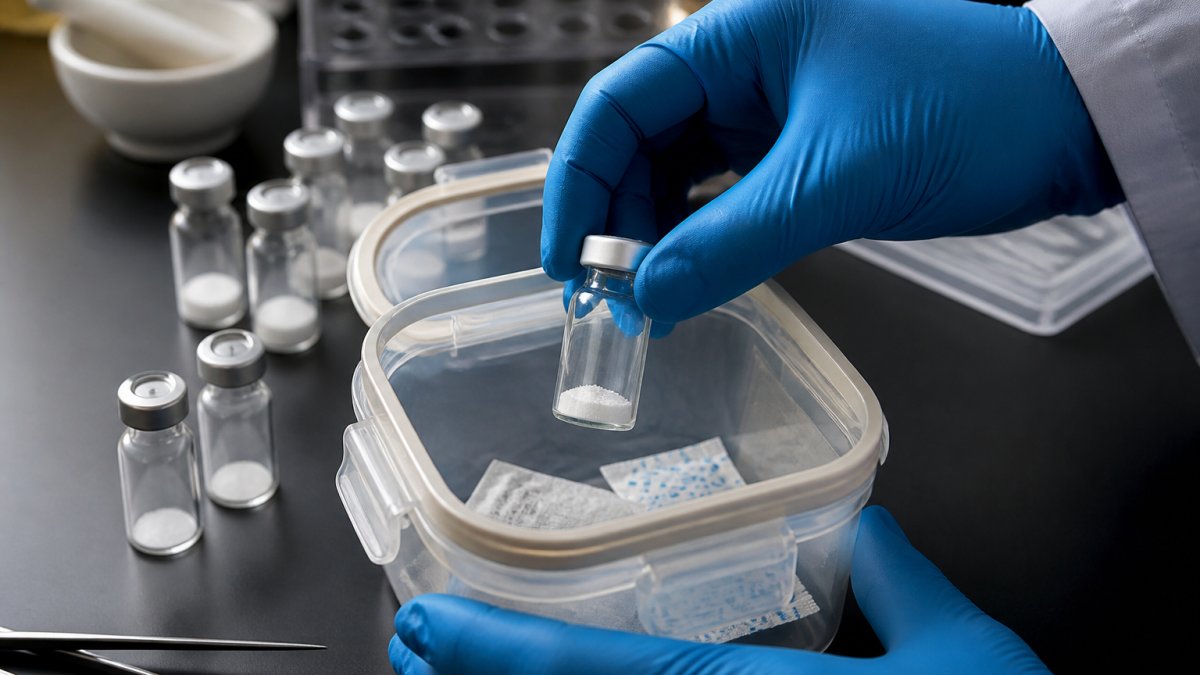
The goal is simple: keep the powder dry, dark, and cool. A sealed vial in an airtight container, kept away from heat and direct light, is the baseline setup.
Room temperature works for short-term storage of dry peptides. Aim for a stable, cool spot, ideally below typical indoor highs, and avoid anywhere that swings with the weather.
Good spots:
Skip the kitchen and garage. Both see temperature and humidity swings that shorten shelf life.
Moisture is the biggest enemy of dry peptides. Humidity drives hydrolysis, the reaction that breaks peptide bonds and reduces potency.
Light exposure comes second. Ultraviolet light can degrade certain amino acid residues over time. Store vials in their original packaging or an opaque container.
Air matters too, but mostly through moisture. Every time you open a vial, humid air gets in.
There is no universal room-temperature shelf life for peptides. Stability depends on the amino acid sequence, the counterion and buffer (if any), residual moisture, vial headspace, and how often the vial is opened. Published stability data is scattered and often assumes refrigeration or freezing, so treat any single number as a starting estimate, not a guarantee.
What the general evidence supports:
A practical way to think about it:
How to use product documentation instead of guessing:
If your protocol requires known potency, the honest answer is that freezer-free room-temperature storage is a short-term bridge, not a long-term substitute for validated cold storage.
Reconstituted peptides are far less forgiving than dry powder. Once you add water, hydrolysis and microbial growth start working against you.
The standard practice is refrigeration at 2 to 8 °C, with a typical working window of a few weeks. Without a freezer, refrigeration is your best option. Without either, your window shrinks fast.
If you have a fridge but no freezer, you are in decent shape for short-term use. Keep the vial sealed, upright, and away from the door where temperatures fluctuate.
If you have neither, options are limited:
None of these match a refrigerator. Treat them as temporary measures.
Sterility is the part most people underestimate. Every time you draw from a vial, you risk introducing bacteria.
Practical rules:
If you cannot refrigerate a reconstituted peptide, shorten your use window and discard sooner rather than later. A cloudy vial is a dead vial.
Travel is where storage plans fall apart. The fix is planning the cold chain before you leave, not during the trip.
For dry peptides, travel is manageable. Keep vials sealed in their original packaging, packed with desiccant, inside a carry-on bag. Avoid checked luggage and hot cars.
For reconstituted peptides, you need active cooling:
Minimize how long reconstituted peptides sit at room temperature during transit. Every hour counts.
Compromised storage rarely announces itself. You have to look for the signs.
Check for:
Any of these points to degradation or contamination. The safe move is to discard the vial and start fresh.
Also track your storage conditions. A simple log of temperature, humidity, and dates tells you when something went wrong and helps you avoid repeating it.
No fridge, no freezer, no cold packs. What is left? The answer depends on whether the peptide is dry or reconstituted, and on how long you need to bridge.
Dry powder is where freezer-free storage actually works. Build a stable micro-environment:
This setup can hold many dry peptides for weeks to a couple of months, but it is not equivalent to refrigeration. Check the CoA and supplier instructions for your specific peptide, and treat any duration as an estimate.
Once water is added, the clock runs fast. Without refrigeration:
A common pattern is to reconstitute only what you can use in a single session when refrigeration is unavailable. That is the safest approach, even if it means more frequent reconstitution.
At Rejuvenation Wellness Solutions LLC, every peptide ships with independent lab testing and a Certificate of Analysis, so you know the purity and handling guidance for your exact batch. Our kits include bacteriostatic dilution water, syringes, and alcohol swabs, which makes sterile handling easier when refrigeration is limited.
If your peptides are lyophilized (dry powder), a short period at room temperature is usually not harmful. Lyophilized peptides are more stable than reconstituted ones and can tolerate brief temperature fluctuations. Check the vial for signs of moisture, clumping, or discoloration. If the powder looks normal and was sealed, it is likely still usable. Reconstituted peptides left out overnight should be inspected for cloudiness or particles and may need to be discarded if sterility is compromised.
Store lyophilized peptides in their original sealed vial, inside an airtight container with a desiccant such as silica gel. Keep them in a cool, dark place away from direct light and heat sources. A closet or cabinet at stable room temperature works if you avoid areas near ovens, windows, or heating vents. Minimize opening the container to reduce moisture exposure. For long-term storage beyond a few months, refrigeration is preferred, but short-term room temperature storage is acceptable for many peptides.
Signs of degradation include discoloration, cloudiness in reconstituted solutions, visible particles, or a change in consistency. Lyophilized powder that has absorbed moisture may appear clumpy or sticky. A previously clear solution turning cloudy or forming precipitate suggests the peptide may no longer be stable. If you suspect degradation, do not use the peptide for research. Proper storage in sealed vials with desiccants and protection from light helps preserve potency and stability.
Use an insulated case with frozen gel packs or a small cooler to maintain a cold chain during transport. For lyophilized peptides, brief room temperature exposure during travel is generally tolerated, but minimize it. Reconstituted peptides need consistent cold storage, so pack them with enough gel packs to last the trip. Avoid placing vials directly against gel packs to prevent freezing. If traveling by air, keep peptides in carry-on luggage and declare them if required by TSA.