

Last Updated: July 20, 2026
Reliable high purity peptide suppliers are critical as labs demand rigorous quality standards. A contaminated batch or mislabeled sequence can invalidate months of work and waste grant funding. The difference between 95% pure and 99%+ pure peptides can determine whether experiments succeed, particularly in receptor binding studies or cell-based assays.
Rejuvenation Wellness Solutions LLC recognizes that researchers need verifiable purity data, transparent sourcing, and consistent quality across batches. According to Nature Reviews Molecular Cell Biology, peptide-based therapeutics have grown into a multi-billion dollar sector, with research-grade peptides serving as critical tools in drug discovery and biotech development.
Three factors separate high purity suppliers from commodity providers: third-party analytical verification, manufacturing transparency (solid-phase vs. solution-phase methods, GMP/ISO certification), and technical accountability.
Peptide purity is a spectrum of quality metrics. When suppliers claim "99% purity," they typically refer to reverse-phase HPLC analysis, measuring the target peptide peak relative to all peaks.
A Certificate of Analysis (COA) is your window into what you’re receiving. Every reputable supplier should provide a COA with every order, detailing analytical methods, purity results, and molecular weight confirmation. HPLC remains the gold standard for peptide analysis because it separates components based on chemical properties and quantifies each one.
The COA should include HPLC method details (gradient conditions, column type, detection wavelength), purity percentage, retention time, and significant impurities. Quality COAs also include solubility testing, showing whether the peptide dissolves in common solvents, critical since a 99% pure peptide that won’t reconstitute becomes useless.
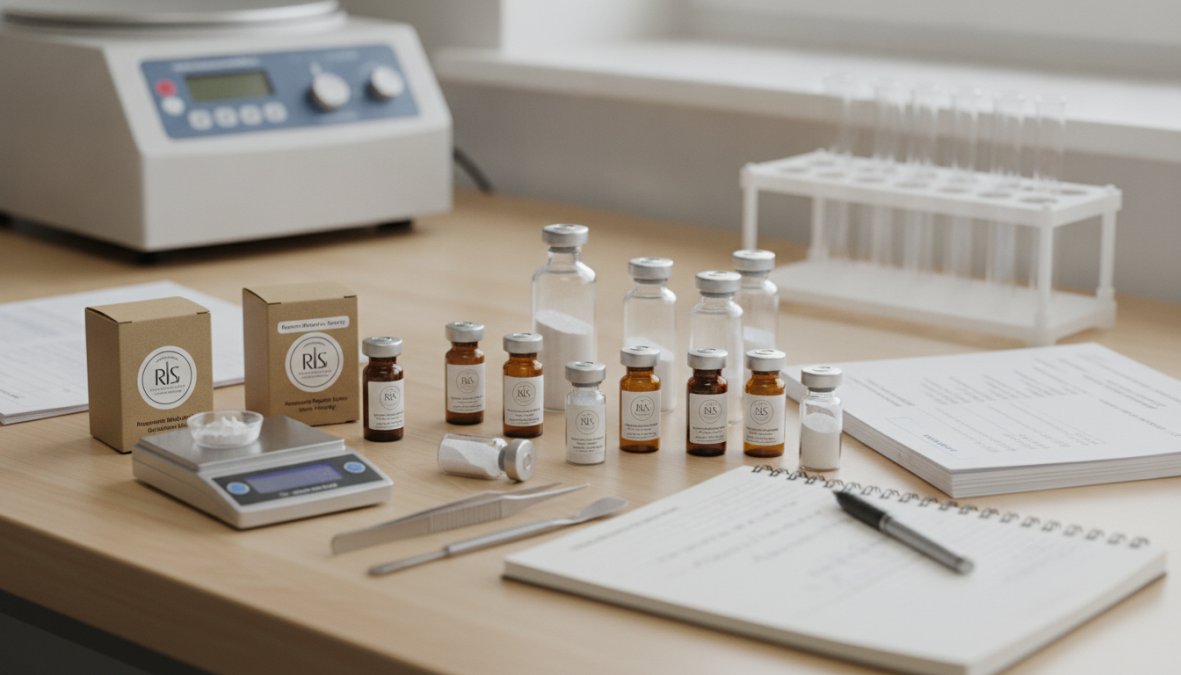
Rejuvenation Wellness Solutions LLC partners with WHO/GMP and ISO-certified manufacturers to ensure every peptide undergoes independent lab testing with comprehensive COA documentation.
While HPLC confirms purity, Mass Spectrometry (MS) confirms identity. HPLC shows how much target peptide is present; MS confirms that peak is actually your peptide, not a similar molecule. For drug discovery or mechanistic studies, MS verification is essential.
Electrospray ionization mass spectrometry (ESI-MS) is standard for peptide verification, measuring mass-to-charge ratios to confirm molecular weight. High purity suppliers using dual analytical methods, HPLC plus MS, demonstrate commitment to quality. This combination catches both purity issues and identity errors.
| Supplier | Starting Price | Best For | Standout Feature | GMP/ISO Certified |
|---|---|---|---|---|
| Rejuvenation Wellness Solutions LLC | Varies by quantity | Individual researchers, small labs | 99%+ purity, comprehensive kits with dilution water and supplies | WHO/GMP, ISO-certified partners |
| GenScript | $3.20/amino acid (crude, 1-30 AA, 4mg) | Fast custom synthesis, complex modifications | TurboTIDE 5-day guarantee for non-complex sequences | ISO 9001 |
| Thermo Fisher Scientific | Quote-based | Enterprise-scale, isotope labeling | HeavyPeptide and LightPeptide AQUA for quantitative proteomics | ISO certified |
| AmbioPharm | Quote-based | GMP-grade APIs, multi-kilogram scale | Hybrid synthesis methods optimizing purity and cost | GMP certified |
| Bachem | Quote-based | Complex peptides, global reach | Express Manufacturing for urgent orders, extensive modification options | GMP/ISO certified |
| PolyPeptide Group | Quote-based | Pharmaceutical development, clinical trials | Six GMP-certified production sites globally | GMP certified |
Rejuvenation Wellness Solutions LLC explicitly serves individual researchers aged 21 and over, not just institutional buyers. The company partners with WHO/GMP and ISO-certified manufacturers, ensuring every peptide meets pharmaceutical-grade standards. Products are 99%+ pure with independent lab testing and COA included with every order. Orders arrive as complete kits including the peptide, bacteriostatic dilution water, sterile syringes, and alcohol swabs, removing friction for researchers unfamiliar with peptide handling.
GenScript’s microwave-assisted PepPower™ platform delivers speed without sacrificing quality. Their TurboTIDE service guarantees 5-day delivery for non-complex sequences. The company offers over 400 modifications, including phosphorylation, PEGylation, and isotope labeling. Starting at $3.20 per amino acid for crude peptides at 4mg scale, GenScript’s pricing is transparent and scales predictably.
Thermo Fisher Scientific synthesizes peptides from 2 to 110 amino acids at scales from 0.1mg to 1kg+. Their HeavyPeptide and LightPeptide AQUA products use stable isotope labeling for quantitative mass spectrometry applications, critical for pharmacokinetic research. Standard production timelines are 2-3 weeks.
AmbioPharm operates as one of the world’s largest custom GMP peptide manufacturers, with capacity from grams to multi-kilogram scales. Their hybrid synthesis approach combines solid-phase and solution-phase methods, optimizing for purity, yield, and cost. For researchers planning to commercialize a peptide or move toward clinical trials, their GMP credentials are invaluable.
Bachem and PolyPeptide Group represent the global pinnacle of peptide manufacturing expertise. Both operate GMP-certified facilities across multiple continents and handle extraordinarily complex peptide structures. Bachem’s Express Manufacturing service handles urgent orders; PolyPeptide’s six GMP-certified production sites globally provide redundancy.
The synthesis method fundamentally affects peptide purity, yield, and cost.
Solid-phase peptide synthesis (SPPS) remains dominant for most research peptides. The peptide chain grows while attached to an insoluble resin, allowing unreacted reagents and byproducts to be washed away between coupling steps. SPPS is fast (days), scalable, and automated, suitable for peptides up to roughly 50 amino acids.
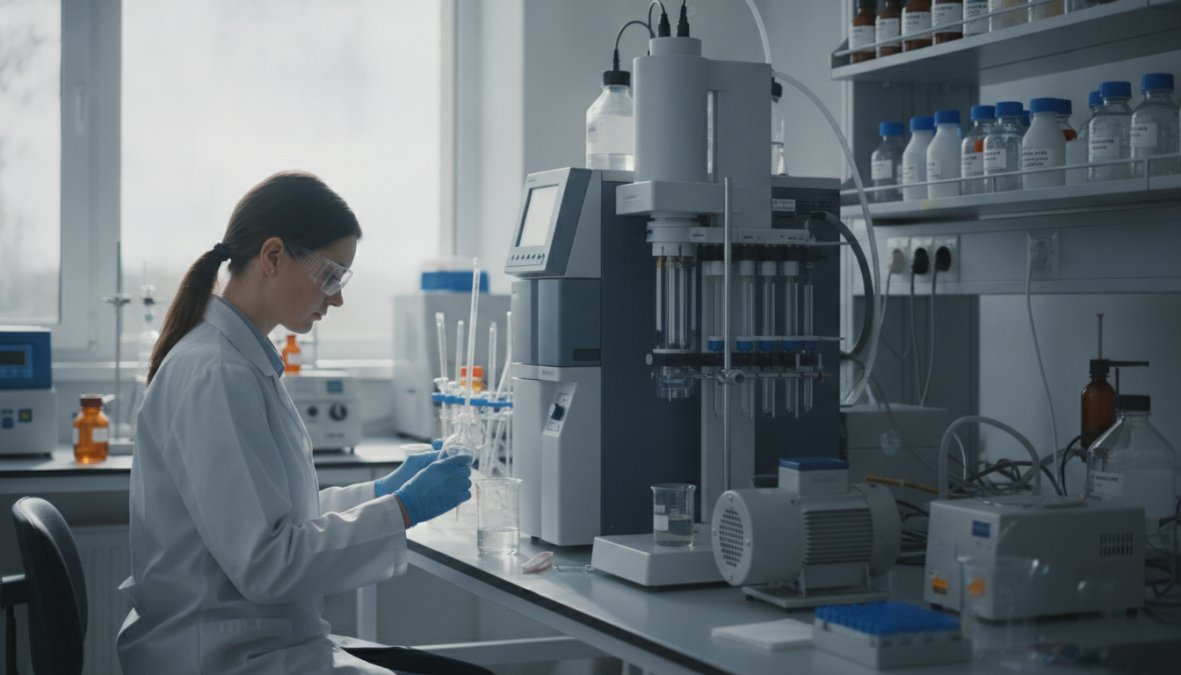
Solution-phase peptide synthesis (LPPS) grows the peptide in solution, eliminating steric hindrance problems for long peptides. However, LPPS is slower, more labor-intensive, and typically more expensive because intermediates must be isolated and purified between steps.
High purity suppliers often use hybrid approaches, combining SPPS efficiency with LPPS flexibility for challenging sequences.
After synthesis, every peptide undergoes analytical verification. Standard workflow includes HPLC for purity, MS for identity confirmation, and often amino acid analysis for quantitation.
HPLC produces a chromatogram showing all peaks in your sample. The target peptide peak should be largest. Quality control flags samples where the target peak is below claimed purity and either re-synthesizes or reports actual purity.
Mass spectrometry provides orthogonal verification. The intact mass should match calculated molecular weight. Deviations indicate modifications like oxidation (16 mass units) or deamidation (18 mass units), which should be documented in the COA.
GMP (Good Manufacturing Practices) compliance represents commitment to reproducibility, documentation, and quality. Researchers moving toward clinical applications need to understand GMP requirements.
The FDA defines GMP standards for pharmaceutical manufacturing, including peptide APIs. The ICH harmonizes requirements across US, EU, and Japan. The EMA enforces standards in Europe. Together, these bodies ensure pharmaceutical-grade peptides meet consistent quality standards globally.
GMP compliance requires documented procedures for every synthesis step, purification, and analysis. Raw materials must be tested and documented. Equipment must be qualified and maintained. For research-grade peptides, GMP compliance is often unnecessary and adds significant cost. For clinical use, GMP compliance is mandatory.
USA-based peptide manufacturing offers regulatory alignment, quality consistency, and intellectual property protection. USA-based manufacturing typically costs more than international suppliers, reflecting higher labor costs and stricter oversight. For researchers concerned about IP protection or planning commercialization, USA-based manufacturing is worth the premium.
Rejuvenation Wellness Solutions LLC partners with USA-based WHO/GMP and ISO-certified manufacturers, providing researchers pharmaceutical-grade standards with domestic supply chain security.
Peptide pricing varies from $3 per amino acid for simple crude peptides to $300+ per amino acid for heavily modified research-grade sequences.
Purity is the primary cost driver. Crude peptides (80-85% pure) cost least because they require minimal purification. Research-grade peptides (95%+ pure) undergo preparative HPLC purification, adding cost but dramatically improving reliability. Pharmaceutical-grade peptides (>99% pure) undergo additional purification and verification, appropriate for clinical applications.
Quantity dramatically affects unit cost. A 5mg order might cost $30/mg; 50mg might cost $8/mg; 500mg might cost $4/mg. Rejuvenation Wellness Solutions LLC provides transparent pricing based on quantity, purity level, and sequence complexity.
Standard peptides consist of 20 common amino acids. Custom modifications add cost through specialized reagents and additional synthesis steps. Phosphorylation adds 10-20%. Acetylation adds 5-10%. PEGylation can double or triple cost. Cyclization adds 20-50%. Fluorescent labeling adds 15-30%. Isotope labeling adds 20-40%.
Even high purity peptides from reputable suppliers can encounter problems.
Peptides degrade through oxidation (especially methionine and tryptophan), hydrolysis (peptide bond cleavage), and aggregation. Proper storage extends lifespan dramatically.
Lyophilized peptides stored at -20°C remain stable for years. Room temperature storage degrades them within weeks. Peptide solutions at -20°C remain stable for months to a year; at 4°C they degrade faster. Humidity and light accelerate degradation.
Start with the supplier’s recommended reconstitution protocol. If the peptide doesn’t dissolve, troubleshoot systematically: verify correct solvent, try gentle warming (37°C), use sonication to break clumps, or add small amounts of organic solvent (5-10% DMSO or ethanol).
If the peptide still won’t dissolve, contact your supplier. Persistent insolubility suggests synthesis error or handling problems. Good suppliers investigate and either re-synthesize or provide refunds.
Selecting a peptide supplier affects your research timeline, budget, and results.
Verify certifications: ISO 9001 indicates quality management compliance; ISO 13485 suggests pharmaceutical focus; WHO/GMP certification means World Health Organization Good Manufacturing Practices compliance.
Evaluate analytical support. Can the supplier provide COA data before ordering? Will they discuss your sequence and warn about synthesis challenges? Do they offer technical support if your peptide doesn’t work as expected?
Assess reliability through independent reviews and references. Contact other researchers who’ve used their peptides. Ask whether peptides worked as expected, whether purity claims were accurate, and about customer service experience.
Price matters, but shouldn’t be the only factor. A 15% cheaper peptide that fails your assay costs far more in wasted time. Mid-tier suppliers often deliver excellent quality at reasonable prices.
For individual researchers and small labs, Rejuvenation Wellness Solutions LLC offers affordable access to 99%+ pure peptides, comprehensive kits, independent lab testing with COA, and explicit support for individual researchers. For larger labs with complex needs, GenScript, Thermo Fisher, or Bachem offer extensive modification options and larger scale capabilities. For GMP-grade production or clinical development, AmbioPharm or PolyPeptide provide regulatory expertise and manufacturing capacity.
Selecting high purity peptide suppliers requires balancing quality, cost, timeline, and support. Rejuvenation Wellness Solutions LLC serves individual researchers with affordable, verified-pure peptides backed by independent lab testing and comprehensive product kits. Their partnerships with WHO/GMP and ISO-certified manufacturers ensure pharmaceutical-grade quality regardless of research scale.
High purity typically refers to peptides that are 99%+ pure, verified through analytical methods like HPLC and mass spectrometry. Purity matters because contaminants can interfere with research results, compromise reproducibility, and affect biological activity. Certificates of Analysis (COAs) from third-party testing provide proof of purity levels and amino acid composition, ensuring your research peptides meet the standards required for reliable outcomes.
Request and review the Certificate of Analysis (COA) before purchasing. Legitimate high purity peptide suppliers provide COAs showing HPLC chromatograms, mass spectrometry data, and analytical verification. Look for suppliers partnered with WHO/GMP and ISO-certified manufacturers, and verify third-party independent lab testing. Reputable suppliers will share detailed analytical data transparently and allow you to review reports before commitment.
Research-grade peptides are suitable for laboratory studies and may have purity levels from 80-98%, with less stringent manufacturing oversight. GMP-grade peptides meet Good Manufacturing Practices standards required for pharmaceutical development and clinical trials, typically featuring 99%+ purity and comprehensive documentation. GMP manufacturing involves stricter quality control, regulatory compliance (FDA, ICH, EMA), and higher costs. Choose based on your application: research-grade for exploratory work, GMP-grade for clinical or commercial development.
Leading suppliers use HPLC (High-Performance Liquid Chromatography) to measure purity and identify impurities, and Mass Spectrometry (MS) to confirm molecular weight and peptide sequence accuracy. Many also perform amino acid analysis (AAA) and endotoxin screening. These peptide quality control methods work together to verify that your peptides meet stated specifications. Every product should include a technical package documenting these analyses in the Certificate of Analysis.
Yes, several established USA-based manufacturers offer high-purity research peptides with GMP capabilities. USA-based manufacturing offers advantages including faster shipping, easier regulatory compliance verification, and direct customer support. Suppliers partnered with WHO/GMP and ISO-certified manufacturers in the US provide transparent quality standards and independent lab testing. Verify certifications and request COAs to confirm legitimacy before purchasing.
This article was written using GrandRanker








