
Last Updated: August 2, 2026
Peptides are delicate molecules susceptible to degradation through hydrolysis, oxidation, and bacterial contamination. Improper storage destroys research value faster than almost any other controllable variable in the lab workflow. A single storage mistake, leaving a vial at ambient temperature or exposing it to light, can reduce peptide potency by 50% or more within weeks.
This guide covers best practices for peptide storage from initial receipt through long-term archival, showing you how to protect your peptides at every stage and maintain shelf-life integrity across your research program.
Most peptide degradation occurs not from lack of knowledge but because storage protocols drift over time. The biggest mistake is treating all peptides identically. Lyophilized peptides have vastly different requirements than reconstituted solutions. Peptides containing methionine or cysteine residues are prone to oxidation in ways others are not.
Common failures include:
Each failure has a straightforward fix once you understand the mechanism.
Temperature governs peptide stability through the Arrhenius relationship: a 10°C drop roughly halves the degradation rate.
Ambient temperature storage limits. Room temperature (68-72°F) is acceptable only for 2 to 4 weeks maximum. Beyond this timeframe, measurable potency loss occurs.
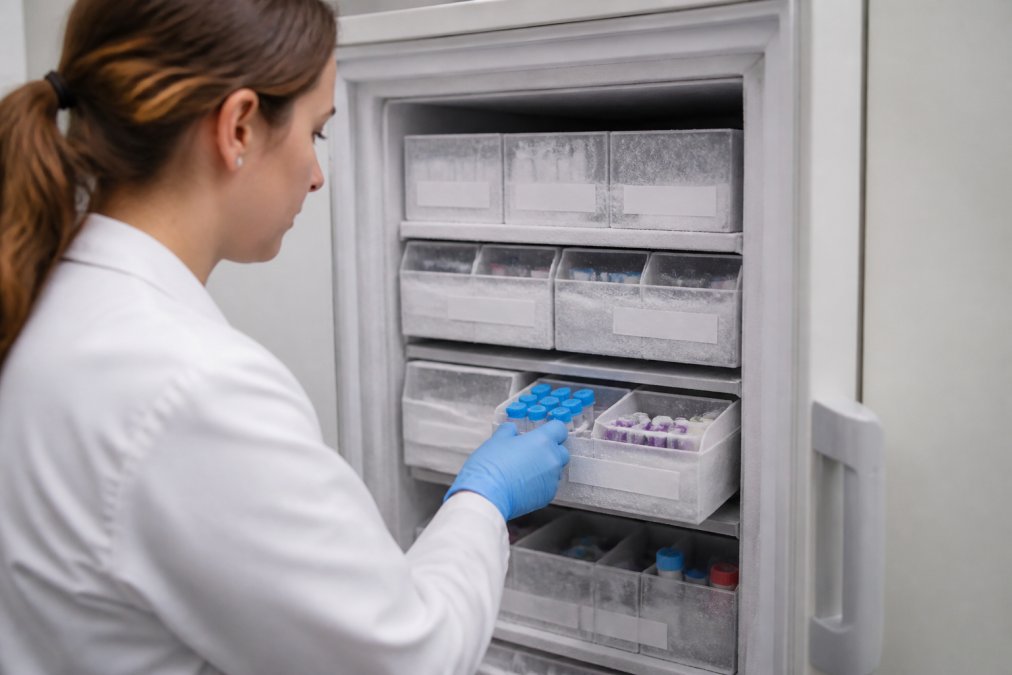
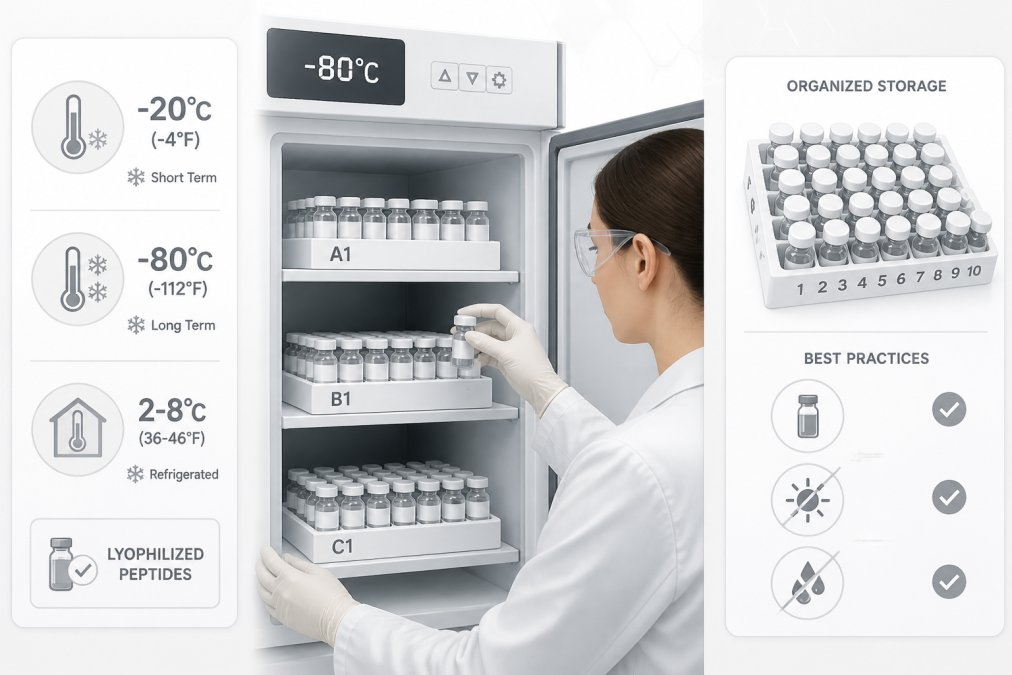
Refrigeration vs. freezer storage. Standard refrigerator temperature (35-46°F) extends shelf-life to 6 to 12 months for most lyophilized peptides. Freezer storage at 0°F or below extends stability to 1 to 3 years. A peptide stored in a freezer retains potency roughly 4 times longer than one in a refrigerator.
Freezer storage introduces one trade-off: moisture ingress during thaw cycles. When a frozen vial warms, condensation forms on interior surfaces, triggering hydrolysis. Allow vials to equilibrate to room temperature while sealed before opening, or use desiccant packets inside the vial to absorb moisture.
Cryogenic storage for long-term stability. Liquid nitrogen storage at −196°C or ultra-low freezers at −80°C represent the gold standard for multi-year stability. Peptides stored cryogenically show minimal degradation over 5+ years. This approach is essential for rare or expensive peptides, long-term reference standards, peptides with known oxidation susceptibility, or research programs spanning years.
Reconstitution activates hydrolysis pathways. Your goal is to slow these pathways while maintaining usability.
Choosing the right solvent and buffer. Water alone is a poor choice for peptide storage. Use bacteriostatic water (sterile water containing 0.9% benzyl alcohol) or a buffered solution. Common buffers include phosphate-buffered saline (PBS) at pH 7.4 and acetate buffers at pH 4.0-5.0. Acidic buffers (pH 3.0-5.0) slow hydrolysis compared to neutral pH.
Add preservatives to prevent bacterial growth. Benzyl alcohol (0.9%) is standard in bacteriostatic water. EDTA (ethylenediaminetetraacetic acid) at 1-5 mM chelates metal ions that catalyze oxidation.
Reconstitution best practices and sterile technique. Work in a biosafety cabinet using aseptic technique. Sterilize your syringe and needle with 70% ethanol. Draw bacteriostatic water or buffer slowly to avoid foam formation. After adding solvent, let the vial sit at 4°C for 30 minutes to allow full dissolution. Gently swirl the vial; do not vortex aggressively.
Storage duration for reconstituted solutions. Most reconstituted peptides remain stable for 1 to 2 weeks at 4°C. If you need longer stability, divide the reconstituted peptide into small aliquots and freeze them at −20°C or −80°C. Frozen aliquots typically remain stable for 3 to 6 months. Thaw once, use what you need, and discard the remainder. Do not refreeze.
Hydrolysis, oxidation, and sequence-dependent stability. Hydrolysis breaks peptide bonds through water molecules and accelerates at higher temperatures and non-neutral pH. Acidic buffers (pH 3-5) slow hydrolysis compared to neutral pH.
Oxidation attacks methionine and cysteine residues. Methionine oxidation is reversible and often tolerable. Cysteine oxidation leads to disulfide bond formation, causing aggregation and loss of activity. Peptides containing these residues require aggressive antioxidant protection.
Peptides with high proportions of hydrophobic amino acids tend to aggregate in aqueous solutions. Those with aromatic residues (phenylalanine, tryptophan, tyrosine) absorb ultraviolet light and initiate oxidation reactions.
Light, moisture, and contamination control. Ultraviolet light (especially 254-280 nm) drives oxidation in peptides containing aromatic or sulfur-containing residues. Store all peptides in opaque, light-blocking containers. Amber glass vials are standard.
Moisture triggers hydrolysis. Lyophilized peptides should be stored in sealed vials with desiccant packets. Silica gel desiccants work well; molecular sieves (3Å or 4Å) are superior. Replace desiccants every 6 to 12 months.
Contamination introduces bacteria and fungi that consume peptides or produce degradative enzymes. Use sterile technique during reconstitution. If you notice cloudiness, discoloration, or unusual odor, discard the solution immediately.
Troubleshooting degraded peptides. Oxidation produces brown or yellow discoloration. Hydrolysis produces a pH shift and loss of peptide mass. Aggregation causes cloudiness or precipitation. Once you identify the mechanism, adjust your storage protocol: add antioxidants (ascorbic acid at 1-5 mM or DTT at 1-10 mM) for oxidation, lower pH or reduce temperature for hydrolysis, or use sterile technique and preservatives for contamination.
For future batches, request peptides with a Certificate of Analysis from your supplier confirming purity and stability data. At Rejuvenation Wellness Solutions LLC, every product undergoes independent lab testing with a Certificate of Analysis for safety and purity, allowing you to verify baseline quality before storage begins.
Vial materials and adsorption prevention. Glass vials are the standard. Borosilicate glass (Type I or Type II) is chemically inert and does not leach contaminants. Avoid soda-lime glass, which can release sodium and calcium ions.
Plastic vials are convenient but problematic. Many peptides, particularly hydrophobic ones, adsorb to plastic surfaces, reducing effective concentration. If you must use plastic, coat the interior with a hydrophilic polymer or use vials specifically designed for peptide storage.
Lyophilized peptides are best stored in glass vials with rubber-lined caps. For long-term storage, use caps with PTFE (polytetrafluoroethylene) liners rather than rubber, as PTFE provides superior moisture barriers.
Desiccant selection and moisture barriers. Silica gel desiccants are inexpensive and effective, changing color as they absorb moisture. Molecular sieves (3Å pore size) absorb water more aggressively and are preferred for critical applications. Place desiccant packets directly in the vial with lyophilized peptide, using small packets (0.5 to 1 gram).
Container compatibility with solvents and buffers. Organic solvents like DMSO can degrade rubber seals. If using organic solvents, use glass vials with PTFE-lined caps. Acidic buffers (pH < 4) can leach ions from glass over extended periods; consider polypropylene vials coated with hydrophilic polymer for storage longer than 6 months.
Aliquot preparation to minimize repeated thawing. Divide your reconstituted peptide into small portions immediately after reconstitution, before any degradation occurs. Use sterile technique and work quickly to minimize air exposure. Typical aliquot sizes are 50 to 100 microliters. Label each aliquot with the date, peptide name, concentration, and batch number.
Freeze aliquots at −20°C or −80°C. When you need to use one, thaw it, use what you need, and discard the remainder. Do not refreeze.
Safe thawing and vortexing techniques. Thaw aliquots slowly at 4°C rather than at room temperature. Slow thawing reduces ice crystal formation that can aggregate peptides. Allow at least 30 minutes for a typical aliquot to thaw completely.
Once thawed, gently mix by swirling or inverting the vial. Do not vortex aggressively, as this introduces air and foam, increasing surface area for oxidation.
Centrifugation and sample preparation. Before using a thawed aliquot, centrifuge it briefly (5 minutes at 1,000-2,000 × g) to remove aggregates or particulates. Transfer the supernatant to a fresh tube for your experiment. This step is especially important for peptides stored several months.
Temperature-controlled packaging during transport. Lyophilized peptides can tolerate brief exposure to ambient temperature during shipping. A 2 to 3-day transit at room temperature will not significantly degrade most peptides. Reconstituted peptides require cold-chain logistics.
Request shipping with insulated boxes and ice packs if receiving reconstituted peptides. The supplier should use enough ice to maintain 4°C throughout transit. Track the shipment and inspect ice packs immediately upon arrival.
Rejuvenation Wellness Solutions LLC offers UPS 2-day air shipping with temperature-controlled packaging.
Maintaining stability across shipping timeframes. For lyophilized peptides, standard insulated shipping with room-temperature packing is adequate. For reconstituted peptides, request overnight or 2-day expedited shipping with cold packs rated to maintain temperature for 48-72 hours.
When you receive peptides, inspect the packaging immediately. Look for signs of temperature excursion: melted ice, condensation inside the box, or vials that are noticeably warm. If you suspect temperature abuse, contact the supplier immediately.
Documentation and expiration tracking. Maintain a detailed inventory of all peptides in storage. Record the peptide name, sequence, source, date received, storage location, temperature, and expected expiration date. Update this inventory monthly.
Calculate expiration dates based on storage conditions. Lyophilized peptides at −20°C typically expire 2-3 years from receipt. Reconstituted peptides at 4°C expire 1-2 weeks from preparation. Reconstituted peptides at −20°C expire 3-6 months.
Verifying peptide integrity before use. Before using a peptide in critical experiments, verify that it remains intact. Run a small sample through high-performance liquid chromatography (HPLC) or mass spectrometry to confirm molecular weight and purity. For long-term storage (>1 year), verify integrity every 6-12 months.
If you notice a decline in peptide quality, lower purity, unexpected peaks in HPLC, or reduced activity in functional assays, adjust your storage protocol immediately.
| Storage Condition | Timeframe | Best Use Case | Key Precautions |
|---|---|---|---|
| Ambient (68-72°F) | 2-4 weeks | Short-term use only | Protect from light; use desiccants |
| Refrigerator (35-46°F) | 6-12 months | Standard research | Minimize freeze-thaw cycles |
| Freezer (−20°C) | 1-3 years | Long-term lyophilized storage | Allow equilibration before opening |
| Ultra-low (−80°C) | 3-5 years | Critical archives | Requires specialized equipment |
| Liquid nitrogen (−196°C) | 5+ years | Multi-year programs | Specialized training required |
Proper peptide storage conditions are the foundation of reproducible research. Temperature control, moisture management, light protection, and careful handling directly translate to better experimental outcomes. When you receive peptides from a trusted supplier like Rejuvenation Wellness Solutions LLC, which provides 99%+ pure products with independent lab testing and a Certificate of Analysis, you’re starting with verified quality. Maintain that quality through the storage protocols covered in this guide, and your research will benefit from stable, reliable peptide materials throughout your program.
Lyophilized peptides are most stable at -20°C or colder, though some remain stable at 2-8°C for shorter periods. Ambient temperature storage is generally limited to days or weeks depending on the peptide sequence and environmental humidity. For long-term storage beyond one year, cryogenic freezing at -80°C or lower is recommended. Always verify specific requirements with your peptide's Certificate of Analysis, as sequence-dependent factors affect stability at each temperature.
Reconstituted peptides should be stored at 2-8°C in sterile vials immediately after preparation. Most reconstituted solutions remain stable for 2-4 weeks under refrigeration, though this varies by peptide composition and buffer pH. Prepare aliquots to minimize freeze-thaw cycles, and store in sterile, sealed containers away from light. If longer storage is needed, freeze reconstituted solutions at -20°C or lower, but expect some degradation with each thaw cycle.
Yes, repeated freeze-thaw cycles can cause peptide degradation through hydrolysis, oxidation, and protein aggregation, especially in reconstituted solutions. Minimize damage by preparing small aliquots sized for single use, avoiding repeated thawing of the same vial. Thaw slowly at 2-8°C rather than at room temperature, and use gentle mixing instead of vigorous vortexing. Plan your research schedule to use each aliquot once when possible.
Glass vials with inert liners are preferred for peptide storage, as they prevent adsorption better than plastic containers. Borosilicate glass vials with polytetrafluoroethylene (PTFE)-lined caps minimize peptide loss to container walls. For lyophilized peptides, ensure vials are sealed with desiccant packs to prevent moisture absorption. Avoid polystyrene or regular plastic vials, which can absorb hydrophobic peptides. Verify container compatibility with your specific solvents and buffers, as some peptides may interact differently with various materials.
Signs of peptide degradation include visible discoloration, precipitation, crystallization, or changes in solubility when reconstituted. If you suspect degradation, check your Certificate of Analysis to compare original purity against current expectations. Degraded peptides may show reduced efficacy in your research but aren't necessarily unsafe to use. Prevent future degradation by storing at appropriate temperatures, protecting from light and moisture, minimizing freeze-thaw cycles, and using fresh desiccant in storage containers. Contact your supplier if degradation occurs within the stated shelf-life.
Both bacteriostatic water and saline are commonly used, but choice depends on your peptide's pH stability and your research protocol. Bacteriostatic water is sterile and contains benzyl alcohol as a preservative, making it suitable for most peptides and longer storage of reconstituted solutions. Saline (0.9% sodium chloride) may be preferred if your peptide requires specific osmolarity or if you're preparing solutions for certain applications. Always verify pH compatibility with your peptide, as pH sensitivity affects stability and solubility during storage.
Store peptides in opaque or amber-colored vials to block ultraviolet light, which accelerates oxidation and degradation. Keep vials in a dark location away from direct sunlight and fluorescent lighting. Use fresh desiccant packs in sealed containers to maintain low humidity and prevent hygroscopic peptides from absorbing moisture, which triggers hydrolysis. For long-term storage, store in sealed, airtight containers with desiccant and consider nitrogen-flushed vials if available. Check desiccant condition regularly and replace when saturated.
This article was written using GrandRanker