Research peptides lose potency every day they sit at the wrong temperature. This guide from Rejuvenation Wellness Solutions LLC explains how to store research peptides long term so samples stay stable for months or years, not weeks.
Key Takeaway The single biggest factor in long-term peptide storage is state: dry lyophilized powder lasts far longer than reconstituted solution. Decide which one you’re storing before anything else.
Peptide Storage Temperature Guidelines
Temperature is the first lever you control, and lyophilized powder and reconstituted solution need different conditions.
Lyophilized Powder Storage Temperatures
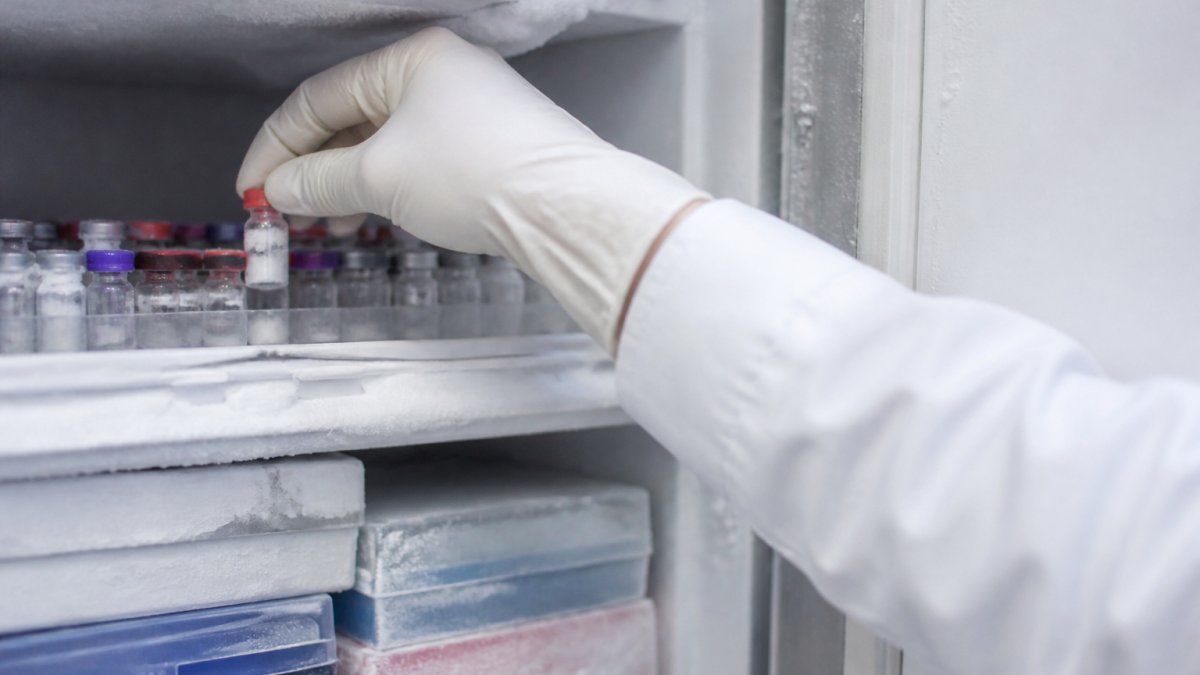
Lyophilized powder is the most stable form of a research peptide, stored at -20°C for routine work and -80°C for long-term archiving.
Short-term (weeks to a few months): -20°C freezer
Long-term (months to years): -80°C ultrafreezer
Transit or brief holding: refrigerated, sealed, and away from light
Reconstituted Solution Storage Temperatures
Reconstituted peptide should be stored cold and used quickly. Refrigeration at 2-8°C is standard and slows hydrolysis.
How Long Does Reconstituted Peptide Shelf Life Last?
Reconstituted peptide shelf life is shorter than most people expect: once you add diluent, degradation accelerates.
As a working rule:
Reconstituted solution in the fridge: days to a few weeks, depending on the peptide
Frozen aliquots: longer, but each thaw costs you stability
Lyophilized powder: months to years when stored cold and dry
Watch Out Never store reconstituted peptide at room temperature for extended periods. Warmth speeds hydrolysis and oxidation, and a vial left out overnight may degrade faster than weeks in the fridge.
Peptide Degradation Factors That Shorten Shelf Life
Degradation is several processes running at once, each with a different fix.
Freeze-Thaw Cycles and Their Impact
Every freeze-thaw cycle stresses a peptide: ice crystals and shifting concentrations drive aggregation and loss of solubility.
Contamination and Hygroscopic Risks
Bacterial contamination is a quiet killer: repeated opening, non-sterile tools, or warm storage invites microbes that break down the peptide and cloud results.
Degradation Factor
What It Does
Practical Fix
Hydrolysis
Water breaks peptide bonds
Keep powder dry, store cold
Oxidation
Oxygen damages residues
Use inert atmosphere, limit air
Freeze-thaw cycles
Causes aggregation
Aliquot before freezing
Contamination
Microbes degrade sample
Sterile tools, sealed vials
Moisture uptake
Feeds hydrolysis
Desiccator with desiccant
Step-by-Step Protocol for Long-Term Peptide Storage
This protocol suits a general research peptide, lyophilized or reconstituted. Hands-on time is roughly 30-45 minutes per batch, plus freezer equilibration.
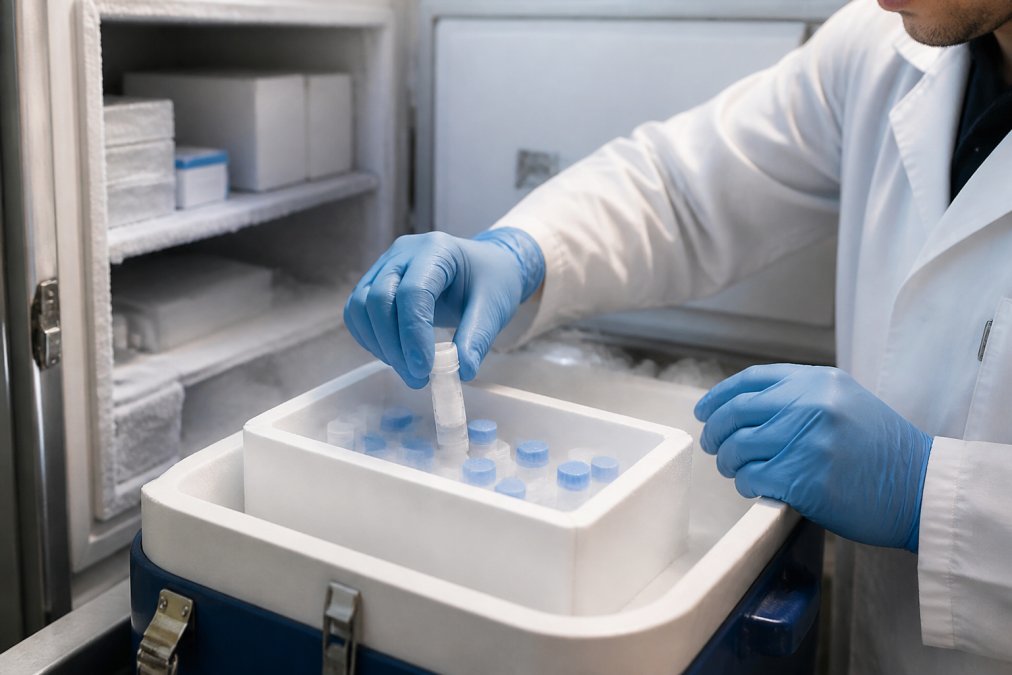
Researcher placing labeled vials of research peptides into a cryogenic storage box on dry ice
Lyophilized peptide vials (borosilicate glass preferred; see the vial compatibility section below)
Low-binding polypropylene microcentrifuge tubes for aliquoting
Bacteriostatic water (0.9% benzyl alcohol) or sterile water for reconstitution
Desiccant (silica gel or indicating beads) and an airtight desiccator or heat-sealed foil pouch
Cryogenic storage box rated for -80°C
Cryogenic-rated labels and a permanent marker
Calibrated freezer thermometer or a data logger
Optional: argon or nitrogen for headspace displacement
Confirm the form and read the Certificate of Analysis. Note whether the peptide arrived lyophilized or in solution, plus purity, salt form (acetate vs. TFA), and recommended storage temperature. TFA salts are common from reverse-phase purification but less desirable for some assays; acetate salts are often preferred for stability work.
Equilibrate vials before opening. If a lyophilized vial shipped cold, let it sit sealed at room temperature for 20-30 minutes. Opening a cold vial pulls ambient moisture onto the powder, which hygroscopic peptides absorb.
Label everything before you open anything. Record peptide name, lot number, date received, date opened, reconstitution date, diluent, final concentration, and initials. Use cryogenic labels, paper labels lift off at -80°C.
Store lyophilized powder cold and dry. Use -20°C for routine work and -80°C for archiving beyond a year. Seal vials in a desiccator or heat-sealed foil pouch with fresh desiccant, and avoid frost-free freezers, which cycle above freezing and introduce moisture.
Reconstitute only what you’ll use in the near term. Add diluent gently down the vial wall, not onto the pellet. Swirl; do not vortex or shake, since shear promotes aggregation. If slow to dissolve, brief warming in your hand is enough, avoid heat.
Aliquot immediately after reconstitution. Split into single-use polypropylene tubes, filling 50-80% of capacity for expansion headspace and to avoid cracking at -80°C. Cap tightly.
Choose the right storage temperature for the aliquot. Use 2-8°C for use within a week or two; freeze at -20°C or below for longer intervals. Not every peptide tolerates freezing, some aggregate on freeze-thaw, so check supplier guidance first.
Displace headspace for oxidation-sensitive peptides. Sequences containing methionine, cysteine, tryptophan, or histidine oxidize readily; a brief argon or nitrogen blanket before sealing slows that pathway.
Log and monitor. Check the freezer’s set point against a calibrated thermometer or data logger at least weekly, noting power interruptions, door-open events, or defrost cycles. A paper log on the freezer door suffices for most labs.
Thaw one aliquot at a time, on ice or at room temperature, and use it fully. Do not refreeze leftovers; if you must hold thawed solution briefly, keep it at 2-8°C and use within the working day.
Pro Tip If you handle many peptides, assign each one a short internal code (for example, P-001, P-002) and keep a master spreadsheet mapping code to sequence, lot, and storage location. It saves hours when you need to find a specific vial in a -80°C box.
Vial Material Compatibility and Stabilizing Agents
Most storage guides stop at temperature, but the container and buffer can matter as much as the freezer setting, especially for dilute peptides, where surface loss stays invisible until your assay comes up short.
Glass vs. Plastic: What Actually Happens at the Surface
Peptides adsorb onto container walls through hydrophobic and electrostatic interactions. The effect is concentration-dependent: the more dilute the solution, the larger the fraction lost to the surface.
Borosilicate glass (Type I) is the standard for lyophilized storage. It is chemically inert, has low extractables, and tolerates -80°C and below. Use it for long-term archiving of powder.
Type II (treated soda-lime) glass is acceptable for short-term aqueous storage but is not ideal for long-term archiving.
Polypropylene (PP) is the workhorse for aliquots. It is cheap, tolerates freezing, and has lower peptide adsorption than polystyrene. Low-binding PP tubes are surface-treated to further reduce adsorption and are worth the small premium for dilute samples.
Polystyrene (PS) and polycarbonate (PC) are poor choices for peptide storage, PS adsorbs peptides readily, and PC can leach bisphenol A under some conditions.
Avoid PVC and any container with plasticizers (DEHP, DINP) for long-term contact with peptide solutions.
Buffers and pH: The Chemistry Behind Stability
Peptide stability is pH-sensitive: the wrong pH accelerates hydrolysis (especially near aspartate and asparagine residues) and drives deamidation of asparagine and glutamine. Most research peptides prefer a mildly acidic to neutral range, but the exact window depends on sequence.
Common choices and their trade-offs:
Acetic acid (typically 0.1% in water), widely used for lyophilized peptides, especially basic peptides that need an acidic counterion. Volatile, so it does not concentrate during lyophilization.
Trifluoroacetic acid (TFA), a common residual counterion from reverse-phase HPLC purification. TFA salts can be problematic for cell-based assays and can affect some analytical methods, so many researchers exchange to acetate before use.
Phosphate-buffered saline (PBS), convenient for biological work but a poor long-term choice for storage because phosphate can catalyze some degradation pathways and PBS supports microbial growth.
Ammonium acetate or ammonium bicarbonate, volatile, lyophilization-friendly, and gentle on most peptides.
HEPES and Tris, fine for short-term handling but not ideal for long-term frozen storage; both can participate in side reactions over time.
Stabilizing Agents and Bulking Agents
Excipients protect peptides during freezing and drying by reducing ice-crystal damage and preserving structure.
Sugars, sucrose, trehalose, and glucose are common cryoprotectants and lyoprotectants. Trehalose in particular is well known for stabilizing proteins and peptides during freeze-drying.
Polyols, mannitol and sorbitol act as bulking agents, giving the lyophilized cake structure and improving reconstitution.
Amino acids, glycine and arginine are used as bulking agents and, in the case of arginine, to suppress aggregation.
Surfactants, polysorbate 20 or 80 at low concentrations can reduce surface adsorption and aggregation, though they can interfere with some assays.
Antioxidants, for oxidation-prone sequences, low levels of ascorbic acid or a chelator like EDTA (to bind trace metals that catalyze oxidation) can help.
Pro Tip For very dilute peptides, use low-binding tubes and add a carrier protein if your protocol allows. It cuts surface adsorption, which is a common and invisible source of sample loss.
Watch Out Do not assume a peptide that looks fine is fine. Adsorption and deamidation are invisible in the vial. If your assay results drift lower over time, suspect surface loss or buffer-related degradation before you suspect the peptide itself.
Common Storage Mistakes to Avoid
Small errors cause most peptide loss. The most common:
Storing reconstituted peptide at room temperature
Refreezing a vial multiple times instead of aliquoting
Leaving vials open to air and moisture
Skipping labels, then losing track of batch and date
Using the frost-free freezer, which cycles temperature and adds moisture
Ignoring visual signs of degradation
Visual indicators include cloudiness, color change, and particles or precipitate; if you see these, the sample may no longer be reliable.
Watch Out Do not use a self-defrosting freezer for long-term storage. The automatic thaw cycles raise temperature and humidity, which shortens shelf life and can ruin sensitive peptides.
Frequently Asked Questions
How long will my peptide last in the fridge?
Reconstituted research peptides typically last up to 30 days when stored in a refrigerator at 2°C to 8°C. Lyophilized powder can remain stable for months under refrigeration. For longer storage, keep lyophilized peptides in a freezer and avoid repeated temperature changes. Always check your Certificate of Analysis for specific stability data.
How long can BPC 157 stay unrefrigerated?
BPC 157 in lyophilized form can stay at room temperature for short periods, usually a few days to a week, but prolonged exposure accelerates degradation. Reconstituted BPC 157 should be refrigerated immediately and used within 30 days. For long-term storage, keep it frozen at -20°C or lower. Always follow the manufacturer’s storage recommendations.
What destroys peptides?
Peptides are destroyed by heat, repeated freeze-thaw cycles, exposure to air and moisture, bacterial contamination, and incompatible solvents or buffers. Hydrolysis and oxidation are common degradation pathways. Using sterile techniques, inert gas, and proper vial materials helps prevent damage and maintain purity.
Is lyophilized powder more stable than reconstituted peptide?
Yes, lyophilized powder is generally more stable than reconstituted peptide. The freeze-drying process removes water, reducing hydrolysis and microbial growth. Lyophilized peptides can last for years at -20°C or lower, while reconstituted peptides have a shelf life of about 30 days refrigerated. Always store lyophilized powder in a desiccator with desiccant.