

Last Updated: October 17, 2026
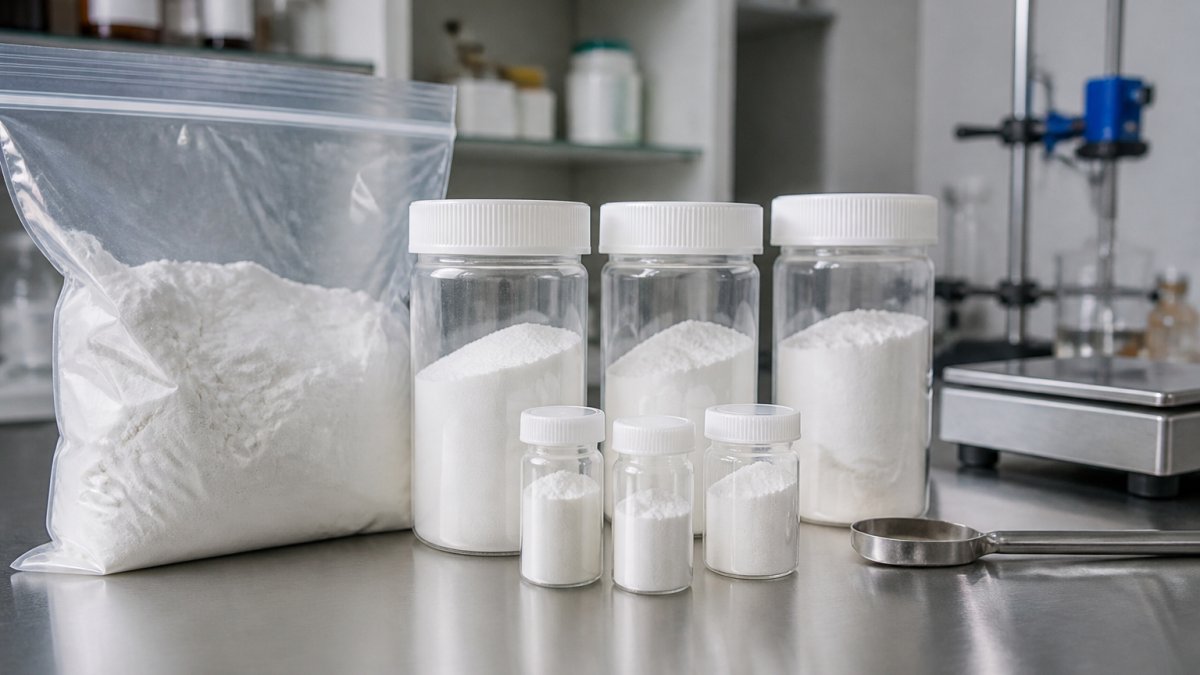
Buying bulk lab grade peptides for academic institutions is not the same as buying research compounds for a single bench experiment. Academic procurement adds layers that commercial buying skips: grant funding rules, institutional purchasing controls, documentation requirements, and multi-year research continuity.
The difference matters because a purchase that fails an audit or a documentation review costs far more than the peptides themselves.
Start with a written requirements list, not a supplier website. Before requesting quotes for bulk lab grade peptides, document what your study actually needs: compound names, target strengths, quantities per arm, and how many months of supply you must hold.
Group your needs into categories before you shop. Most academic peptide catalogs organize compounds by research area, and matching your list to those categories speeds up quote requests.
| Requirement | What to Record | Why It Matters |
|---|---|---|
| Compound category | Research area and compound name | Prevents ordering the wrong analog |
| Product strength | Milligrams per vial | Determines total vial count |
| Quantity | Vials per study arm, plus reserve | Drives bulk pricing tiers |
| Documentation | COA and lot-specific testing | Required for institutional review |
| Form | Lyophilized powder vs. other | Affects storage and handling |
Record each compound by product code where the supplier publishes one. A product code removes ambiguity when two compounds share a similar name.
Academic laboratory peptide procurement follows a predictable sequence, and skipping steps is where most delays originate. A common approach is to route every order through four gates: requirements, supplier qualification, documentation review, and purchase approval.
Institutions often require a purchase order rather than a card payment, and receiving departments may quarantine packages until paperwork is matched. Confirm those internal steps early.
Most supplier pages tell you what they sell. Very few tell you how to qualify them. For an academic buyer, supplier evaluation is a due-diligence exercise with a paper trail, not a vibe check. The goal is to produce a short, defensible vendor file your purchasing office, grant auditor, or institutional safety committee can review without a follow-up meeting.
Run every candidate supplier through the same five-part checklist. Score each item pass, conditional, or fail, and keep the responses in writing.
A supplier that can only send a generic sample COA from a previous batch is a conditional pass at best. A supplier that cannot name the testing laboratory is a fail for institutional work.
Ask specifically whether the report you receive will be generated from the lot that ships to you. A common pattern is a supplier testing once per batch and reusing the report across multiple lots; that is not lot-specific data and will not survive an audit.
Traceability is the difference between a documentation package and a stack of PDFs. Ask for a sample trace from a recent shipment.
Universities and research institutions typically require more than a product page before they will issue a purchase order. Confirm early whether the supplier can support:
A supplier that has never completed an institutional onboarding packet will slow your first order and every reorder after it.
Test this before you buy. Send one documentation question and time the response. A supplier that takes days to answer a pre-sale question will take longer once payment has cleared.
We publish lot-specific documentation with every product, support purchase orders and institutional onboarding, and keep our team reachable by text, phone, and email within hours, not days.
A peptide Certificate of Analysis is the lot-specific record of what was tested, how it was tested, and what the results were. It is the single most important document in an academic peptide purchase.
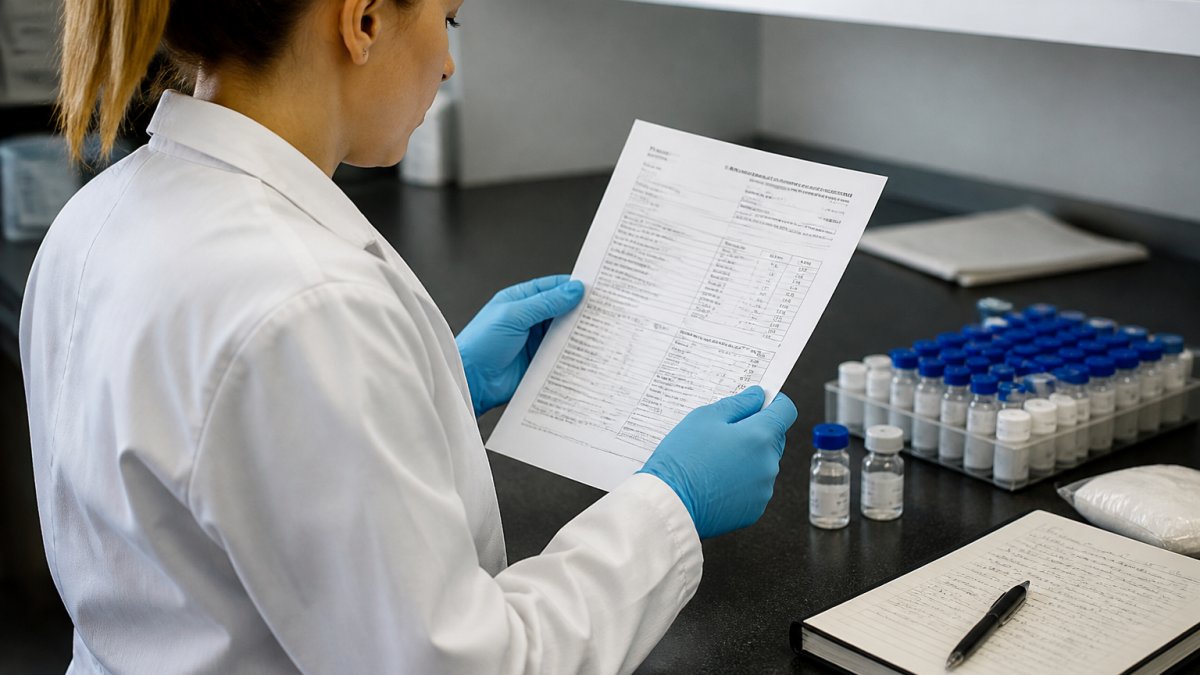
Read it in this order:
If the lot number on the COA does not match the vial, stop. That is a documentation failure, not a clerical inconvenience.
Peptide purity testing confirms that the compound in the vial matches the compound on the label at the stated purity. Third-party verification means an independent laboratory, not the manufacturer, performed that testing.
For academic work, third-party testing is the standard to insist on. Independent results are harder to dispute during peer review or an institutional audit. Ask whether testing is performed per lot or per batch, and whether results are retained and retrievable months later.
A bulk quote is not a price. It is a set of assumptions about quantity, documentation, shipping, and timing, and two quotes with the same headline number can differ by a wide margin once those assumptions are normalized. The method below turns quotes into an apples-to-apples comparison your purchasing office can defend.
Start by converting each quote to a cost per vial at the quantity you will actually order, then to a cost per study arm. Suppliers quote in different units: per vial, per kit, per milligram, or per case. Pick one unit, usually cost per vial at your target strength, and convert every line item to it before comparing.
| Cost Line | What to Capture | Why It Changes the Comparison |
|---|---|---|
| Unit price | Price per vial at your exact quantity tier | Confirm the tier applied matches your order size |
| Minimum order quantity | Vials or dollar threshold | A low unit price with a high MOQ can cost more overall |
| Documentation | COA and lot-specific testing included or billed separately | Should be standard; a documentation fee is a hidden markup |
| Shipping | Method, cost, and cold-chain handling | Expedited or cold-chain shipping can exceed the peptide cost on small orders |
| Lead time | Days from purchase order to delivery | Long lead times force larger safety stock and higher carrying cost |
| Reorder terms | Price protection and availability on future lots | A cheap first order with an expensive reorder is not a cheap study |
A common pattern is a supplier with the lowest unit price losing on landed cost once a documentation fee, cold-chain shipping, and a long lead time are included. The reverse also happens: a slightly higher unit price with included documentation and reliable two-day shipping often produces the lowest cost per completed study arm.
Pricing for bulk lab grade peptides depends on compound, strength, quantity, and delivery requirements, so we quote each request individually rather than publish a flat list. Send your requirements list with the questions above and we will return a quote formatted so your purchasing office can compare it line by line.
Peptide storage and handling determines whether the documentation you paid for still means anything at week twelve.
Practical rules for academic labs:
Our product kits include the peptide, bacteriostatic dilution water, syringes, and alcohol swabs. Our products are supplied for research use only, not for clinical or human use, and every lot undergoes independent laboratory testing with a Certificate of Analysis.
Academic procurement rarely fails on the science. It fails on documentation, storage discipline, and quotes compared on the wrong number.
Start by requesting the supplier’s quality documentation: a lot-specific Certificate of Analysis, third-party purity testing results, and proof of manufacturing partnerships such as WHO/GMP or ISO-certified facilities. Confirm the supplier can provide research-use-only labeling and traceable lot numbers. Ask whether they serve individual researchers as well as institutions, and check their fulfillment and support responsiveness. A supplier that cannot produce documentation before you order is a risk to your study’s reproducibility.
A useful peptide Certificate of Analysis should identify the compound, lot number, product code, and quantity, plus analytical results such as purity percentage by HPLC, mass confirmation by mass spectrometry, and the testing laboratory’s name. It should be lot-specific, not a generic sample. Look for a clear purity specification and any stated storage recommendations. If the COA lacks a lot number or third-party testing details, treat the purity claim as unverified and request more documentation.
Request the lot-specific COA before or with your shipment, then confirm the lot number on the vial matches the document. For independent verification, submit a sample to a qualified analytical laboratory for HPLC purity testing and mass spectrometry identity confirmation. Keep the results with your procurement records. If you are comparing suppliers, ask whether they will share third-party testing reports for the specific lot you will receive, not just a representative batch.
Most lyophilized (freeze-dried) peptide powders should be stored frozen and protected from light and moisture, following the supplier’s label and COA recommendations. Before opening, let the vial equilibrate to room temperature to reduce condensation. Once reconstituted, follow the supplier’s guidance for short-term refrigeration and avoid repeated freeze-thaw cycles. Log lot numbers, receipt dates, and storage conditions so your peptide storage and handling records support reproducibility and audit requirements.








