
Last Updated: August 12, 2026
Impure peptides contain contaminants, degradation products, or lower-than-claimed purity levels. The difference between 99% pure and 85% pure isn’t just a number, it’s the difference between reliable results and unpredictable outcomes. Impurities introduce endotoxins, heavy metals, microbial growth, or unintended chemical compounds that compromise research integrity and waste months of work.
At Rejuvenation Wellness Solutions LLC, we work directly with researchers burned by unregulated suppliers who received cloudy solutions, off-smelling products, or batches that failed to produce expected results. We partner with WHO/GMP and ISO-certified manufacturers and 503B compounding pharmacies to ensure every product undergoes independent lab testing with a Certificate of Analysis. Counterfeit peptides, improperly reconstituted solutions, and products stored in substandard conditions are widespread in the unregulated market. Learning to spot physical and chemical signs of impurity is foundational to protecting your research.
The first line of defense is visual inspection. Examine your product carefully before use, physical appearance reveals significant quality problems.
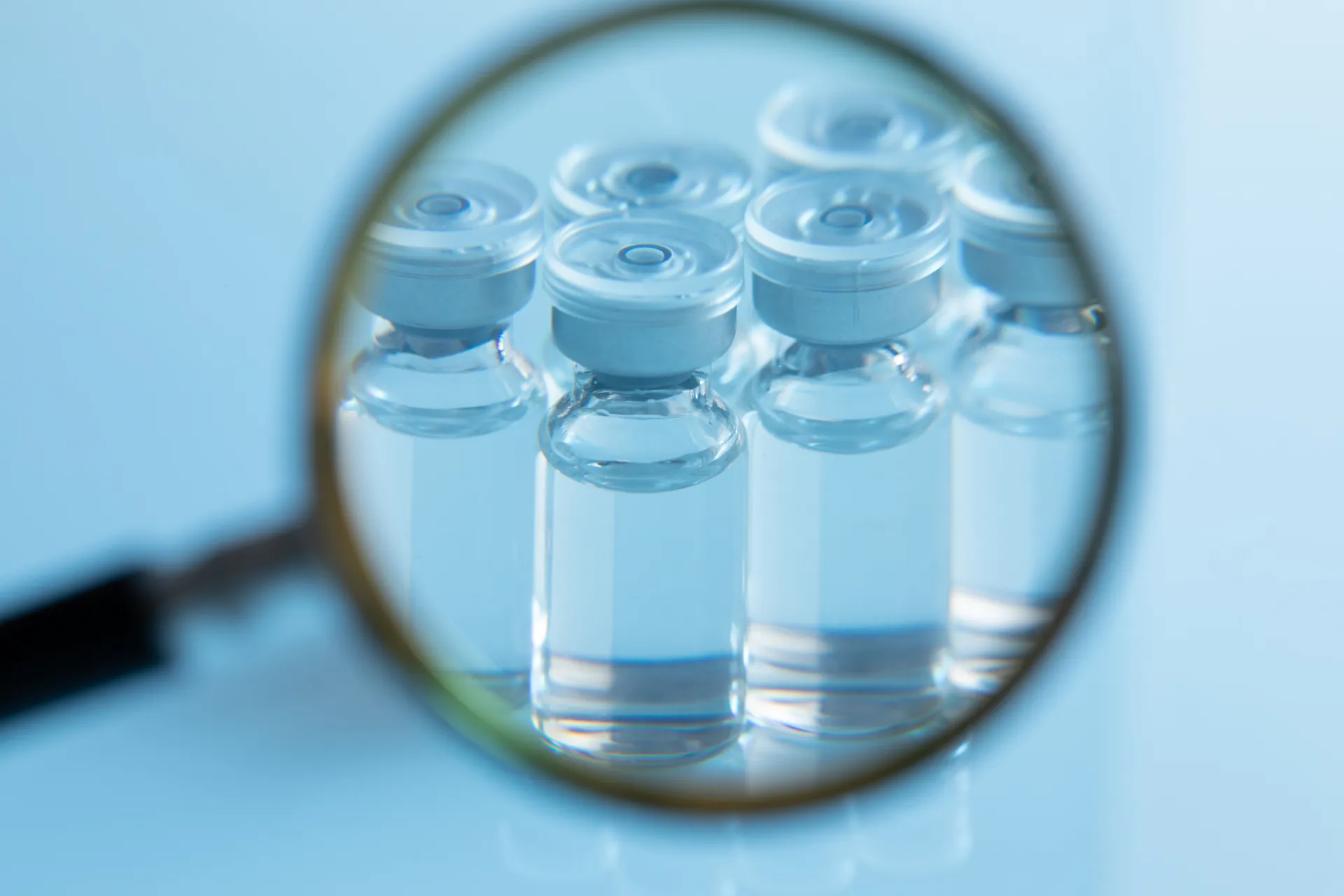
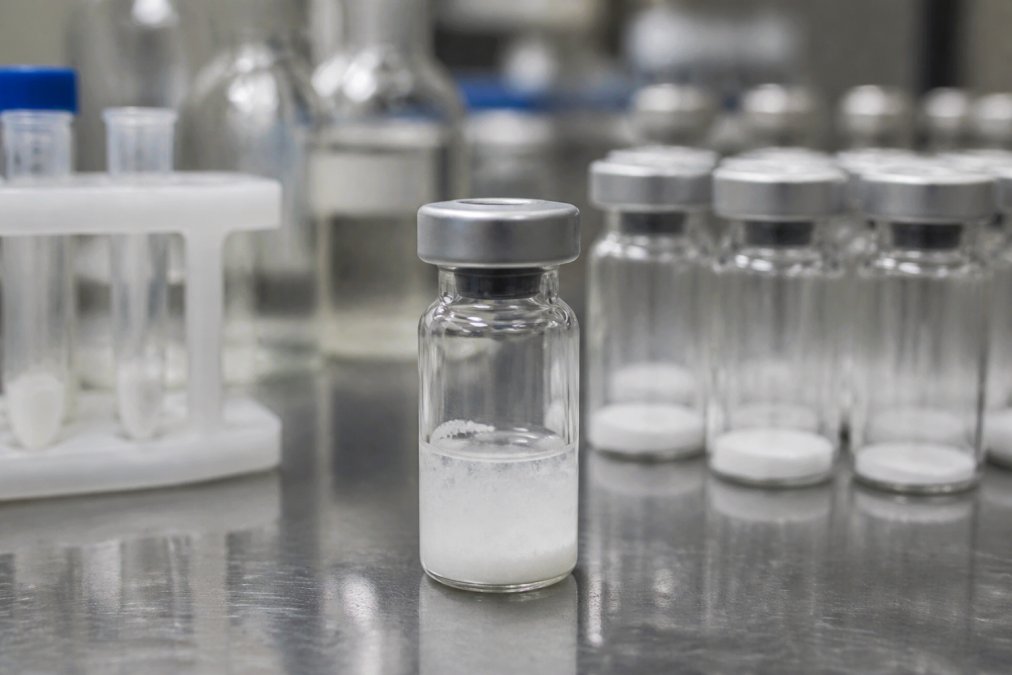
A pure peptide solution should be clear and colorless, or slightly tinged if the peptide has inherent color. Cloudiness, haziness, or visible particles indicate microbial growth, endotoxins, or aggregated peptide particles. Aggregated peptides scatter light and won’t dissolve properly during reconstitution, skewing dosing calculations.
Discoloration, brown, yellow, or dark tints, suggests oxidative degradation. Peptides are sensitive to light and oxygen. Darkened vials have been exposed to conditions that chemically alter the compound, especially if stored in clear glass without light protection.
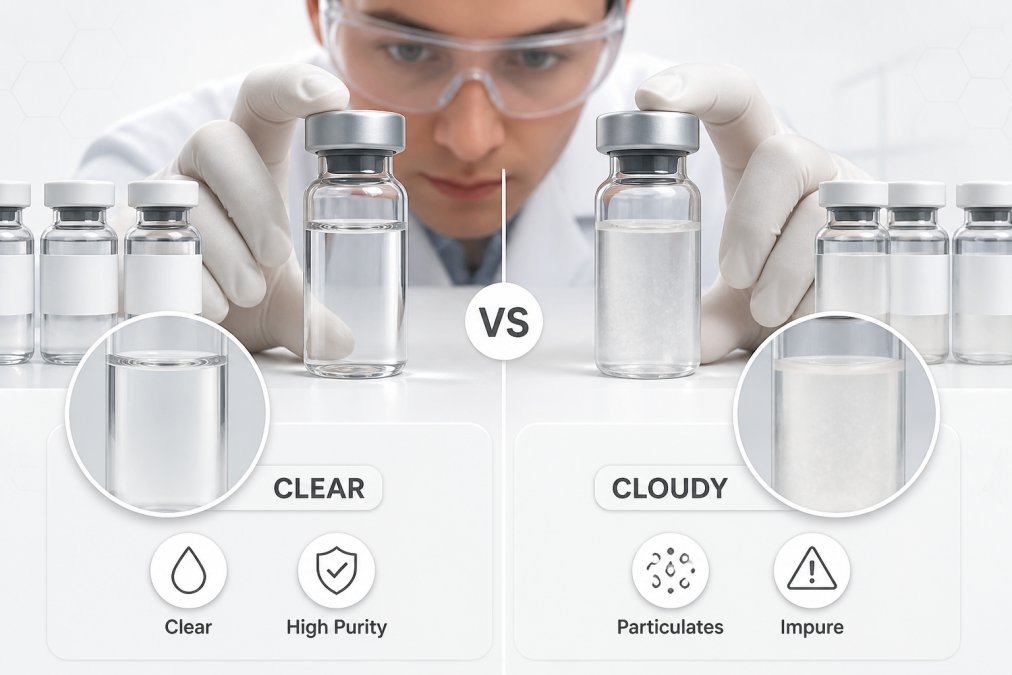
Check your solution against a white background in good lighting. Any visible particles, cloudiness, or color change beyond manufacturer specifications warrants immediate contact with your supplier.
Pure peptide solutions have minimal odor or faint chemical smell. Strong, pungent, or unpleasant smells, particularly ammonia, sulfur, or decay, indicate bacterial contamination or chemical degradation. Bacterial growth produces volatile compounds with distinct odors; if something smells off, the peptide is compromised.
Unexpected crystallization on vial walls, around caps, or suspended in solution suggests improper storage or contamination. Legitimate peptide solutions remain dissolved at specified storage temperatures. Crystallization between uses indicates inadequate storage conditions or expired shelf-life.
A Certificate of Analysis (CoA) from an independent, accredited laboratory, not the supplier’s internal lab, confirms batch number, purity percentage, and contaminant test results.
Research-grade peptides should be 99% pure or higher. The CoA should specify the testing method used, typically HPLC (High-Performance Liquid Chromatography), the gold standard for peptide purity. Examine the batch number and testing date; the batch number links your vial to the exact manufacturing run tested, ensuring traceability. Testing dates should be recent, ideally within the last few months.
Look for endotoxin testing results in EU/mg (Endotoxin Units per milligram). For injectable peptides, endotoxin levels should be below 0.25 EU/mg. Higher levels indicate inadequate purification or manufacturing contamination. Sterility testing confirmation is mandatory for injectable peptides; if the CoA doesn’t mention it, that’s a red flag.
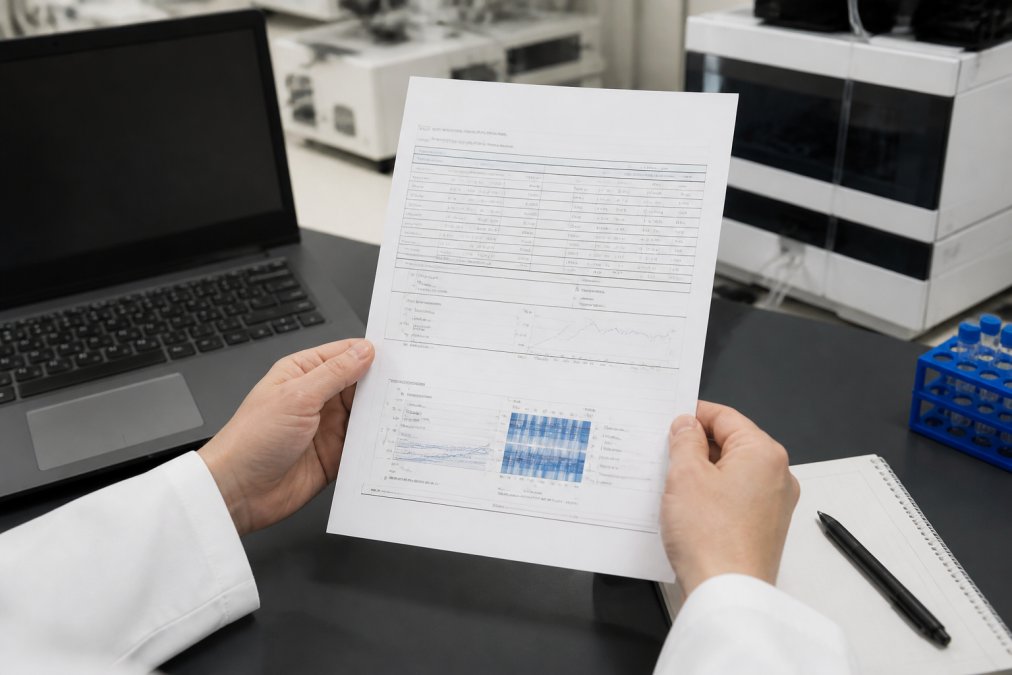
Vague language like "approximately 99%" or "greater than 95%" indicates inadequate testing. Legitimate labs provide exact percentages with decimal places. If the CoA doesn’t specify the testing method, it’s incomplete. Missing laboratory accreditation status, name, or contact information means you can’t verify legitimacy.
Heavy metal testing results listed as "not detected" without detection limits are problematic, a 10 ppm detection limit differs significantly from 0.1 ppm. Legitimate labs specify detection limits. Finally, ensure the CoA is dated after manufacturing but before shipment and matches your batch number, confirming test results correspond to your specific product.
How you store peptides determines how long they remain pure and effective. Poor storage accelerates degradation and introduces impurities.
Store peptide solutions at 2-8°C (35-46°F) in a pharmaceutical-grade refrigerator, not standard kitchen fridges that cycle through wider temperature ranges. Freeze-thaw cycles damage peptide structure. Store in amber or opaque vials, never clear glass. If received in clear vials, transfer to amber glass immediately and keep in dark locations. UV light and room lighting degrade peptides over weeks or months.
Maintain a dry environment; excessive moisture promotes microbial growth and alters peptide concentration. Avoid storage near heat sources, direct sunlight, windows, heating vents, or refrigerator tops. A stable, dark, cool location extends shelf-life significantly.
Once reconstituted, peptides are more vulnerable to degradation and microbial growth. Use bacteriostatic water specifically formulated for peptide reconstitution, which contains benzyl alcohol to inhibit bacterial growth. Use sterile syringes and needles to prevent contamination.
Store reconstituted solutions at 2-8°C and use within the manufacturer’s specified timeframe, typically 14-30 days. Never reuse a vial after multiple needle insertions; use a new sterile needle for each withdrawal. If appearance, smell, or clarity changes after reconstitution, discard the solution immediately.
The FDA classifies peptides as drugs when intended for therapeutic human use, requiring clinical trials, approval, and strict manufacturing standards. However, many online peptides are marketed as "research chemicals" or "not for human consumption" to circumvent FDA oversight. This regulatory gray area creates significant risks, unregulated products don’t meet manufacturing standards or require purity testing.
FDA-approved peptide therapies are manufactured under strict GMP (Good Manufacturing Practice) standards with batch testing for purity, sterility, and endotoxins. For legitimate scientific research, work with suppliers who voluntarily adhere to GMP standards and obtain independent lab testing. Rejuvenation Wellness Solutions LLC partners with WHO/GMP and ISO-certified manufacturers specifically to meet these standards. Regulatory oversight determines accountability; an FDA-approved manufacturer faces legal consequences for contamination, while unregulated suppliers have none.
Beyond visual inspection and CoA review, several verification methods confirm peptide authenticity and purity.
Every legitimate batch has a unique identifier linking your vial to the manufacturing run, testing results, and quality control documentation. Demand a batch number for every order. The batch number on your vial should match the CoA batch number, confirming lab results correspond to your product. Some suppliers maintain online batch tracking systems; if a supplier doesn’t offer this, ask why.
Request additional testing from independent laboratories if you have batch concerns. The Limulus Amebocyte Lysate (LAL) test detects bacterial endotoxins at extremely low levels; sterility testing confirms absence of bacterial and fungal growth. These tests add cost but protect high-stakes research. Rejuvenation Wellness Solutions LLC includes independent lab testing with every product. Ensure any additional testing uses accredited, independent laboratories, not manufacturer internal labs.
The unregulated peptide market contains counterfeit products and substandard manufacturing.
Unregulated manufacturers skip purification steps to reduce costs, leaving contaminants in final products. Heavy metals like lead, cadmium, and mercury accumulate during synthesis if equipment isn’t maintained or raw materials are contaminated. Heavy metal toxicity is cumulative; low levels in single batches accumulate across multiple batches, damaging organs, disrupting hormonal balance, and triggering neurological problems.
Bacterial endotoxins trigger inflammatory responses causing fever, joint pain, and immune activation. In research, endotoxin contamination skews results by triggering unintended biological responses. Unidentified chemical contaminants from inadequate purification may interact unpredictably with your research system, producing false results.
Impure peptides cause adverse events ranging from localized injection site reactions, redness, swelling, pain, to systemic effects like hormonal imbalance, immune activation, and organ toxicity. Severe or persistent injection site reactions indicate contaminated product. Systemic toxicity occurs when contaminants enter the bloodstream and affect multiple organ systems. Heavy metals accumulate in liver and kidneys; endotoxins trigger widespread inflammation.
Systemic toxicity is often attributed to other causes, delaying problem identification. Immunogenicity is another risk; some contaminants trigger immune responses causing antibody production against the peptide, rendering it unusable even after switching to purer sources.
The difference between impure peptides and high-quality research compounds comes down to manufacturing rigor, independent verification, and supplier accountability. Visual inspection, Certificate of Analysis review, and batch tracking are your first lines of defense. The most reliable protection is sourcing from suppliers who voluntarily meet GMP standards and provide independent lab testing.
Rejuvenation Wellness Solutions LLC partners with WHO/GMP and ISO-certified manufacturers and 503B compounding pharmacies to deliver peptides that are 99%+ pure, independently tested, and fully traceable. Every product includes a Certificate of Analysis, same-day order fulfillment, and UPS 2-day air shipping. When your research depends on peptide quality, work with a supplier that prioritizes safety, purity, and transparency. Shop with Rejuvenation Wellness Solutions LLC and get the high-purity research peptides your work demands.
Safe peptides come with a Certificate of Analysis showing purity testing results, batch number verification, and endotoxin/sterility testing. Check that the supplier partners with WHO/GMP and ISO-certified manufacturers. Look for physical signs: the solution should be clear, colorless or slightly off-white, with no cloudiness or unusual odor. If you notice discoloration, crystallization, or injection site reactions, the batch is compromised. Always verify the supplier's regulatory compliance and request lab reports before use.
Degraded peptides often show visible changes: cloudiness or haziness in the solution, unexpected discoloration (yellowing, browning, or darkening), crystallization or precipitation, and unusual chemical odors. These occur when peptides are stored improperly, exposed to light or heat, or contaminated during reconstitution. Degradation can also cause injection site reactions including redness, swelling, or welts. If you observe any of these signs, discard the batch and contact your supplier for verification or replacement.
Request documentation showing partnerships with WHO/GMP and ISO-certified manufacturers or 503B compounding pharmacies. Legitimate suppliers provide a Certificate of Analysis for every batch, include batch numbers on labels, and offer independent lab testing results. Check that the supplier can verify endotoxin and sterility testing. Ask for references and confirm certifications directly with the certifying bodies. Be cautious of suppliers unwilling to share lab reports or batch verification, this is a red flag for counterfeit or unregulated products.
A valid Certificate of Analysis should show purity percentage (aim for 99%+), batch number matching your vial label, test dates within acceptable timeframes, and results for endotoxin levels and sterility testing. Key metrics include HPLC or mass spectrometry results confirming peptide identity, moisture content, and absence of heavy metals or microbial contaminants. Red flags include missing batch numbers, outdated test dates, incomplete testing panels, or vague purity claims. Always cross-reference the batch number on the certificate with the number on your vial before use.
This article was written using GrandRanker