

Last Updated: July 29, 2026
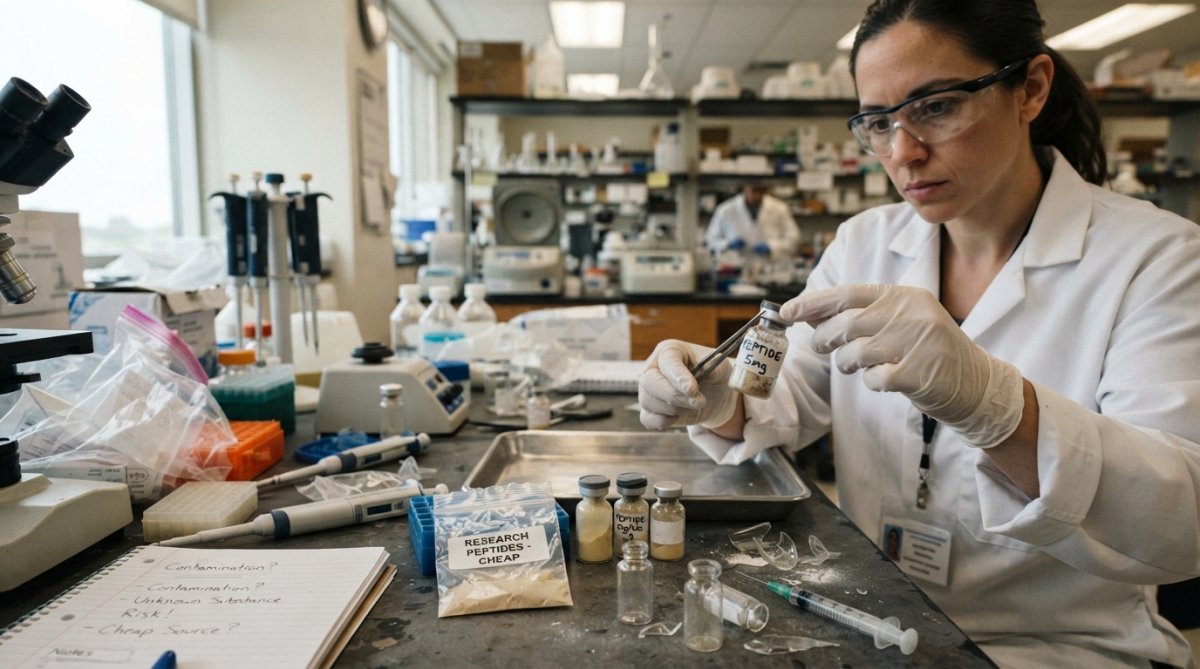
The risks of buying cheap peptides extend far beyond simple quality concerns. When researchers and individuals source peptides from unregulated suppliers, they expose themselves to contaminated products, dosing errors, hormonal disruption, and potential legal complications. At Rejuvenation Wellness Solutions LLC, we’ve documented cases where researchers purchased peptides at a fraction of legitimate market prices, only to discover through independent testing that products contained bacterial contamination, incorrect amino acid sequences, or dangerous filler compounds. Below, we’ll show you exactly what makes cheap peptides dangerous, how to identify counterfeit products, and why clinical oversight matters even for research applications.
Peptides are short chains of amino acids linked together in specific sequences. When synthesized correctly, each amino acid must be added in precise order, and the final product must undergo rigorous purification to remove impurities and verify bioavailability, the degree to which the peptide can be absorbed and used in biological systems.
Legitimate manufacturers use high-performance liquid chromatography (HPLC) to verify amino acid sequences, mass spectrometry to confirm molecular weight, and sterility testing to ensure products are free from bacteria and endotoxins. These quality control steps add cost. A cheap peptide supplier typically skips these steps entirely, cutting costs by 50-80% compared to legitimate sources.
If a peptide costs significantly less than competitors, one of three things is happening: the supplier is cutting corners on synthesis quality, skipping verification testing, or using lower-grade raw materials. None of these scenarios produces a product safe for research or personal use.
Many unregulated peptide suppliers exploit a regulatory gray area by labeling products "not for human consumption" or "research chemicals only." This disclaimer is not a legal safety pass, it’s a loophole designed to bypass FDA oversight.
The FDA regulates drugs, defined as substances intended to diagnose, cure, mitigate, treat, or prevent disease in humans or animals. By labeling a peptide as a "research chemical," suppliers claim their product falls outside FDA jurisdiction. In reality, if someone uses the product therapeutically, for weight loss, anti-aging, or muscle growth, the product is still a drug under FDA law, regardless of the label.
This creates a regulatory gap that cheap suppliers exploit relentlessly. They can manufacture peptides with zero pharmaceutical standards, skip sterility testing, use unverified suppliers for raw materials, and sell directly to individuals without oversight. The "not for human consumption" label provides legal cover while the actual product may be contaminated, mislabeled, or entirely different from what’s advertised.
Research chemicals sold this way often come from overseas manufacturers with no quality standards, no traceability, and no accountability. Seized products analyzed by regulatory agencies have contained bacterial endotoxins, heavy metals, and incorrect peptide sequences.
Contamination is the most common problem with cheap peptides. Bacterial contamination introduces endotoxins, toxic compounds released by gram-negative bacteria, that trigger immune system responses even at microscopic levels. Endotoxins can cause fever, inflammation, and in severe cases, septic shock. Sterility testing requires specialized equipment, so cheap suppliers skip it.
Dosing errors compound the risk. If a vial is mislabeled, containing 5mg instead of the stated 10mg, researchers will administer incorrect doses. This leads to inconsistent results and unpredictable physiological effects. Hormonal peptides are particularly dangerous when dosed incorrectly, causing blood sugar instability, joint pain, and water retention.
A common adverse event with cheap peptides is injection site infection. When products lack sterility, bacteria introduced during injection can cause localized infections that spread systemically, requiring antibiotic treatment and sometimes hospitalization.
Chemical contamination from impurities introduced during synthesis is another risk. If the manufacturing process skips purification steps, the final product contains byproducts and unreacted starting materials. These contaminants can trigger allergic reactions, tissue damage at injection sites, and systemic toxicity. Independent lab analysis has found heavy metals, solvents, and organic impurities in seized cheap peptides.
| Risk Type | Common Cause | Health Impact | Detection Method |
|---|---|---|---|
| Bacterial contamination | Skipped sterility testing | Fever, infection, sepsis | Sterility test, bacterial culture |
| Dosing errors | Mislabeling or imprecise synthesis | Inconsistent results, hormonal disruption | Certificate of Analysis, HPLC testing |
| Chemical impurities | Incomplete purification | Allergic reactions, tissue damage | Mass spectrometry, HPLC |
| Endotoxin presence | Gram-negative bacterial contamination | Immune response, inflammation | LAL (Limulus Amebocyte Lysate) test |
The FDA regulates peptides intended for human use through the drug approval process. This process requires manufacturers to demonstrate safety and efficacy through clinical trials, provide detailed manufacturing records, and maintain quality control standards.
Gray market vendors operate outside this system entirely. They source peptides from manufacturers with no FDA oversight, no quality agreements, and no accountability. Black market suppliers often manufacture peptides in uncontrolled environments with minimal equipment.
Counterfeit products are a growing problem in the cheap peptide market. Suppliers purchase legitimate-looking vials and labels, then fill them with inferior or entirely different products. Some counterfeits contain no active peptide at all, just bacteriostatic water. Others contain peptides at concentrations 50-200% different from stated amounts.
The FDA has limited resources to police the peptide market, so enforcement is reactive rather than preventive. By the time a cheap peptide supplier is shut down, thousands of people may have already purchased compromised products.
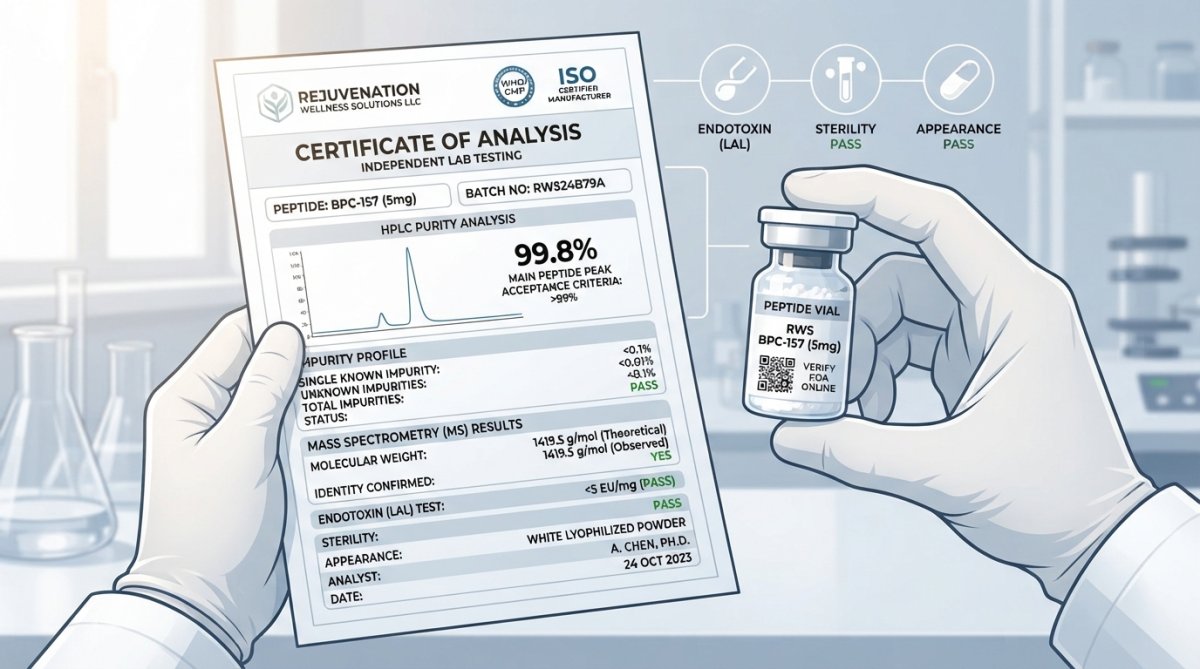
The Certificate of Analysis (CoA) is your first line of defense. This document, issued by an independent third-party laboratory, confirms the peptide’s purity, amino acid sequence, and absence of contaminants. Legitimate suppliers provide CoAs before purchase. The CoA should include:
If a supplier refuses to provide a CoA or claims it’s "proprietary," that’s a disqualifying red flag.
Verify the laboratory that issued the CoA is accredited by relevant bodies (ISO 17025 for analytical testing, CAP for clinical labs). Cross-reference the lab’s name with accreditation databases. Some cheap suppliers issue fake CoAs with laboratory names that don’t exist.
Examine the vial and packaging carefully. Legitimate peptides come in sterile, vacuum-sealed amber vials with tamper-evident seals. Cheap products often arrive in clear vials or loose packaging. Labels should be professionally printed with consistent fonts. Misspellings or blurry printing are signs of counterfeits.
Ask about the manufacturer’s WHO/GMP certification or ISO 13485 compliance (medical device manufacturing standard). Cheap suppliers almost never have these certifications because maintaining them requires significant investment in quality systems.
Request traceability information. Legitimate manufacturers can trace each batch back to raw material suppliers and document every step of synthesis and testing.
The FDA maintains a list of approved peptide drugs available through legitimate pharmaceutical channels. These include somatropin (human growth hormone), insulin analogs, and various therapeutic peptides used for specific medical conditions. All underwent rigorous clinical testing, manufacturing oversight, and post-market surveillance.
The critical distinction is between FDA-approved peptides and research chemicals. FDA-approved peptides are manufactured under current Good Manufacturing Practice (cGMP) standards, distributed through licensed pharmacies, and prescribed by physicians who monitor patients for adverse effects.
In the United States, peptides intended for human use must either be FDA-approved drugs or be manufactured under a valid FDA exemption, such as compounding pharmacy regulations for 503B pharmacies. Any other peptide sold for human consumption is technically illegal, regardless of labeling.
Physician-supervised peptide therapy through legitimate compounding pharmacies operates in a different legal framework. A 503B compounding pharmacy can manufacture peptides under physician prescription when an FDA-approved equivalent doesn’t exist. The pharmacy must follow cGMP standards, maintain sterility, and document quality control. The physician monitors the patient and adjusts dosing based on clinical response.
The legal status of peptides in the United States is determined by intended use and manufacturing standards. A peptide manufactured to cGMP standards under physician supervision in a 503B compounding pharmacy is legal. The same peptide, manufactured overseas without quality standards and sold as a "research chemical," is not.
Compounding pharmacies operating under 503B regulations must be licensed by their state, maintain sterile compounding facilities, employ trained pharmacists, and follow FDA-issued guidance on quality standards. Every batch must be tested for sterility, potency, and purity.
Clinical oversight means a licensed physician evaluates the patient, determines that peptide therapy is appropriate, prescribes a specific peptide at a specific dose, and monitors the patient for adverse effects. Without clinical oversight, problems go undetected until they become serious.
The research chemical market exists precisely because it avoids these requirements. By marketing peptides as "not for human consumption," suppliers bypass the need for physician involvement, pharmacy licensing, quality control, and patient monitoring.
Rejuvenation Wellness Solutions LLC partners with WHO/GMP and ISO-certified manufacturers and 503B compounding pharmacies to ensure products meet pharmaceutical-grade standards. Every peptide undergoes independent lab testing with a Certificate of Analysis before shipment.
If you’re considering peptide therapy, the safest path is working with a physician and a legitimate compounding pharmacy. This approach provides legal protection, quality assurance, clinical monitoring, and recourse if problems arise.
Legitimate compounding pharmacies source peptides from WHO/GMP and ISO-certified manufacturers. Every batch is tested by the pharmacy before dispensing. Patients receive documentation of what they’re receiving and how to use it safely.
The physician’s role is critical. They evaluate your health status, determine whether peptide therapy is appropriate, prescribe a specific peptide and dose, and monitor you over time. This oversight catches adverse effects early and allows dose adjustments based on clinical response.
For research applications, sourcing from manufacturers with verifiable quality credentials is essential. Suppliers who provide Certificates of Analysis from accredited laboratories, maintain WHO/GMP or ISO 13485 certification, and offer traceability documentation are significantly more reliable than cheap vendors.
According to FDA guidance on compounding pharmacies, 503B pharmacies must follow current Good Manufacturing Practice standards and maintain detailed quality control records.
Research from peer-reviewed studies on peptide manufacturing standards demonstrates that products manufactured under cGMP standards have significantly lower contamination rates than unregulated sources.
Information from American Peptide Society guidelines on peptide quality emphasizes that amino acid purity, synthesis accuracy, and post-synthesis verification are non-negotiable for research applications.
The risks of buying cheap peptides are substantial and well-documented. Contamination, dosing errors, hormonal disruption, and legal exposure are real consequences of sourcing from unregulated suppliers. If you’re serious about peptide research or therapy, quality and clinical oversight aren’t optional, they’re foundational to safety and success. Rejuvenation Wellness Solutions LLC offers high-purity research peptides from WHO/GMP and ISO-certified manufacturers with independent lab testing and Certificates of Analysis for every product. With same-day order fulfillment, UPS 2-day air shipping, and customer support available by text, phone, and email within hours, you can access reliable peptides without the risks of cheap alternatives. Shop Rejuvenation Wellness Solutions LLC and get the quality assurance your research deserves.
Research peptides labeled 'not for human consumption' are not approved by the FDA for human use and carry significant risks. These products often lack the clinical oversight, sterility testing, and safety protocols required for human administration. Cheap research peptides frequently contain contaminants, incorrect dosing, or unverified purity levels. Only peptide products prescribed by physicians through licensed compounding pharmacies with 503B oversight should be considered for human use. Always verify independent lab testing with a Certificate of Analysis before any consideration.
Unregulated peptides pose multiple health risks including bacterial contamination, dosing errors that cause hormonal disruption, blood sugar instability, and adverse events. Gray market and black market vendors often sell counterfeit products with unknown composition. Without FDA oversight and clinical oversight, there is no guarantee of sterility, bioavailability, or accurate labeling. Cheap peptides frequently fail independent lab testing, revealing substandard purity or harmful contaminants. The lack of safety protocols means users have no recourse if complications occur.
Request a Certificate of Analysis from independent lab testing before purchase, this document verifies purity percentage and contamination screening. Verify the supplier partners with WHO/GMP and ISO-certified manufacturers. Check for 503B compounding pharmacy partnerships, which indicate regulatory compliance. Avoid suppliers offering significantly cheaper prices than established competitors, as this is a red flag for counterfeit or contaminated products. Contact the supplier directly to confirm certifications and ask about their safety protocols and quality control procedures.
Most injectable peptides sold online fall into a regulatory gray area, they are marketed as 'research chemicals' or 'not for human consumption' to avoid FDA jurisdiction. However, purchasing for personal human use may violate FDA regulations and state laws. Legitimate peptide therapy requires a physician's prescription and dispensing through licensed 503B compounding pharmacies. Buying from unauthorized suppliers carries legal risks and no consumer protection. If considering peptide therapy, consult a physician who can prescribe through compliant channels rather than purchasing from unregulated online vendors.
This article was written using GrandRanker








