


Last Updated: August 13, 2026
Peptide quality assurance is the systematic process of verifying that research-grade peptides meet established purity, identity, and safety standards before use in laboratory research or clinical trials. A contaminated or mislabeled peptide batch can invalidate months of research, waste resources, and compromise the integrity of your findings.
At Rejuvenation Wellness Solutions LLC, we’ve built our entire operation around this principle: every peptide shipment includes a Certificate of Analysis from an independent laboratory. This framework covers the analytical methods, documentation standards, and red flags that separate legitimate, high-purity products from substandard or fraudulent ones.
A Certificate of Analysis (COA) is the primary document proving your peptide batch has been tested and meets stated purity specifications. It’s a technical report from an independent laboratory detailing the actual composition and quality of the material you received.
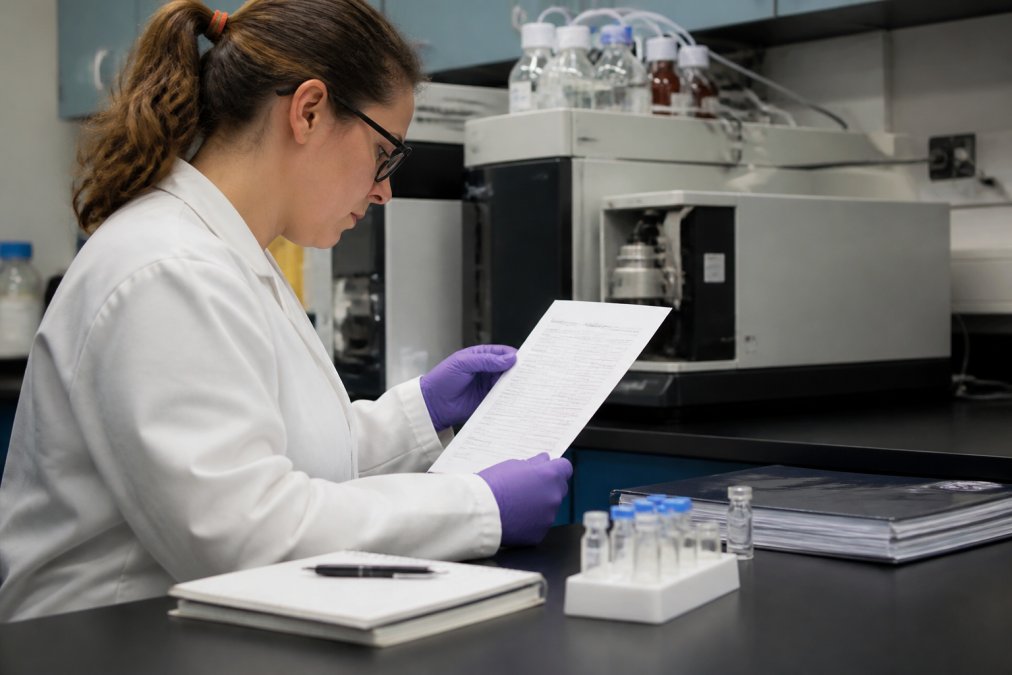
A complete COA includes identity verification using mass spectrometry, confirming the peptide’s molecular weight matches the theoretical value for your sequence. The purity profile, measured by high-performance liquid chromatography (HPLC), shows the percentage of the desired peptide relative to all other compounds; research-grade material should be 95% or higher.
The impurities profile lists by-products and degradation products identified during synthesis, including truncated sequences, oxidized variants, and residual solvents like trifluoroacetic acid (TFA). Endotoxin levels are critical for cell culture or animal studies and should be reported in endotoxin units per milligram (EU/mg), with most research applications requiring levels below 0.1 EU/mg. Microbial testing confirms the absence of bacterial or fungal contamination.
The analytical methods section lists specific techniques used: HPLC for purity, mass spectrometry for molecular weight, and others depending on your peptide’s properties. A legitimate supplier specifies exact conditions, column type, solvent system, and detection wavelength rather than giving vague descriptions.
Every batch of peptide synthesis produces a unique lot number, clearly stated on your COA. This identifier links your vial directly to the analytical data, manufacturing record, and specific batch of starting materials used. Without clear lot number tracking, you cannot verify that the peptide you received matches the COA you reviewed.
The manufacturing date on your COA should be recent relative to your order. Peptides gradually degrade over time, so a COA dated six months before shipment suggests the material has been sitting in storage and its actual purity may have declined. Storage conditions noted in the COA reveal how the manufacturer handled your material; peptides should be stored at -20°C or colder for long-term stability.
High-performance liquid chromatography and mass spectrometry are the two foundational analytical methods for peptide quality assurance, confirming identity and quantifying purity.
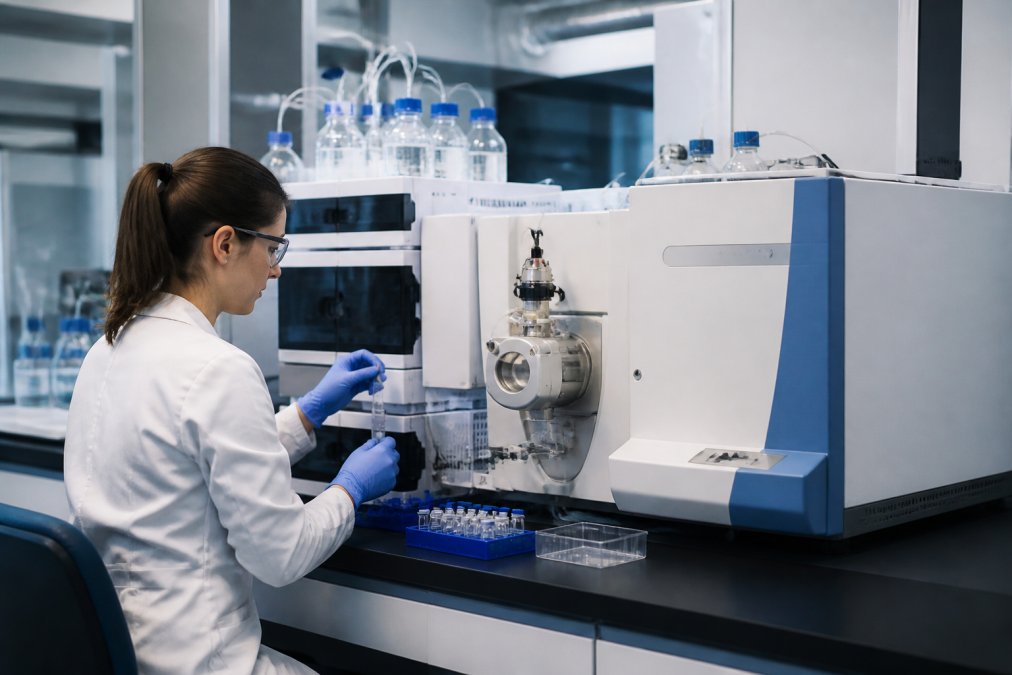
HPLC separates the components of your peptide sample based on their chemical properties as they flow through a packed column. The detector measures light absorption at a specific wavelength (usually 214 nm, where peptide bonds absorb strongly), producing a chromatogram showing peaks that represent individual compounds.
The largest peak should be your target peptide. Its height or area relative to all other peaks determines the purity percentage. Smaller peaks represent impurities: truncated sequences, oxidized variants, or residual synthesis reagents. A supplier should explain which peaks correspond to which impurities, with peaks at different retention times typically indicating structural variants.
Different HPLC columns, solvent systems, and pH conditions can produce different purity readings for the same sample. A legitimate supplier uses standardized, validated methods and reports specific conditions used. When comparing COAs from different suppliers, verify they used comparable HPLC methods.
Mass spectrometry measures the mass-to-charge ratio of ionized molecules, allowing precise determination of molecular weight. For peptides, this is the definitive identity test. Your peptide has a specific theoretical molecular weight based on its sequence; if mass spectrometry shows a different molecular weight, the peptide is either the wrong sequence, partially degraded, or contaminated.
Most peptide COAs report molecular weight via electrospray ionization mass spectrometry (ESI-MS) or matrix-assisted laser desorption/ionization (MALDI-MS). A complete MS report shows the observed molecular weight, theoretical molecular weight, and mass difference (usually in parts per million). A difference of less than 5 ppm indicates excellent agreement and confirms identity.
Peptide synthesis inevitably produces impurities. Understanding what they are helps you interpret your COA and decide whether a batch is suitable for your research.
The most common peptide synthesis impurity is the deletion peptide, a sequence missing one or more amino acids. These arise when a coupling reaction fails during synthesis, and the growing chain continues without incorporating that amino acid. Deletion peptides have slightly lower molecular weight than the target and elute at a different time during HPLC.
Oxidized peptides form when amino acids like methionine or tryptophan react with oxygen, adding a small mass increase and changing chemical properties. If your peptide contains methionine, expect some oxidized variant unless the supplier used special handling to prevent it.
Dimerization occurs when two or more peptide molecules covalently link together, usually through disulfide bonds between cysteine residues. These larger molecules have proportionally higher molecular weight and elute much later during HPLC. If your peptide contains cysteine, the COA should specify whether the peptide is supplied in reduced (free cysteine) or oxidized (disulfide-bonded) form.
The impurities profile should list each identified impurity as a percentage of the total. A high-quality batch might show your target peptide at 98%, with 1% deletion peptide and 1% other impurities. A lower-quality batch might show 92% target with 3% deletion peptide, 2% oxidized variant, and 3% unidentified impurities.
Trifluoroacetic acid (TFA) is a common solvent used during peptide synthesis and purification. Most peptide suppliers use TFA-based purification, and residual TFA often remains in the lyophilized powder. High TFA content affects peptide solubility and can lower pH significantly when dissolved in aqueous solution. A quality COA specifies the TFA content, typically reported as a percentage by weight; levels below 10% TFA are acceptable for most applications.
Acetate salts are sometimes used instead of TFA during purification, particularly for peptides where TFA causes problems. The COA should clearly state whether your peptide is supplied as a TFA salt or acetate salt and in what ratio. Some suppliers offer peptides as the free base or in alternative salt forms, which typically cost more but may be necessary for your specific research.
The gold standard for peptide quality assurance is third-party lab verification, having an independent laboratory test your batch and issue a COA. This eliminates conflicts of interest and provides objective confirmation of quality.
A legitimate supplier partners with certified analytical laboratories and provides COAs from those labs with every shipment. The lab should be ISO 17025 accredited, indicating it meets international standards for competence and impartiality. The COA should clearly identify the testing laboratory, its accreditation status, and the date of analysis.
Supplier transparency extends beyond the COA. A trustworthy supplier provides detailed information about their manufacturing partners, quality control protocols, and standard operating procedures. They should explain how they handle batch-to-batch variability, how they store peptides to prevent degradation, and what happens if a batch fails quality testing.
Rejuvenation Wellness Solutions LLC partners with WHO/GMP and ISO-certified manufacturers and 503B compounding pharmacies, ensuring every product undergoes independent lab testing with a Certificate of Analysis. Ask your supplier: Can you download COAs before purchasing? Are your manufacturing partners publicly listed or verifiable? Do you have accreditation from recognized standards bodies? How do you handle customer concerns about batch quality? Evasive answers are a warning sign.
A COA with no analytical methods section is a major red flag. The supplier should specify which HPLC column was used, what solvent system, what detection wavelength, and what temperature. Vague descriptions like "HPLC analysis confirmed purity" without method details suggest cursory or fabricated testing.
Identical COAs across multiple batches ordered at different times is highly suspicious. Real batches have real variation. If a supplier’s COAs are identical down to the decimal point across ten different batches, the data is likely fabricated.
Claims of "99%+ purity" without supporting documentation are marketing language, not quality assurance. A legitimate supplier provides the actual purity percentage from analytical testing. If a supplier advertises "99%+ purity" but their COA shows 97.3%, that’s a discrepancy worth questioning.
Extremely low prices relative to competitors often indicate quality shortcuts. A supplier offering peptides at half the market rate is likely cutting corners on testing or using lower-cost starting materials. Missing endotoxin or microbial testing is a red flag if you plan to use the peptide in cell culture or animal studies. Vague language about manufacturing or storage is another warning sign; a supplier should clearly state where the peptide was synthesized, how it was purified, and how it was stored.
Use this checklist when evaluating a peptide supplier and reviewing your Certificate of Analysis:
| Quality Criterion | What to Verify | Red Flag |
|---|---|---|
| Certificate of Analysis | Independent lab testing with accreditation | No COA provided; identical COAs across batches |
| Molecular Weight | Mass spectrometry confirmation within 5 ppm of theoretical | Difference >5 ppm; no MS data |
| Purity Percentage | HPLC-based purity ≥95% for research-grade | Purity <90%; vague "99%+" claims without data |
| Impurities Profile | Detailed list of identified impurities with percentages | "Impurities <5%" without breakdown; no chromatogram |
| Endotoxin Level | <0.1 EU/mg for cell culture applications | No endotoxin testing; levels >1 EU/mg |
| Microbial Testing | <100 CFU/g for most applications | No microbial testing; high CFU counts |
| TFA/Acetate Content | Clearly specified salt form and percentage | No salt information; unexplained high TFA (>20%) |
| Batch-Specific Documentation | Unique lot number linked to COA and manufacturing date | Generic documentation; lot numbers not tracked |
| Manufacturing Details | Supplier identifies synthesis location and purification method | Vague descriptions; evasive about sourcing |
| Storage & Stability | Clear storage temperature and shelf-life guidance | No storage information; room-temperature shipment without explanation |
Before placing an order, request a sample COA and verify it includes all sections above. After receiving your peptide, compare the actual COA to the sample you reviewed and confirm the lot number matches. If anything differs unexpectedly, contact your supplier immediately.
Peptide quality assurance is the foundation of reliable research. A single contaminated batch can invalidate months of work and compromise your findings. By understanding what to look for in a Certificate of Analysis, recognizing common impurities, and identifying red flags in supplier documentation, you protect your research investment and ensure your results are built on solid ground.
Rejuvenation Wellness Solutions LLC makes this process straightforward by providing independent lab testing with every peptide shipment, detailed batch-specific documentation, and transparent partnerships with WHO/GMP and ISO-certified manufacturers. When you choose a supplier committed to third-party verification and supplier transparency, you’re choosing a partner invested in your research success. Get started with Rejuvenation Wellness Solutions LLC and access peptide solutions you can trust.
A Certificate of Analysis (COA) provides third-party verification of your peptide's purity, identity, and batch-specific documentation. It confirms that analytical methods like high-performance liquid chromatography and mass spectrometry have been applied to verify molecular weight, amino acid sequence, and absence of microbial contamination. Without a COA, you cannot verify that your research-grade peptide meets the purity standards required for reliable experimental results.
Most research-grade peptides should achieve 95% purity or higher, with many premium suppliers offering 99%+ purity. The acceptable level depends on your specific application: identity verification studies may tolerate 90-95%, while sensitive pharmacological research typically requires 98-99%+ purity. Your COA should clearly state the chromatographic purity percentage. If a supplier cannot provide this specification backed by analytical data, the peptide is not suitable for rigorous research.
HPLC results show chromatographic purity as a percentage of the main peak versus total peaks detected. Mass spectrometry confirms molecular weight and amino acid sequence accuracy. Look for a single dominant peak in HPLC (typically >95% area under the curve) and a molecular weight reading that matches your peptide's theoretical mass within 1-2 daltons. By-product peaks and impurities should be individually identified. If results show multiple unexplained peaks or molecular weight discrepancies, the batch quality is questionable.
Red flags include incomplete amino acid sequences, elevated trifluoroacetic acid or acetate residue content, microbial contamination detected in endotoxin testing, multiple unidentified impurity peaks on HPLC, batch-to-batch variability in purity levels, and missing or vague COA documentation. Suppliers who cannot explain their standard operating procedures, refuse to provide lot number tracking, or offer suspiciously low prices relative to third-party validated competitors are also warning signs of poor quality control.
Request a full COA that includes the independent lab's name, accreditation details, and test date. Verify the lab's credentials through regulatory compliance databases. Check that the COA specifies which analytical methods were used (HPLC, mass spectrometry, endotoxin testing). Legitimate suppliers partner with WHO/GMP and ISO-certified laboratories and can provide batch-specific documentation with lot number tracking. If a supplier cannot produce a detailed, verifiable COA within hours of your request, their testing claims are unreliable.
Quality suppliers provide detailed storage instructions specifying temperature (typically 2-8°C for lyophilized powder), humidity conditions, and shelf life. The COA should include stability data showing how purity is maintained over time under recommended conditions. Check whether the peptide is supplied as a lyophilized powder (more stable) or in solution. Request information on solubility testing results and any special handling requirements. Lack of storage guidance or stability data suggests the supplier has not validated their product quality over time.
Fraudulent documentation often lacks specific batch numbers, test dates, or independent lab names. Real COAs include molecular weight confirmation, amino acid sequence verification, impurities profile with individual peaks identified, and endotoxin/microbial testing results. Be suspicious of vague purity claims ('high purity' without a percentage), missing analytical methods, or COAs that appear photocopied or generic across multiple batches. Legitimate suppliers provide unique, batch-specific documentation and respond to verification requests within hours.
This article was written using GrandRanker








