

Last Updated: August 14, 2026
Peptide quality control metrics are the measurable standards used to verify that synthesized peptides meet required purity, identity, and safety specifications before use in research, clinical trials, or therapeutic applications. These metrics determine whether a peptide batch is suitable for its intended purpose, whether that’s basic laboratory research or regulated pharmaceutical development.
The stakes are high. A contaminated or misidentified peptide can invalidate months of research, compromise clinical trial data, or worse, pose safety risks to study participants. Quality control isn’t bureaucratic overhead; it’s the foundation of reproducible science. Without standardized measurement protocols, there’s no way to know if you’re actually working with what you ordered or if batch variations will affect your results.
At Rejuvenation Wellness Solutions LLC, we understand that individual researchers and institutional labs need the same confidence in their peptide supplies as large pharmaceutical manufacturers do. That’s why every product undergoes independent lab testing with a Certificate of Analysis documenting purity, identity, and impurity profiles. This article breaks down the key metrics, analytical methods, and quality standards that separate reliable peptides from unreliable ones.
Peptide quality control metrics rely on two primary analytical techniques: High-Performance Liquid Chromatography (HPLC) and Mass Spectrometry (MS). These methods work together to answer two critical questions: Is this the right molecule? And how pure is it?
HPLC is the workhorse of peptide purity analysis. It separates peptide components based on their chemical properties as they flow through a specialized column, then detects them as they elute. The result is a chromatogram, a graph showing peaks representing different molecules in your sample.
Here’s what makes HPLC essential for peptide quality control metrics: it quantifies purity by measuring the area under each peak. The main peptide peak should represent at least 95% of the total peak area for high-quality material. Smaller peaks indicate impurities, degradation products, synthesis byproducts, or residual reagents. By comparing retention times (the time it takes a molecule to travel through the column) to known standards, analysts confirm they’re looking at the right compound.
HPLC has limitations, though. It tells you how many components are present and their relative amounts, but it doesn’t definitively prove molecular identity. Two different peptides might have similar retention times. That’s where mass spectrometry comes in.
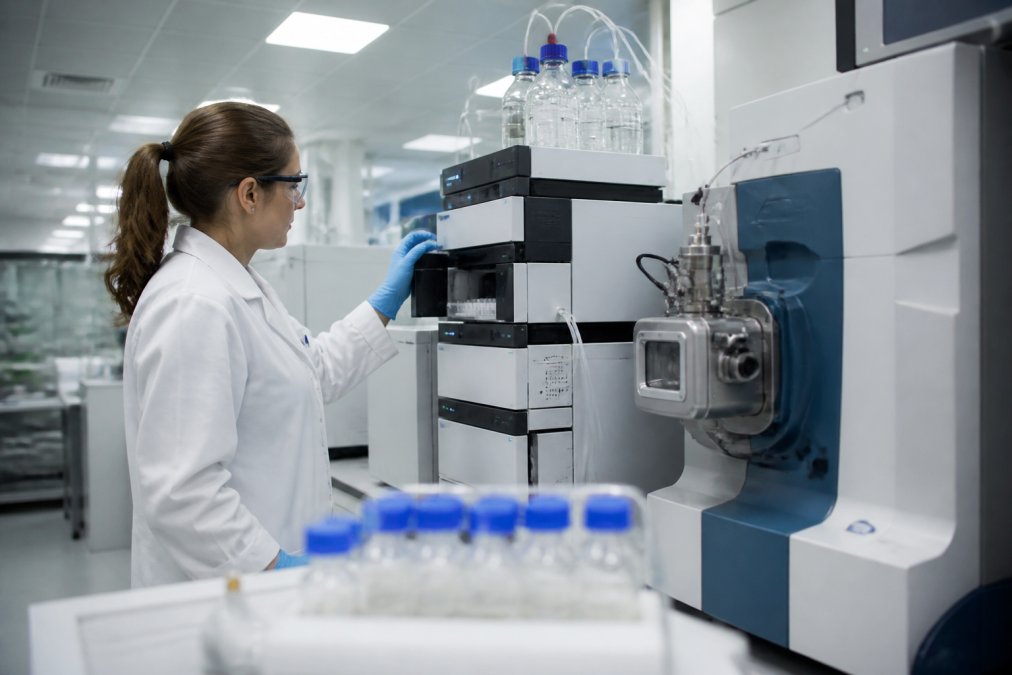
Mass spectrometry measures the molecular weight of peptides with extraordinary precision. It ionizes peptide molecules, separates them by mass-to-charge ratio, and detects them. The result is a mass spectrum showing the exact molecular weight of your peptide and any impurities present.
For peptide quality control metrics, MS serves as the definitive identity check. A peptide with a known sequence has a predictable molecular weight. If your mass spectrum shows a different mass, you have the wrong compound or a significant structural alteration. Electrospray ionization (ESI), a common MS technique for peptides, can detect multiple charge states of the same molecule, providing redundant confirmation of molecular weight.
MS also reveals impurities you might miss with HPLC alone. Counter-ions like trifluoroacetic acid (TFA) or acetate salt add mass. Incomplete capping, where synthesis failed to add the final protecting group, creates a measurable mass difference. These details matter for research reproducibility and regulatory compliance.
Understanding common peptide impurities and their detection is essential for interpreting your Certificate of Analysis. Impurities fall into several categories, each requiring different detection methods.
Synthesis-related impurities include incomplete sequences (truncated peptides missing one or more amino acids), deleted sequences (missing internal amino acids), and capped variants (missing the terminal protecting group). These appear as distinct peaks in HPLC chromatograms and show different molecular weights in mass spectra. They’re common in solid-phase peptide synthesis and typically represent 1-5% of the total peptide in a quality batch.
Oxidation products form when methionine or tryptophan amino acids react with oxygen. These oxidized forms have slightly different retention times in HPLC and measurable mass shifts in MS. They’re particularly problematic for long-term storage and can accumulate over time.
Residual solvents used during synthesis (like dimethylformamide or acetonitrile) can remain in the final product. Unlike peptide impurities, these are detected through different methods, typically gas chromatography or specialized solvent testing, rather than HPLC or MS. Their presence affects solubility testing and may influence how your peptide behaves in solution.
Salts and counter-ions deserve special mention. Many peptides are supplied as salts, TFA salts are common because TFA is used during synthesis and purification. The counter-ion adds mass but isn’t a contaminant per se; it’s part of the chemical form. Your Certificate of Analysis should specify the salt form and account for it when calculating the actual peptide content.
The purity percentage is the single most important metric on your Certificate of Analysis. It represents what percentage of your sample is the intended peptide versus all other compounds combined. A 99% purity means 1% is something else, impurities, salts, water, or residual solvents.
How is purity calculated? HPLC analysis measures the area under the main peptide peak and divides it by the total area of all peaks. The result is expressed as a percentage. A reputable supplier uses standardized methods, typically HPLC at 214 nm wavelength, which detects peptide bonds, to ensure consistency across batches.
Batch verification goes beyond purity percentage. It involves comparing your batch’s analytical results to the Certificate of Analysis provided at purchase. Key checks include: Does the molecular weight in the mass spectrum match the expected value? Do the HPLC retention times match previous batches? Are impurity profiles consistent with historical data for that peptide? Significant deviations suggest a manufacturing problem or potential mix-up.
Amino acid analysis (AAA) is a complementary technique that hydrolyzes (breaks down) your peptide into individual amino acids, then quantifies each one. By comparing the measured amino acid composition to the theoretical composition for your peptide sequence, you confirm the peptide contains the right amino acids in the right proportions.
AAA doesn’t directly verify sequence, it can’t tell you if amino acids are in the correct order. But it catches major problems. If your peptide is supposed to contain three lysine residues and the AAA shows only one, something is wrong. If the total amino acid content doesn’t match the expected molecular weight, you may have degradation or contamination.
Sequence verification for peptides typically relies on mass spectrometry. Advanced MS techniques like tandem MS (MS/MS) can fragment the peptide and identify the sequence of amino acids based on the mass differences between fragments. This is the gold standard for confirming you have the correct peptide, not just the right amino acids.
Residual solvents are organic compounds used during peptide synthesis and purification that remain in the final product. Common residual solvents include acetonitrile, dimethylformamide, and methanol. While these are usually present in trace amounts, they can affect peptide behavior, storage stability, and regulatory compliance.
Solubility testing evaluates how well your peptide dissolves in common research solvents, typically water, phosphate-buffered saline (PBS), or dimethyl sulfoxide (DMSO). Poor solubility can indicate aggregation, hydrophobic impurities, or salt form issues. A quality Certificate of Analysis includes solubility data or notes any known solubility limitations.
Testing for residual solvents uses specialized methods like gas chromatography with flame ionization detection (GC-FID). These aren’t always included in standard certificates but are critical for GMP-certified manufacturing and regulatory submissions. If your research has strict solvent requirements, verify that your supplier tests for and reports residual solvents.
Your Certificate of Analysis is the official record of your peptide’s quality. Learning to read it correctly ensures you understand what you’re actually receiving and whether it meets your research needs.
A complete Certificate of Analysis includes these sections: peptide name and sequence, molecular weight (theoretical and observed), purity percentage (with HPLC method details), mass spectrometry data confirming identity, amino acid analysis results (if performed), residual solvent levels, water content, and batch number with synthesis date. Some certificates also include storage recommendations and stability data.
The purity percentage appears prominently, this is your first quality check. Verify it meets your requirements. A 95% purity is acceptable for many research applications; 98-99% is preferred for sensitive work. Next, check the molecular weight. The observed mass from MS should match the theoretical mass within acceptable tolerances (typically ±0.1% for peptides).
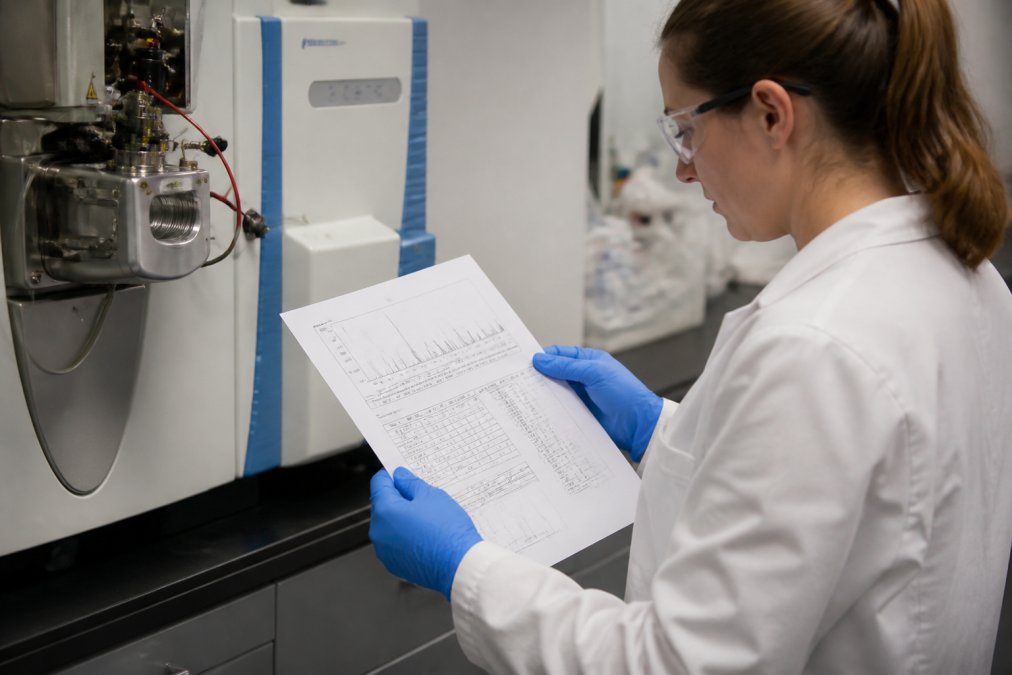
HPLC chromatogram details matter. The certificate should specify the wavelength (214 nm is standard for peptides), the column type, and the gradient used. This information lets you reproduce the analysis or compare results across suppliers. If the chromatogram shows multiple peaks of similar height, investigate. A dominant main peak with minor impurity peaks is normal; multiple peaks of comparable size suggests quality issues.
Batch-to-batch consistency is your stability check. If you’ve ordered the same peptide before, compare the new certificate to previous ones. Purity should be consistent within 1-2%. If purity drops significantly, ask why. Residual solvent levels and water content should also remain stable. Major deviations warrant clarification from your supplier.
GMP (Good Manufacturing Practice) compliance is the regulatory standard for pharmaceutical manufacturing in the United States. GMP-certified facilities follow strict protocols for quality control, documentation, equipment maintenance, and personnel training. For peptide research, especially work intended for clinical trials or therapeutic development, GMP certification is non-negotiable.
GMP compliance affects peptide quality control metrics directly. GMP facilities use validated analytical methods, meaning the HPLC, MS, and other equipment are calibrated, tested, and documented to ensure consistent, reliable results. Calibration curves are maintained for quantification. Equipment logs track maintenance and performance. Every batch is tested by multiple analysts or instruments to catch errors.
Quality assurance (QA) in GMP facilities goes beyond testing individual batches. It includes process validation, proving that your manufacturing process consistently produces peptides meeting specifications. It includes stability testing, storing peptides under defined conditions and re-testing them over time to confirm they remain stable. It includes change control procedures, if anything about the manufacturing process changes, the impact on quality is assessed before implementation.
For researchers, GMP certification means your Certificate of Analysis comes with auditable documentation. If a regulator or your institution asks to verify the testing, the facility can produce records proving the work was done correctly. This matters for clinical trials, FDA submissions, and institutional compliance.
ISO 9001 certification, which Rejuvenation Wellness Solutions LLC’s manufacturing partners maintain, adds another layer. ISO 9001 is a quality management standard that covers the entire organization, not just manufacturing. It includes document control, corrective actions, management review, and continuous improvement. A facility with both GMP and ISO 9001 certification has demonstrated commitment to quality across all operations.
Peptide stability directly impacts your quality control metrics. A peptide stored improperly degrades over time, developing new impurities that change its purity percentage and potentially alter its biological activity. Your Certificate of Analysis reflects the peptide’s quality at the time of testing, usually right after synthesis. How well it maintains that quality depends on storage conditions.
Most lyophilized (freeze-dried) peptides should be stored at -20°C or colder. Some peptides are stable at 2-8°C for short periods. Room temperature storage accelerates degradation, particularly for peptides containing sensitive amino acids like methionine (which oxidizes) or serine (which can hydrolyze). Your supplier should provide storage recommendations; follow them closely.
Batch-to-batch consistency is a key quality control metric often overlooked. If you order the same peptide multiple times, you should receive peptides with nearly identical purity, identity, and impurity profiles. Significant variations suggest manufacturing inconsistencies or quality control lapses. Consistent batches mean your research results are reproducible and comparable across time.
Stability testing, storing peptides and re-testing them at defined intervals, reveals how quickly quality degrades. A peptide that’s 99% pure at delivery but drops to 92% purity after six months at -20°C has a stability problem. Reputable suppliers conduct and publish stability data. If your peptide will be used months after purchase, ask for stability data at your intended storage conditions.
Some suppliers offer stability guarantees, a commitment that peptides will maintain specified purity if stored as directed. This is valuable for long-term research projects. Rejuvenation Wellness Solutions LLC partners with WHO/GMP and ISO-certified manufacturers that conduct stability testing and provide detailed storage guidance, ensuring your peptides maintain quality throughout your research timeline.
Choosing a peptide supplier means trusting their commitment to quality. Rejuvenation Wellness Solutions LLC works exclusively with WHO/GMP and ISO-certified manufacturers and 503B compounding pharmacies that test every batch independently and provide comprehensive Certificates of Analysis. Our same-day fulfillment and UPS 2-day air shipping mean your peptides arrive fresh, with documentation you can trust. When your research depends on peptide quality, reliability matters. Shop with confidence at Rejuvenation Wellness Solutions LLC.
Most research applications require peptides with 95% purity or higher, though 99%+ purity is preferred for clinical trials and sensitive studies. The acceptable purity level depends on your specific research application. Peptides with higher purity reduce variables and improve result reproducibility. Always verify the purity percentage listed on the Certificate of Analysis before use in your research.
A Certificate of Analysis documents the analytical results from independent lab testing. Look for purity percentage (typically shown as HPLC peak integration), molecular weight confirmation via mass spectrometry, amino acid composition data, residual solvent levels, and batch identification. Cross-reference the reported purity against your research requirements. If any metric falls below acceptable thresholds, contact your supplier before using the batch.
Common impurities include incomplete sequences, deletion sequences, oxidized forms, and residual solvents like trifluoroacetic acid. HPLC identifies impurities by separating compounds based on retention time; mass spectrometry confirms molecular weight and detects unexpected byproducts. Amino acid analysis reveals composition errors. A complete Certificate of Analysis will document all detected impurities and their concentrations, ensuring you know exactly what you're using.
GMP (Good Manufacturing Practice) standards ensure consistent manufacturing processes, proper calibration of analytical equipment, and documented quality assurance protocols. GMP-certified manufacturers maintain strict controls over raw materials, production conditions, and testing procedures. This standardization means peptide batches are reproducible and reliable. Peptides from GMP-compliant facilities reduce the risk of batch-to-batch variability that could compromise your research outcomes.
This article was written using GrandRanker