

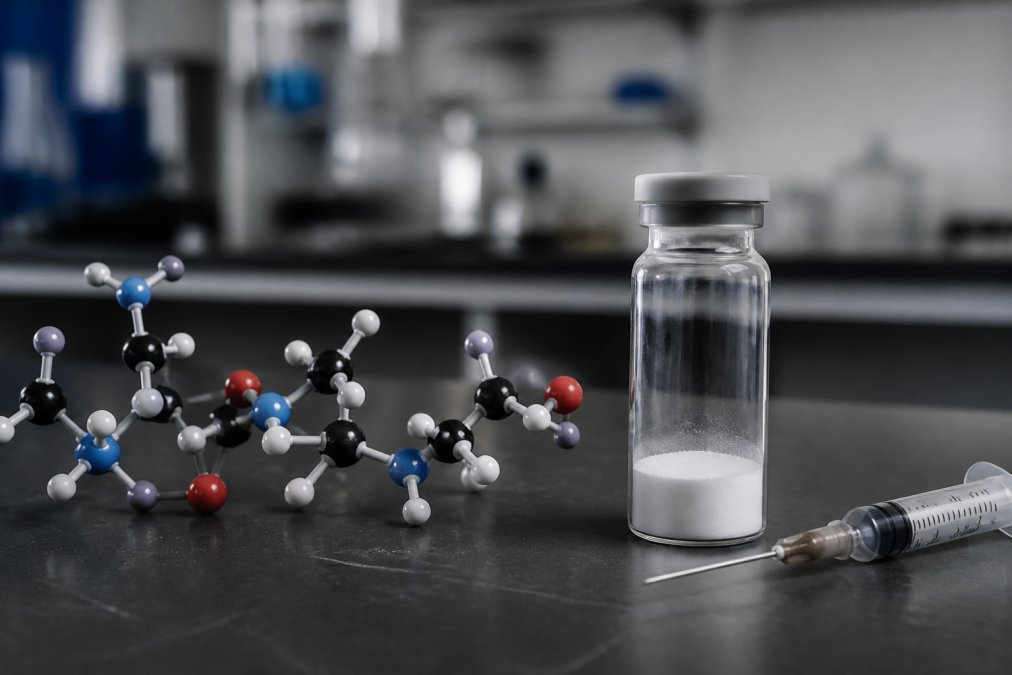
Last Updated: August 18, 2026
Peptides are short chains of amino acids linked by covalent bonds. At Rejuvenation Wellness Solutions LLC, we recognize that understanding peptide structure vs function explained is essential for researchers. A peptide typically contains between 2 and 50 amino acids, distinguishing it from larger proteins that contain 50 or more residues. The number of amino acids directly influences the peptide’s molecular weight, stability, and biological activity.
Amino acids are organic compounds containing an amine group, a carboxylic acid group, and a distinctive side chain. The human body uses 20 standard amino acids in protein synthesis, each with unique properties, some hydrophobic (water-repelling), others hydrophilic (water-attracting), and some charged or polar. This diversity allows peptides to fold into specific shapes and perform specialized functions.
The linear sequence of amino acids is called the primary structure. Changing even a single amino acid can completely alter biological activity, making sequence accuracy critical.
Peptide bonds are covalent bonds formed between amino acids through a condensation reaction. The carboxylic acid group of one amino acid reacts with the amine group of the next, releasing water and creating a stable amide bond. The chain has a defined directionality: the beginning has a free amine group (N-terminus) and the end has a free carboxylic acid group (C-terminus). Researchers always list amino acid sequences from N-terminus to C-terminus by convention. Peptide bonds are stable molecules suitable for research, though extreme pH, high temperature, and enzymatic activity can break these bonds through proteolysis.
A peptide’s three-dimensional shape determines which receptors it can bind to, which enzymes it can inhibit, and which biological processes it can modulate. This direct relationship between structure and function is critical for research success.
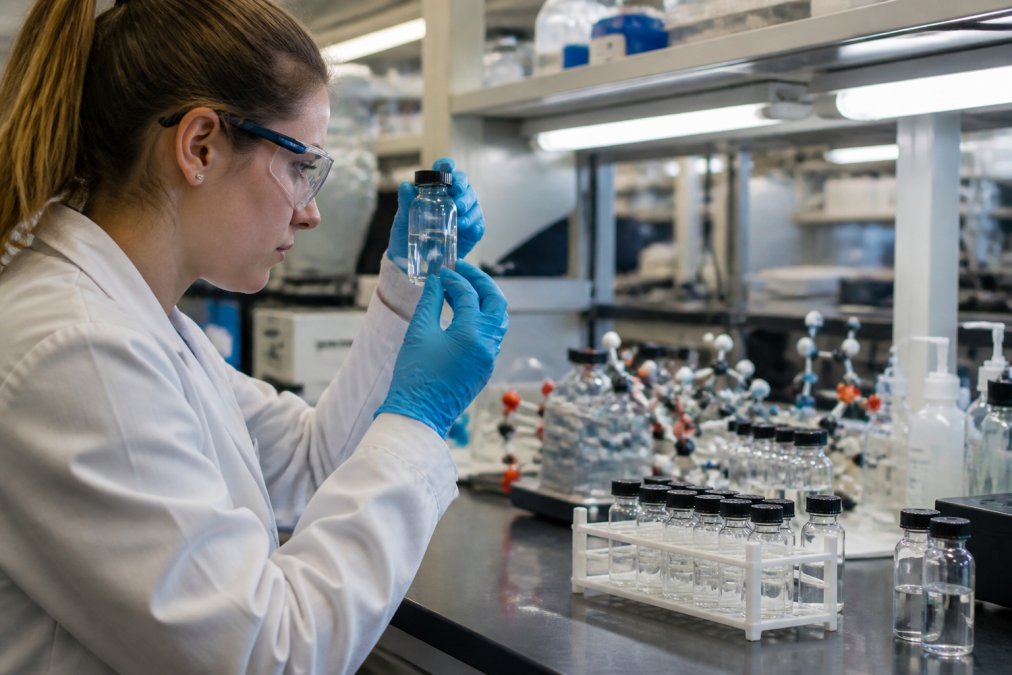
Once synthesized, a peptide folds into a three-dimensional conformation driven by chemical interactions. Hydrophobic residues cluster away from water, hydrophilic residues face outward, and charged amino acids position themselves to minimize electrostatic strain. A peptide designed as a hormone must fold into a specific shape to fit its target receptor, like a key fitting a lock. If the peptide doesn’t fold correctly, it won’t bind and the biological signal won’t transmit. This is why batch-to-batch consistency matters; each batch must fold the same way to produce consistent results.
The primary structure is the order of amino acids in the chain, containing all information needed to determine the peptide’s higher-order structures and function. The amino acid sequence determines molecular weight, which is the sum of all constituent amino acid masses minus water molecules lost during peptide bond formation. Researchers use molecular weight to verify correct synthesis.
Secondary structure refers to local folding patterns like alpha helices (spiral formations) and beta sheets (extended, pleated structures). These structures form because they minimize the peptide’s energy state through hydrogen bonds between backbone atoms. An alpha helix forms when the carbonyl oxygen of one amino acid bonds with the amide hydrogen four residues ahead. Beta sheets form when extended regions align side by side, bonded by hydrogen interactions. Secondary structure affects how the peptide interacts with its environment and helps predict storage requirements and handling conditions.
The specific arrangement of amino acids determines what the peptide can do. A peptide designed as an enzyme inhibitor must have amino acids positioned precisely to fit the enzyme’s active site. A signaling peptide must have the right charge distribution to interact with cell receptors. Researchers often modify peptide sequences deliberately to change activity, adding a hydrophobic amino acid might increase membrane penetration, while replacing a charged amino acid with a neutral one might improve stability in acidic conditions.
Researchers can sometimes predict a peptide’s behavior from its sequence alone. A peptide containing mostly hydrophobic amino acids with a few charged residues clustered at one end will likely aggregate in water and might need organic solvents for solubility.
Peptide stability is a practical concern for researchers. Peptides are vulnerable to enzymatic cleavage by proteases, hydrolysis in acidic or basic conditions, oxidation, and aggregation.
Proteolysis is enzymatic breakdown of peptide bonds. Researchers use sterile technique and sometimes add protease inhibitors to peptide solutions. Hydrolysis occurs when peptide bonds are broken by water molecules under extreme pH conditions. Researchers must store peptides at pH values where they remain stable, typically between pH 4 and 8.
Oxidation affects peptides containing susceptible amino acids like methionine and cysteine. Researchers often store peptides under inert gas or in sealed containers to minimize oxidation. Aggregation occurs when peptide molecules clump together, forming insoluble complexes. Once aggregated, a peptide is typically lost for research purposes.
| Degradation Factor | Primary Cause | Prevention Strategy |
|---|---|---|
| Proteolysis | Enzymatic cleavage | Sterile handling, protease inhibitors |
| Hydrolysis | Extreme pH | Store at neutral pH (4-8) |
| Oxidation | Dissolved oxygen | Inert gas storage, antioxidants |
| Aggregation | Hydrophobic interactions | Maintain solubility, temperature control |
A Certificate of Analysis (CoA) verifies a peptide batch meets quality standards. Understanding how to read it ensures your research is built on reliable material.

The CoA typically includes the peptide name and sequence, confirming you received the correct product. The molecular weight is stated, calculated from the amino acid sequence. The purity percentage is listed, usually as a percentage of total peptide mass. Purity is measured using high-performance liquid chromatography (HPLC). A single large peak indicates high purity, while multiple peaks suggest contamination or incomplete synthesis. Reputable suppliers like Rejuvenation Wellness Solutions LLC provide detailed chromatograms for independent verification.
The CoA also lists identity confirmation method, typically mass spectrometry, which measures the exact mass of the peptide molecule and confirms it matches the expected molecular weight. Water content is another important parameter, most quality peptides have water content below 5%, with premium products below 2%.
When reviewing a CoA, look for the testing date and retest date. A retest date of one year in the future is standard for properly stored peptides. The CoA should also list any additives or buffer components included with the peptide.
The distinction between peptides and proteins is based on size, but this difference has functional implications. Peptides are defined as chains of fewer than 50 amino acids. Proteins contain 50 or more.
Peptides are generally more soluble than proteins because they’re smaller with less complex three-dimensional structure. Proteins typically have more complex tertiary and quaternary structures. Tertiary structure refers to overall three-dimensional folding, stabilized by interactions between distant amino acids. Quaternary structure is when multiple protein chains assemble together.
The size difference affects production methods. Peptides can be synthesized chemically using solid-phase peptide synthesis, while proteins are typically produced through biological expression systems. Peptides are often more stable in biological environments because they have fewer vulnerable sites for enzymatic attack.
Understanding peptide structure vs function explained directly impacts research outcomes. A peptide’s structure determines its stability in experimental conditions, its ability to cross cell membranes, its solubility in chosen solvents, and its interaction with target molecules.
In clinical research, peptide structure determines efficacy and safety. A therapeutic peptide must fold correctly to be effective. Researchers must verify structure through analytical techniques before advancing to clinical trials. This is why Rejuvenation Wellness Solutions LLC emphasizes independent lab testing with a Certificate of Analysis.
In drug development, structure-function relationships guide optimization. When a lead peptide shows promising activity but isn’t quite effective enough, researchers modify the sequence to improve function. Post-translational modifications that occur after peptide synthesis also affect structure and function, making it critical to understand which modifications are present.
In structural biology, peptides serve as tools for understanding protein function. Because peptides are smaller and simpler, they’re easier to crystallize and study using X-ray crystallography.
The relationship between peptide structure and function is fundamental to modern research. Structure determines function, and understanding this relationship allows researchers to predict peptide behavior, optimize designs, and troubleshoot problems.
At Rejuvenation Wellness Solutions LLC, we provide peptides with verified structure through rigorous quality testing and independent lab analysis. Every product includes a Certificate of Analysis confirming purity, identity, and composition. This verification ensures your research is built on peptides whose structure you can trust. Whether you’re conducting independent studies, running clinical trials, or optimizing peptide designs, having access to high-purity, verified peptides makes the difference between results you can rely on and data you have to question. Shop our peptide selection and access the modern solutions your research deserves.
For researchers seeking reliable peptide solutions, the NIH’s guide to peptide synthesis and characterization provides comprehensive technical information. Understanding peptide structure requires familiarity with biochemical principles detailed in peer-reviewed journals on peptide chemistry and molecular biology. For regulatory guidance on research peptide quality standards, the FDA’s guidance on pharmaceutical peptide products outlines expectations for purity and identity verification that inform industry best practices.
The amino acid sequence establishes the peptide's primary structure, which directly dictates how the chain folds and interacts with other biomolecules. Each amino acid contributes specific chemical properties, hydrophobicity, charge, and size, that influence the peptide's conformation and biological activity. Even a single amino acid substitution can eliminate or alter function, which is why precise sequencing is critical for research peptides.
Peptides and proteins are both polypeptides made of amino acids linked by peptide bonds, but they differ primarily in size and complexity. Peptides typically contain fewer than 50 amino acids, while proteins contain 50 or more. This size difference affects their structural complexity, folding patterns, and biological roles. Proteins often form complex tertiary and quaternary structures; peptides generally maintain simpler conformations.
Impurities in peptide samples can interfere with experimental results by competing with the target peptide for binding sites, altering cellular responses, or introducing confounding variables. High-purity peptides (99%+ pure) ensure that observed biological effects result from the intended peptide, not contaminants. This is why independent lab testing with a Certificate of Analysis is essential for reliable, reproducible research outcomes.
Structural modifications like disulfide bonds, acetylation, or phosphorylation can enhance or reduce peptide stability depending on the specific change. Modifications that increase cross-linking typically improve resistance to proteolysis and degradation, extending shelf life. Conversely, certain modifications may increase susceptibility to enzymatic breakdown. Storage conditions, pH, and temperature also interact with structure to determine degradation rates.
This article was written using GrandRanker








