
Last Updated: August 23, 2026
Peptide degradation happens silently. You reconstitute a vial, store it carefully, and weeks later discover the potency has dropped to 40% of what you started with. This isn’t negligence, it’s chemistry. Peptides oxidize in oxygen, hydrolyze when exposed to moisture, and denature with temperature fluctuations. Each degradation pathway is preventable, but only if you understand what’s driving the breakdown.
At Rejuvenation Wellness Solutions LLC, we work with researchers who need peptides to perform consistently across study protocols. The difference between success and failure often comes down to storage practices most researchers never consider until something goes wrong. A single batch of degraded peptides can invalidate weeks of work, but the fix is straightforward: get the fundamentals right, and your peptides remain stable and potent for months.
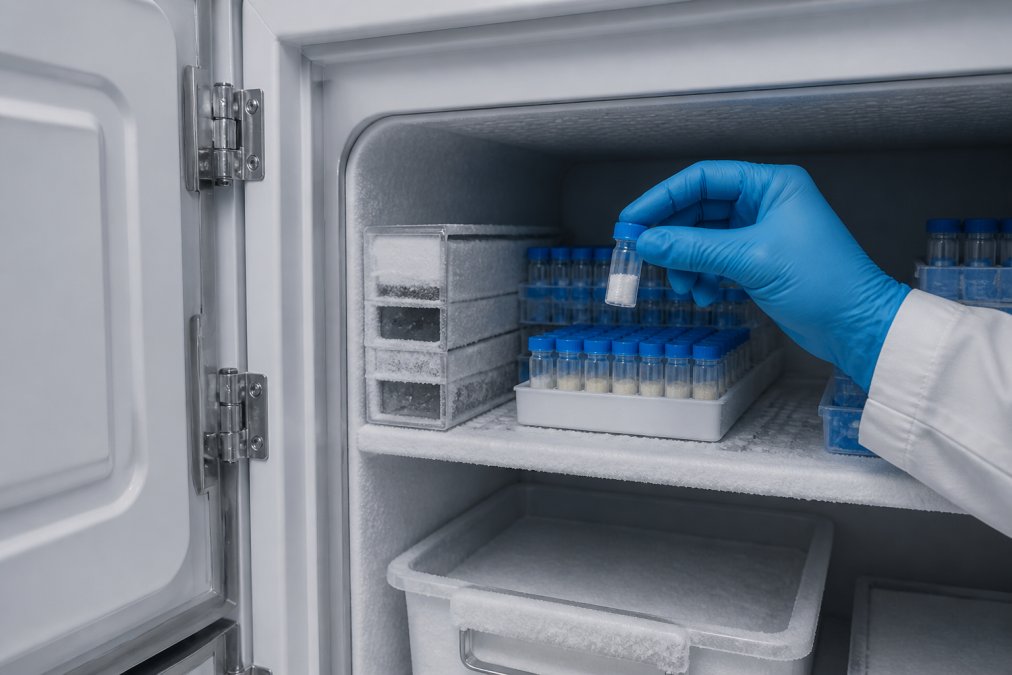
Temperature is the single most important variable in peptide storage stability. The right temperature depends on how long you need to keep your peptides.
For peptides you’ll use within 2-4 weeks, a standard -20°C freezer works. Chemical reactions proceed roughly twice as fast for every 10°C increase in temperature (peer-reviewed research). At -20°C, hydrolysis and oxidation slow dramatically. Most lyophilized peptides remain stable for a month or longer, assuming they’re protected from light and humidity (the FDA).
The practical advantage is accessibility. A -20°C freezer is standard equipment in most labs. However, -20°C has a hard limit: beyond 4-6 weeks, even well-protected peptides show measurable potency loss.
For studies lasting months or requiring peptide reserves, -80°C is the standard. At this temperature, degradation slows to a crawl. Most lyophilized peptides remain stable for 6-12 months or longer (peer-reviewed research).
The difference between -20°C and -80°C is exponential. The additional 60 degrees of cooling reduces chemical reaction rates by roughly 10-fold. A peptide that loses 5% potency per month at -20°C might lose only 0.5% per month at -80°C.
The form your peptide arrives in determines how you store it and how long it remains stable.
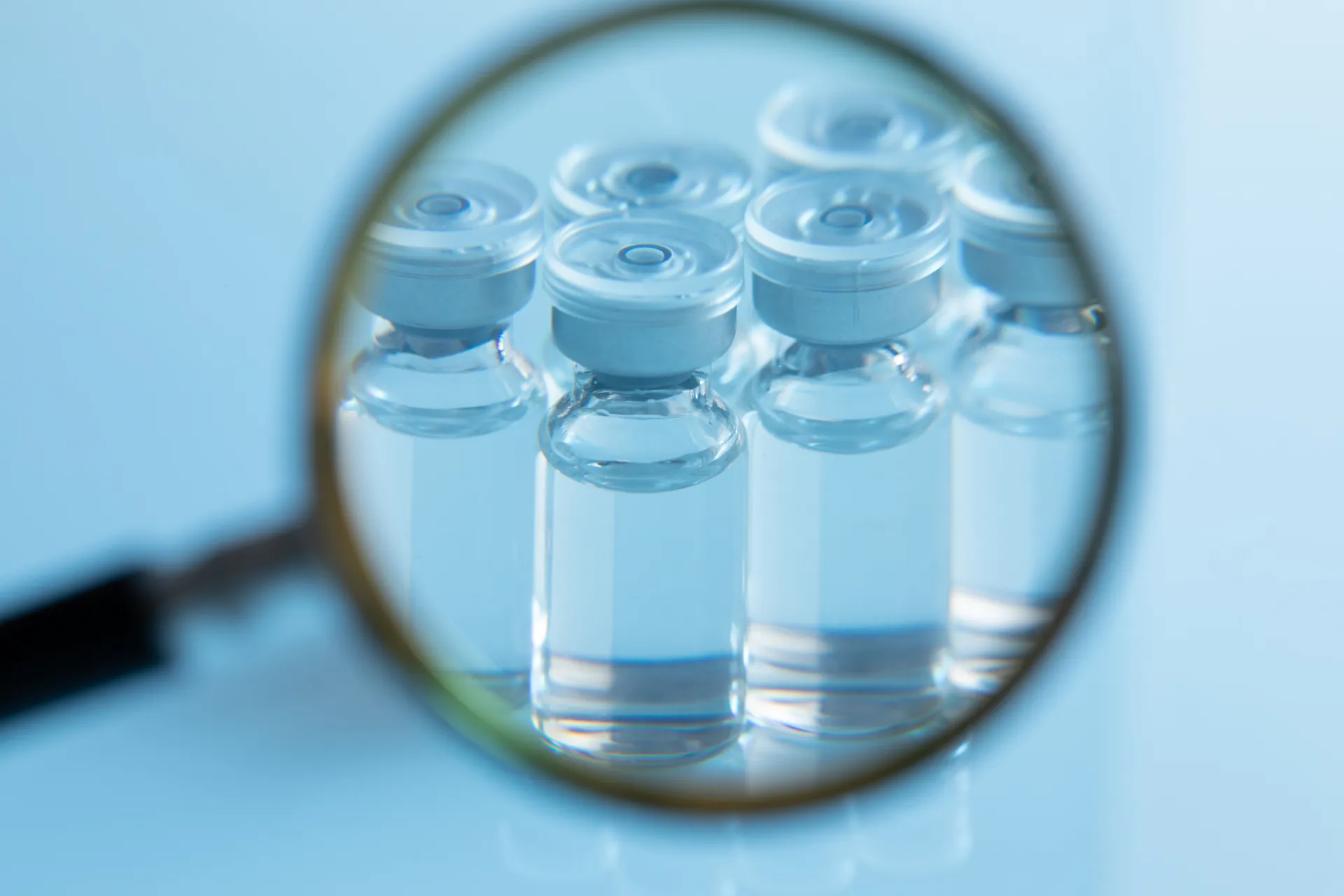
Lyophilized peptides arrive as a solid powder in a sealed vial. The lyophilization process removes water, the primary driver of peptide degradation. A lyophilized peptide in an unopened, properly sealed vial can remain stable for years at -20°C or -80°C.
Reconstituted peptides, dissolved in a solvent like bacteriostatic water, are ready to use immediately. But reconstitution reintroduces water, which accelerates degradation. A reconstituted peptide at -20°C typically remains usable for 2-4 weeks; at 4°C, for 1-2 weeks.
Most researchers order lyophilized peptides and reconstitute only what they need for immediate use. This approach gives you both stability and flexibility.
Reconstitution seems simple, add solvent to powder, but the details matter enormously.
Bacteriostatic water is the standard for most peptide research. It contains benzyl alcohol, which inhibits bacterial growth and extends the stability of reconstituted peptides compared to sterile water alone. Bacteriostatic water typically allows reconstituted peptides to remain stable for 2-4 weeks at -20°C or 1-2 weeks at 4°C.
Some researchers use saline (0.9% sodium chloride solution) for specific applications, but it lacks preservative properties. If you use saline, reduce your shelf-life expectations by roughly half.
The pH of your solvent matters too. Most peptides are pH-sensitive. Bacteriostatic water is pH-neutral, making it the safest default choice. A common mistake is reconstituting with regular distilled water, which lacks preservatives and provides no protection against bacterial contamination. Always use bacteriostatic water.
Sterility is non-negotiable. Bacterial growth consumes peptides and produces byproducts that degrade them further.
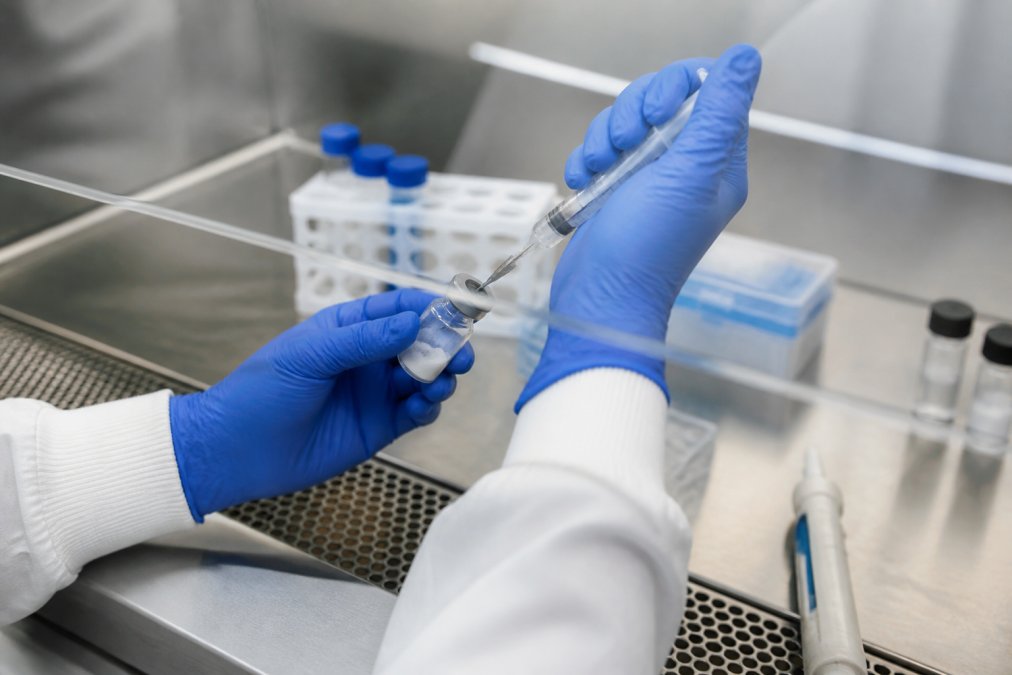
Reconstitute in the cleanest space available. If you have access to a laminar flow hood, use it. Otherwise, wipe down your work surface with 70% isopropyl alcohol. Use sterile syringes and sterile vials. Swab the rubber septum of your peptide vial with an alcohol pad before inserting the needle.
Use a sterile syringe to draw bacteriostatic water. Insert the needle at an angle to avoid coring. Inject the water slowly and let the peptide dissolve naturally, don’t shake or agitate the vial, as this introduces air and accelerates oxidation.
After reconstitution, label the vial with the date, concentration, and lot number. Store immediately at the appropriate temperature.
Once reconstituted, your peptide has a finite window of usability. The exact duration depends on storage temperature and how well you protect against degradation.
At 4°C, a reconstituted peptide in bacteriostatic water typically remains usable for 1-2 weeks. At -20°C, the same peptide typically lasts 2-4 weeks. At -80°C, reconstituted peptides can remain stable for 2-3 months.
The key variable is how well you protect against freeze-thaw cycles. Every time you thaw a frozen peptide and refreeze it, you introduce stress that accelerates degradation.
Aliquoting is the solution. Reconstitute your peptide, then divide it into small single-use portions in sterile vials. Use one aliquot at a time, leaving the others frozen. This eliminates freeze-thaw stress and extends the overall usability of your peptide batch.
Visible signs of degradation are your first warning. If your reconstituted peptide develops a precipitate (cloudiness or visible particles), it’s degrading. Turbidity (cloudiness without visible particles) suggests bacterial contamination or early-stage degradation. Color changes are also a red flag, most peptides are colorless or slightly yellow when fresh.
If your peptide looks fine but you’re unsure about its potency, you can use a peptide stability estimator tool. These free online calculators estimate remaining potency based on storage temperature, days since reconstitution, and freeze-thaw cycles.
When in doubt, discard. A batch of degraded peptides will skew your results and waste weeks of research time.
Peptides degrade through several distinct pathways. Understanding each one tells you exactly what to protect against.
Oxidation is the reaction between peptides and oxygen. It’s accelerated by light, heat, and trace metals. A peptide exposed to air at room temperature can lose potency measurably within hours.
Minimize oxygen exposure by storing peptides in sealed vials with inert septums. Consider using vials flushed with inert gas like argon or nitrogen, which displace oxygen and prevent oxidation.
Freeze-thaw cycles are brutal on peptide stability. Ice crystals can rupture peptide molecules, and thawing causes osmotic stress. If you must freeze and thaw, do it slowly. Rapid thawing causes more damage than slow thawing at refrigerator temperature. Minimize the number of cycles by aliquoting into single-use portions.
Some researchers add cryoprotectants like glycerol to their reconstituted peptides to reduce ice crystal formation and osmotic stress during freezing.
Light accelerates degradation through photochemical reactions. Store peptides in amber or opaque vials, not clear glass. Keep them away from windows and bright lights.
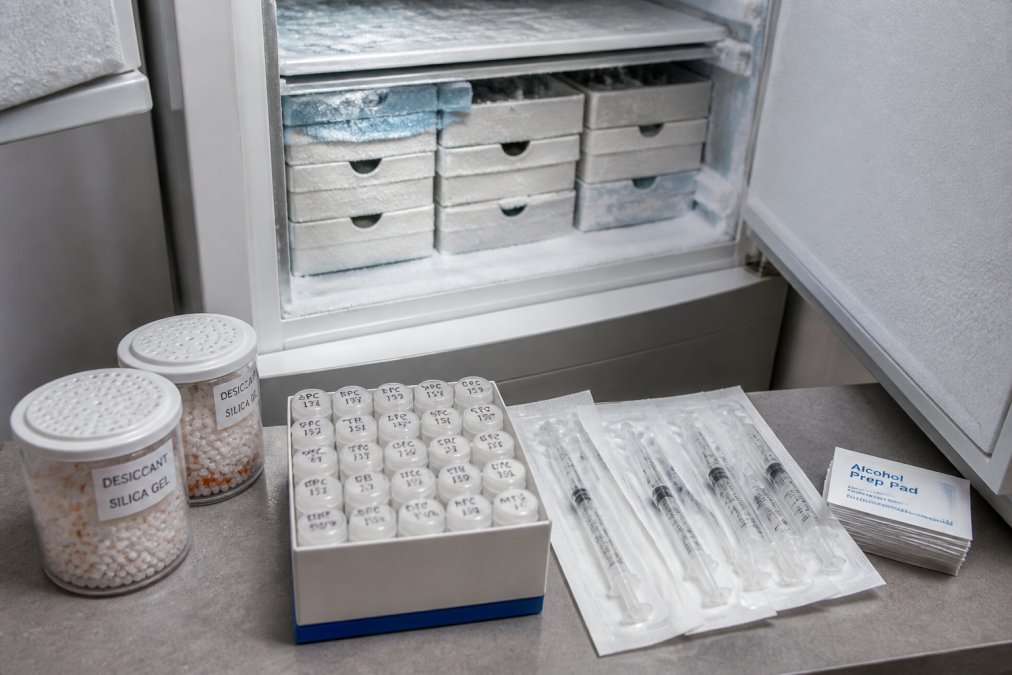
Humidity is the enemy of lyophilized peptides. Use desiccants to control humidity. Silica gel with a color indicator is affordable and effective. When the silica gel turns pink, it’s saturated and needs replacement. Molecular sieves are more expensive but provide superior moisture control in humid environments.
Store your peptides in sealed containers with desiccants. Many researchers use hard-shell vial cases with desiccant inserts, which protect against physical damage, light exposure, and humidity.
Bacterial contamination degrades peptides rapidly. Bacteria consume the peptide as a nutrient source and produce enzymes that break down proteins. Prevent contamination through sterile technique during reconstitution, use bacteriostatic water, and minimize exposure time.
Setting up proper storage doesn’t require expensive equipment, but it does require intentionality.
For lyophilized peptides, you need a -20°C freezer at minimum. The freezer should be in a stable location, not near heat sources, and ideally with a backup power supply to prevent temperature excursions during outages.
Store your lyophilized peptides in sealed vials inside an opaque, airtight container with desiccants. This triple-layer approach protects against light, humidity, and temperature fluctuations. Label everything clearly with the peptide name, lot number, and storage date.
For reconstituted peptides, store in sterile vials in your freezer using small aliquots to minimize freeze-thaw cycles. Keep a log of which aliquots you’ve used and when you reconstituted them.
Many individual researchers use a combination approach: order lyophilized peptides from a supplier like Rejuvenation Wellness Solutions LLC, store them at -20°C, and reconstitute small portions as needed.
Glass vials are standard for peptide storage. Glass is chemically inert and doesn’t interact with peptides or solvents. Use vials with rubber septums that seal tightly. Amber or opaque vials are preferable to clear glass because they block light.
For long-term storage, use vials designed for pharmaceutical use. These have better seals and are less likely to allow oxygen ingress. Size matters: a vial that’s too large relative to the amount of peptide it contains has excess air space, which increases oxidation risk. Use the smallest vial size that accommodates your peptide volume.
Silica gel desiccants are the most accessible option. They’re cheap, effective, and easy to use. Place a desiccant packet inside your storage container alongside your peptide vials. Replace the desiccant monthly or whenever it becomes saturated.
Molecular sieves provide superior moisture control, especially in humid climates. They cost more but remain effective longer and can be regenerated by heating.
Inert gas flushing is the gold standard for preventing oxidation. Before sealing a vial, flush it with argon or nitrogen gas to displace oxygen. This is common in pharmaceutical manufacturing but less practical for individual researchers.
For most researchers, the practical approach is: lyophilized peptides in sealed vials with desiccants at -20°C. This simple setup prevents the vast majority of degradation pathways and costs almost nothing.
If your peptide shows visible precipitation or turbidity, degradation has occurred. If the vial was sealed and stored at the correct temperature, the most likely cause is contamination during reconstitution. Review your reconstitution technique: Did you use a sterile syringe? Did you swab the vial septum with alcohol? Did you work quickly to minimize air exposure?
If precipitation appeared after weeks of storage, hydrolysis is the likely culprit, suggesting either the solvent pH was wrong or the storage temperature fluctuated. For future batches, confirm that you’re using bacteriostatic water and that your freezer temperature is stable.
If your peptide darkened significantly, oxidation occurred, suggesting either the vial seal was compromised or the peptide was exposed to light. Check your vial caps for cracks. Switch to amber vials. Consider adding a desiccant to your storage container.
Recovery is rarely possible. Once a peptide has degraded, you can’t reverse the chemical changes. The best approach is prevention: get the storage conditions right from the start.
Keeping peptides stable is fundamentally about controlling the chemistry. Temperature, moisture, oxygen, light, and contamination are all preventable. Get these variables right, and your peptides will perform consistently across your research timeline.
Rejuvenation Wellness Solutions LLC supplies peptides with certificates of analysis confirming purity and stability at the time of shipment. From there, proper storage is your responsibility, but it’s a responsibility you can absolutely meet with the practices outlined here. Whether you’re running a clinical trial or a home-lab study, these storage fundamentals apply. Master them, and you’ll avoid the frustration of degraded peptides and failed experiments.
A: Store lyophilized peptides in a -80°C freezer in sealed vials with desiccants to minimize moisture exposure. For reconstituted peptides, use sterile vials and refrigerate at 2-8°C for short-term use (up to 2 weeks) or freeze at -20°C to -80°C for longer storage. Always protect from light, oxygen, and freeze-thaw cycles. Use bacteriostatic water as your solvent to inhibit bacterial growth and extend shelf life.
A: Reconstituted peptide shelf life depends on storage temperature and solvent. At 2-8°C (refrigerated), most reconstituted peptides remain stable for 7-14 days. At -20°C, stability extends to several months. At -80°C, properly stored reconstituted peptides can remain stable for 6-12 months or longer. Minimize freeze-thaw cycles, each cycle degrades potency. Aliquoting into smaller vials helps reduce repeated thawing.
A: The primary threats to peptide stability are freeze-thaw cycles, oxidation, moisture (humidity), light exposure, temperature fluctuations, and bacterial or chemical contamination. Repeated freezing and thawing causes ice crystal formation that damages peptide structure. Oxidation occurs when peptides contact oxygen, especially those with methionine or cysteine residues. Humidity triggers hydrolysis. Storing at room temperature accelerates all degradation processes. Using sealed, sterile vials with desiccants and storing at -80°C mitigates these risks.
A: If reconstituted peptides were left at room temperature for a few hours, they may still be usable depending on the specific peptide sequence and solvent. Check for visible signs of degradation: turbidity, precipitate, or discoloration. If the peptides appear clear and uncontaminated, you can test them or use a peptide stability estimator tool to assess remaining potency. However, if left unrefrigerated overnight or longer, discard them to avoid unreliable research results. Always return peptides to appropriate cold storage immediately once discovered.
This article was written using GrandRanker