
Last Updated: August 26, 2026
Understanding the distinction between peptide purity vs potency is fundamental to conducting reliable research. These two metrics measure fundamentally different properties, yet many researchers treat them interchangeably, compromising experimental outcomes. At Rejuvenation Wellness Solutions, we clarify this critical distinction to help researchers select peptides matching their specific requirements.
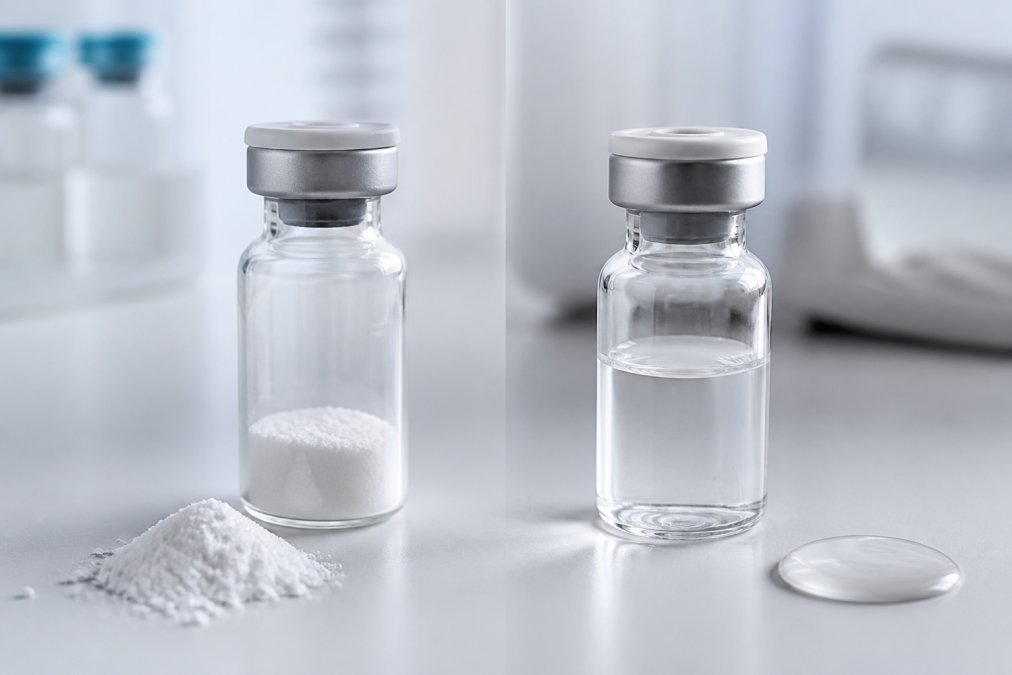
Purity tells you what percentage of your sample is actually the peptide you ordered. Potency measures how biologically active that peptide is and how effectively it performs its intended function. A vial can be 99% pure and still have low potency if the peptide molecules are degraded, misfolded, or chemically altered.
Peptide purity quantifies the percentage of your sample that consists of the target peptide molecule versus contaminants, including related compounds, synthesis byproducts, residual solvents, and salts. When a Certificate of Analysis states 99% purity, it means 99% of the sample’s mass is the intended peptide structure.
Purity is measured through high-performance liquid chromatography (HPLC) and mass spectrometry (peer-reviewed research). These methods separate and identify every component in your sample, providing a detailed impurity profile. High purity confirms that what you received matches the chemical formula and molecular weight you ordered, but doesn’t guarantee the peptide will work for your research if it has degraded during storage or synthesis introduced structural defects.
Potency measures biological activity, how well the peptide performs its intended function in a biological system. This is assessed through in vitro or in vivo bioassays that test the peptide’s ability to bind to receptors, trigger cellular responses, or produce measurable physiological effects. Potency depends on context: the same peptide might show high potency in one assay system and lower potency in another, depending on pH, temperature, buffer composition, and cell type.
A peptide can be chemically pure but biologically inactive if the active pharmaceutical ingredient has undergone structural changes that don’t affect its molecular weight but eliminate its function. Oxidation of methionine residues, deamidation of asparagine, or improper disulfide bond formation can render a pure peptide inactive (peer-reviewed research).
You receive a Certificate of Analysis showing 99% purity, conduct your experiment, and the peptide produces minimal effect. This disconnect occurs because purity and potency measure different things.
During synthesis, the peptide backbone may form correctly, but the three-dimensional structure critical for receptor binding may be misfolded. Post-translational modifications like oxidation or deamidation can occur even in a pure sample, especially during storage. The peptide might also be present in an inactive form, such as aggregated molecules that clump together, reducing bioavailability.
Counter-ions also play a role. A peptide salt (like acetate or hydrochloride) is chemically pure but may have reduced potency if the counter-ion interferes with cellular uptake or receptor binding. A 99% pure peptide-acetate might contain 30-40% acetate salt by weight, meaning only 60-70% is the active peptide molecule itself (the FDA).
Storage conditions dramatically affect potency. A pure peptide stored at room temperature in a humid environment will degrade over weeks, even if it remains chemically pure. This is why Rejuvenation Wellness Solutions recommends requesting stability data alongside your Certificate of Analysis.
Verifying peptide purity requires understanding the analytical methods used and interpreting results correctly. The gold standard is high-performance liquid chromatography (HPLC), often combined with mass spectrometry for confirmation.
HPLC separates peptide components based on their chemical properties. The sample is dissolved and injected onto a column where components separate and emerge at different times. A detector measures absorbance at 214 nm, the wavelength where peptide bonds absorb light most strongly, creating a chromatogram showing peaks for each component.
The area under the peak for your target peptide, divided by the total area of all peaks, gives the purity percentage. Mass spectrometry provides confirmation by measuring the molecular weight of each component, distinguishing the target peptide from closely related sequences like truncation products.
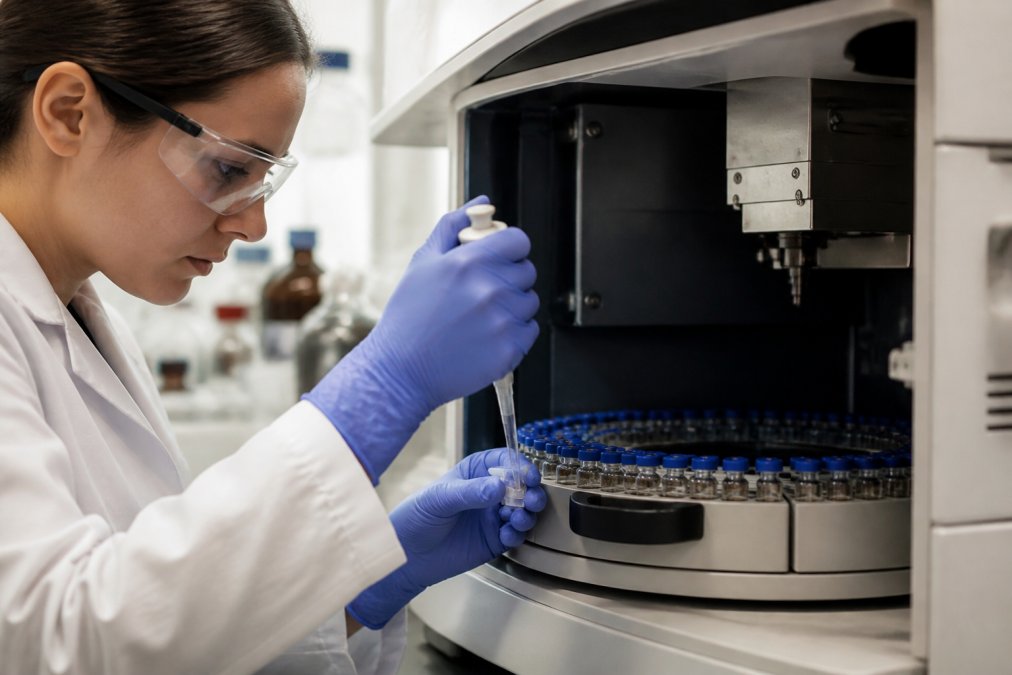
A Certificate of Analysis includes an impurity profile showing every component detected in your sample:
When reviewing an impurity profile, focus on the identity and quantity of the largest impurity peaks. A 99% pure peptide with 0.5% of a closely related truncation sequence may be more problematic than one with 1% of a salt residue.
A high-quality Certificate of Analysis identifies each impurity by name and percentage. Rejuvenation Wellness Solutions provides detailed impurity profiles for all products, including identification of any truncation, deprotection, or oxidation products detected.
The Certificate of Analysis (CoA) is your primary tool for verifying that you received what you ordered. It’s a legal document certifying that the peptide meets stated specifications for purity, identity, and potency.
A comprehensive Certificate of Analysis contains:
The most critical sections are purity (HPLC), identity (mass spectrometry), and the impurity profile.
Independent laboratory testing adds credibility to purity claims. When a supplier uses an in-house laboratory, there’s inherent bias toward favorable results. Third-party testing from an accredited laboratory, ideally ISO/IEC 17025 accredited, provides objective verification.
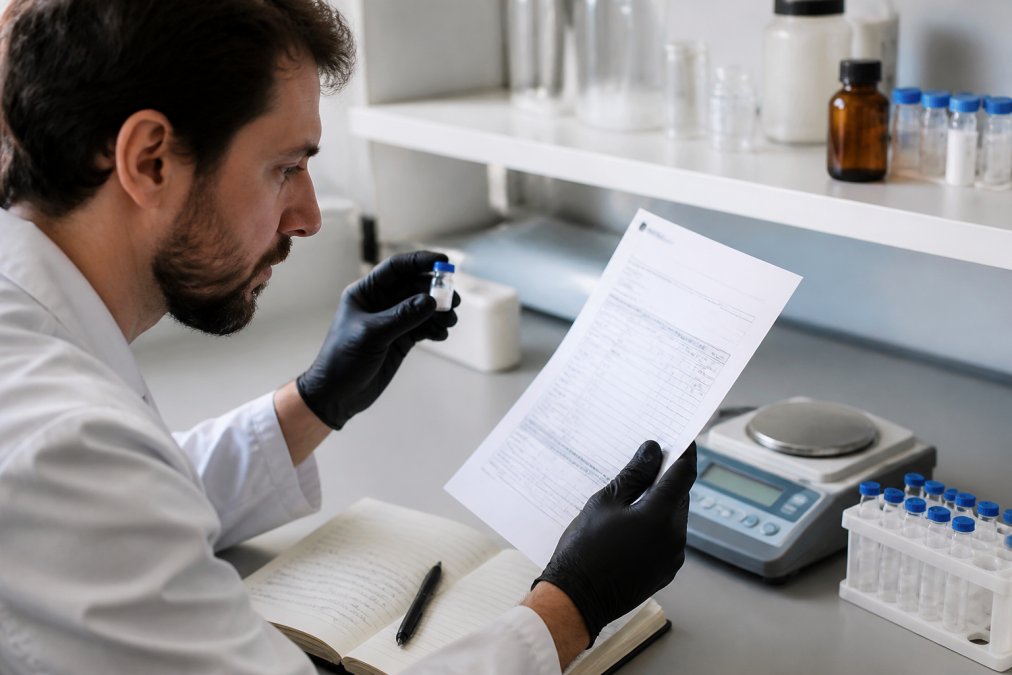
Look for these indicators of legitimate third-party testing:
Rejuvenation Wellness Solutions partners with WHO/GMP and ISO-certified manufacturers and accredited third-party testing laboratories to ensure every product includes an independent Certificate of Analysis. Be cautious of suppliers offering CoAs "upon request" or providing only summary purity percentages without impurity details.
The ultimate measure of a peptide’s value for your research is its biological activity, whether it produces the physiological response you’re studying. A peptide with high purity and documented potency will generate consistent, reproducible results. A peptide lacking potency will produce noise and failed experiments.
Biological activity encompasses pharmacodynamics (how the peptide interacts with its target, receptor binding, signal transduction) and pharmacokinetics (how the body or cell system processes the peptide). In research settings, you’re primarily concerned with pharmacodynamics: does the peptide bind to its target and trigger the intended effect?
Bioavailability, the fraction of administered peptide that reaches the site of action in active form, is particularly important for in vivo studies. A pure peptide that degrades rapidly in the bloodstream will show low bioavailability and weak experimental outcomes.
This is why researchers should request not just purity data but also potency assays or bioactivity data. An HPLC purity result tells you the chemical composition. A potency assay tells you whether the peptide will actually work for your research.
Peptide purity standards vary by application.
Research-grade peptides typically meet 99%+ purity standards, appropriate for most academic research, preclinical studies, and laboratory validation experiments. At 99% purity, impurities represent 1% or less of the sample by weight, minimizing interference with your assay.
However, "99% purity" is not a single standard. A peptide that’s 99% pure with 0.8% of a closely related truncation sequence may behave differently than one with 0.7% salt and 0.3% solvent residue. The composition of impurities matters as much as the total percentage.
For clinical trial applications or therapeutic development, higher purity standards apply. Good Laboratory Practice (GLP) compliance typically requires comprehensive analytical validation.
Rejuvenation Wellness Solutions provides 99%+ pure research peptides suitable for independent researchers, clinical trials, and laboratory studies. Every product includes a detailed Certificate of Analysis showing exact purity, impurity profile, and third-party testing confirmation.
Most peptides are synthesized as salts, typically acetate, hydrochloride, or trifluoroacetate (TFA). When a Certificate of Analysis states 99% purity for a peptide-acetate, that percentage includes the acetate salt. The actual peptide API (active pharmaceutical ingredient) may represent only 60-70% of the sample weight.
This matters for dosing accuracy. If you’re calculating peptide concentration based on total sample weight, you’re overestimating the actual peptide present. Quality suppliers specify the salt form and provide a correction factor, allowing you to calculate the correct dose for your research.
A peptide’s purity at the time of testing doesn’t guarantee it will remain pure throughout your research. Peptides degrade through oxidation, hydrolysis, aggregation, and deamidation. Storage conditions dramatically affect the degradation rate.
Peptides stored at room temperature in humid conditions degrade rapidly, often losing significant potency within weeks. Peptides stored at -20°C in dry conditions remain stable for months or years. Request stability data from your supplier if you’re conducting long-term research.
Rejuvenation Wellness Solutions recommends storing peptides at -20°C or below in sealed vials protected from light and moisture, and provides guidance on reconstitution and storage to maximize stability throughout your research project.
The price difference between lower-purity and research-grade peptides can be substantial. The question is whether the cost savings justify the potential experimental risks.
Lower-purity peptides introduce variability. Impurities can interfere with assays, compete for binding sites, or trigger off-target effects, requiring repeated experiments and ultimately costing more in reagents and labor than you saved on peptide cost.
High-purity peptides with detailed analytical characterization provide confidence in your results. For academic research with limited budgets, lower-purity peptides may be acceptable for initial proof-of-concept work. But for studies intended for publication, regulatory submission, or clinical trials, research-grade purity is essential.
Rejuvenation Wellness Solutions provides 99%+ pure research peptides at competitive pricing through partnerships with WHO/GMP and ISO-certified manufacturers and 503B compounding pharmacies. We offer same-day order fulfillment and UPS 2-day air shipping, ensuring your peptides arrive in optimal condition. Our text, phone, and email support is available within hours, so you can resolve questions quickly and keep your research on schedule.
=== FAQ ANSWERS (audit these too, same rules) ===
[1] Q: What is the fundamental difference between peptide purity and potency?
A: Purity measures the percentage of the target peptide versus impurities and byproducts in your sample, determined through HPLC or mass spectrometry. Potency measures the biological activity or functional effectiveness of the peptide in your research application. A sample can be 99% pure chemically but have reduced potency if the peptide molecules are damaged, misfolded, or degraded. Both matter: purity confirms what you’re getting, potency confirms it will work as intended.
[2] Q: How do I verify peptide purity before purchasing?
A: Request a Certificate of Analysis (CoA) from the supplier before committing to an order. The CoA should include HPLC chromatography data showing purity percentage, identification of impurities, molecular weight confirmation via mass spectrometry, and third-party testing verification. Check that testing was performed by an ISO/IEC 17025 accredited laboratory. Rejuvenation Wellness Solutions provides independent lab testing with a CoA for every product, allowing you to confirm quality before use.
[3] Q: Why can a highly pure peptide still have low biological activity?
A: High chemical purity does not guarantee biological function. A peptide can be 99% pure but have low potency if the molecules are oxidized, deamidated, or misfolded, all structural changes that don’t show up as impurities but damage the peptide’s ability to interact with its target. Storage conditions, pH exposure, and freeze-thaw cycles also degrade biological activity without changing the purity percentage. This is why stability and proper handling matter as much as the initial purity measurement.
[4] Q: What purity level should I look for in research peptides?
A: Research-grade peptides typically start at 95% purity, but 98-99%+ purity is standard for reliable results. Higher purity reduces background noise in your experiments and improves reproducibility. The best choice depends on your application: cell-based assays and in-vivo studies benefit from 99%+ purity to minimize off-target effects. For less sensitive applications, 95-98% may suffice. Rejuvenation Wellness Solutions provides 99%+ pure peptides to support consistent, high-quality research outcomes.
A: Purity measures the percentage of the target peptide versus impurities and byproducts in your sample, determined through HPLC or mass spectrometry. Potency measures the biological activity or functional effectiveness of the peptide in your research application. A sample can be 99% pure chemically but have reduced potency if the peptide molecules are damaged, misfolded, or degraded. Both matter: purity confirms what you're getting, potency confirms it will work as intended.
A: Request a Certificate of Analysis (CoA) from the supplier before committing to an order. The CoA should include HPLC chromatography data showing purity percentage, identification of impurities, molecular weight confirmation via mass spectrometry, and third-party testing verification. Check that testing was performed by an ISO/IEC 17025 accredited laboratory. Rejuvenation Wellness Solutions provides independent lab testing with a CoA for every product, allowing you to confirm quality before use.
A: High chemical purity does not guarantee biological function. A peptide can be 99% pure but have low potency if the molecules are oxidized, deamidated, or misfolded, all structural changes that don't show up as impurities but damage the peptide's ability to interact with its target. Storage conditions, pH exposure, and freeze-thaw cycles also degrade biological activity without changing the purity percentage. This is why stability and proper handling matter as much as the initial purity measurement.
A: Research-grade peptides typically start at 95% purity, but 98-99%+ purity is standard for reliable results. Higher purity reduces background noise in your experiments and improves reproducibility. The best choice depends on your application: cell-based assays and in-vivo studies benefit from 99%+ purity to minimize off-target effects. For less sensitive applications, 95-98% may suffice. Rejuvenation Wellness Solutions provides 99%+ pure peptides to support consistent, high-quality research outcomes.
The distinction between peptide purity vs potency explained is fundamental to successful research. Purity tells you what you received; potency tells you whether it will work. Both matter. Selecting a supplier that provides detailed analytical characterization, third-party testing, and responsive support ensures you have the high-quality peptides your research deserves. Shop Rejuvenation Wellness Solutions and access the cutting-edge peptide solutions that empower your scientific work.
This article was written using GrandRanker