

Last Updated: August 25, 2026
Peptide purity testing is the analytical process of measuring the percentage of active peptide in a sample and identifying any contaminants or impurities present. For researchers working with peptides, knowing the exact composition of your material is non-negotiable, it determines whether your experiments will succeed or fail. At Rejuvenation Wellness Solutions LLC, we understand that purchasing research peptides without verified purity data is like buying a reagent without a Certificate of Analysis: you’re essentially guessing at what you actually have.
The stakes are high. A peptide sample that claims 95% purity but actually contains 87% active compound will skew your dosing, invalidate your results, and waste weeks of research time. Contaminants like residual solvents, synthesis byproducts, or microbial endotoxins can trigger unexpected biological responses that have nothing to do with your target peptide. Independent third-party lab testing eliminates this uncertainty by providing an objective, defensible record of what’s in your vial.
Research-grade purity matters across multiple contexts. Individual researchers running small-scale studies need it to ensure reproducibility. Clinical trial organizations require it for regulatory compliance. Biotech teams need it to validate batch consistency before scaling production. The difference between a supplier who provides lab-tested peptides with a Certificate of Analysis and one who doesn’t is the difference between science you can trust and guesswork.
| Lab | Key Strength | Best For | Turnaround |
|---|---|---|---|
| Rejuvenation Wellness Solutions LLC | Affordable, 99%+ pure with independent testing included | Individual researchers & small teams | Same-day fulfillment |
| Prodigy Labs | Transparent per-sample pricing, fast turnaround | Researchers needing quick results | 5-7 business days |
| Vanguard Laboratory | ISO/IEC 17025:2017 accredited, comprehensive testing | Organizations requiring audit-grade results | ~1 week |
| Apollo Analytical | GLP-compliant, transparent pricing | Research groups & compounding pharmacies | Variable with rush option |
| ACS Peptide Testing Labs | ICH and USP validated methods | Researchers seeking independent validation | Contact for timeline |
Third-party tested research peptides have undergone analysis by a laboratory independent from the manufacturer or supplier. This separation is critical because it removes financial incentive to inflate purity numbers. When a supplier tests their own peptides in-house, there’s an inherent conflict of interest. An independent lab has no stake in the result, they’re simply reporting what the chemistry shows.
Independent validation works like this: you submit a sample to a third-party lab, they perform standardized analytical methods (typically HPLC and mass spectrometry), and they issue a Certificate of Analysis that documents the purity percentage, molecular weight confirmation, and any detected contaminants. This report becomes your defensible record. If something goes wrong in your research, you have objective data proving your starting material was what you thought it was.
The credibility difference is substantial. A supplier claiming "99% pure" carries weight only if that claim is backed by independent testing. Rejuvenation Wellness Solutions LLC includes independent lab testing with every product, every vial comes with a Certificate of Analysis so you can verify the purity claim yourself. This approach builds trust because the data is verifiable, not just marketing language.
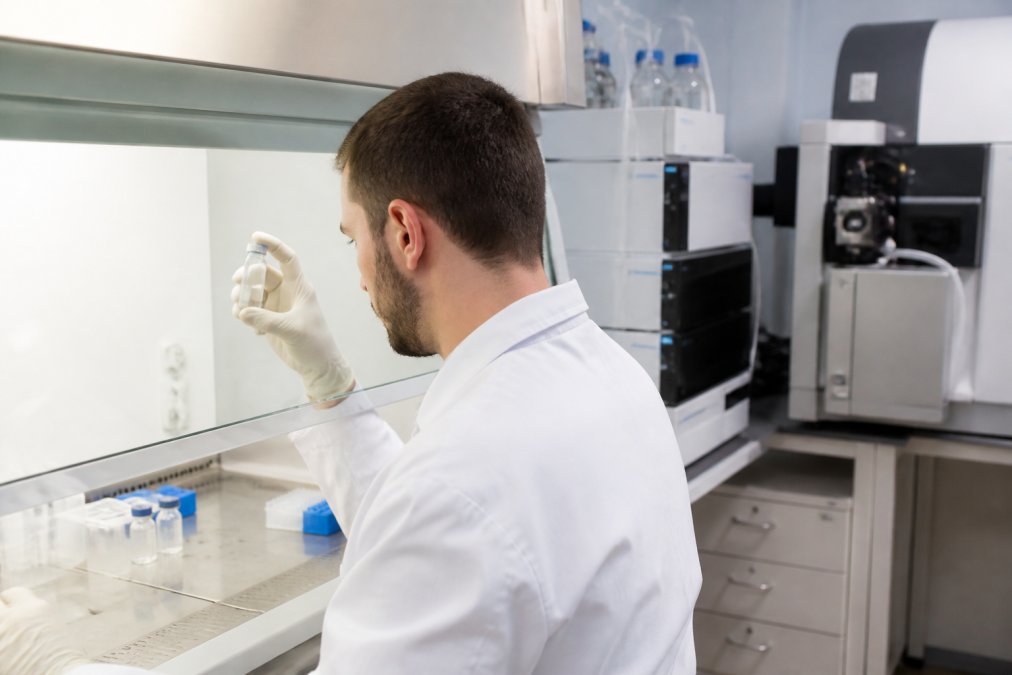
Many researchers who’ve been burned before ask: how do I know the lab testing isn’t fake? The answer is verification. Legitimate labs are accredited to ISO standards, validate their methods to official guidelines like USP or ICH, and maintain quality systems you can audit. Vanguard Laboratory holds ISO/IEC 17025:2017 accreditation, which means their testing methods are independently verified as accurate. Prodigy Labs is pursuing ISO 17025 accreditation, signaling their commitment to formal standards. These credentials matter because they’re not self-reported, they’re verified by external auditors.
High-performance liquid chromatography (HPLC) is the workhorse of peptide purity analysis. It separates the components in your sample by passing them through a column under pressure, then detecting them as they emerge. The result is a chromatogram, a graph showing peaks for each component. The largest peak is your target peptide; smaller peaks are impurities. HPLC gives you a purity percentage by comparing the area under your peptide’s peak to the total area of all peaks.
Liquid chromatography-mass spectrometry (LC-MS) takes this further by coupling HPLC separation to mass spectrometry detection. After HPLC separates the components, mass spectrometry identifies each one by its molecular weight. This dual approach confirms not just that you have a pure compound, but that the compound is actually the peptide you ordered. A peak in HPLC could theoretically be any molecule of similar size; mass spectrometry proves it’s the right one.
For most peptide purity testing, HPLC alone is sufficient. It’s faster, cheaper, and gives you the purity percentage you need. Mass spectrometry adds value when you need molecular weight confirmation or when you’re dealing with peptides that are difficult to separate chromatographically. Apollo Analytical includes both HPLC and ESI-MS in their core package at $300 per sample, giving you identity confirmation plus purity data.
The practical difference: if your only question is "how pure is this sample?", HPLC answers it. If you need to confirm "is this actually the peptide I ordered, and how pure is it?", add mass spectrometry. Rejuvenation Wellness Solutions LLC’s independent lab testing includes both methods, so you get complete analytical coverage without deciding between them.
A Certificate of Analysis is your window into what’s actually in your vial. Learning to read one transforms it from a confusing technical document into actionable information. The CoA typically includes several key sections: sample identification, analytical methods used, results, and the lab’s signature confirming the data.
Start with the purity percentage, usually listed as "Purity by HPLC" or "% Purity." This is the headline number, the percentage of your sample that is the target peptide. Anything below 95% should raise questions; anything above 99% is excellent (peer-reviewed research). Next, look at the molecular weight confirmation, often listed as "Observed MW" versus "Expected MW." These should match within a few Daltons (the unit of atomic mass). A significant difference suggests the wrong peptide or a degraded sample.
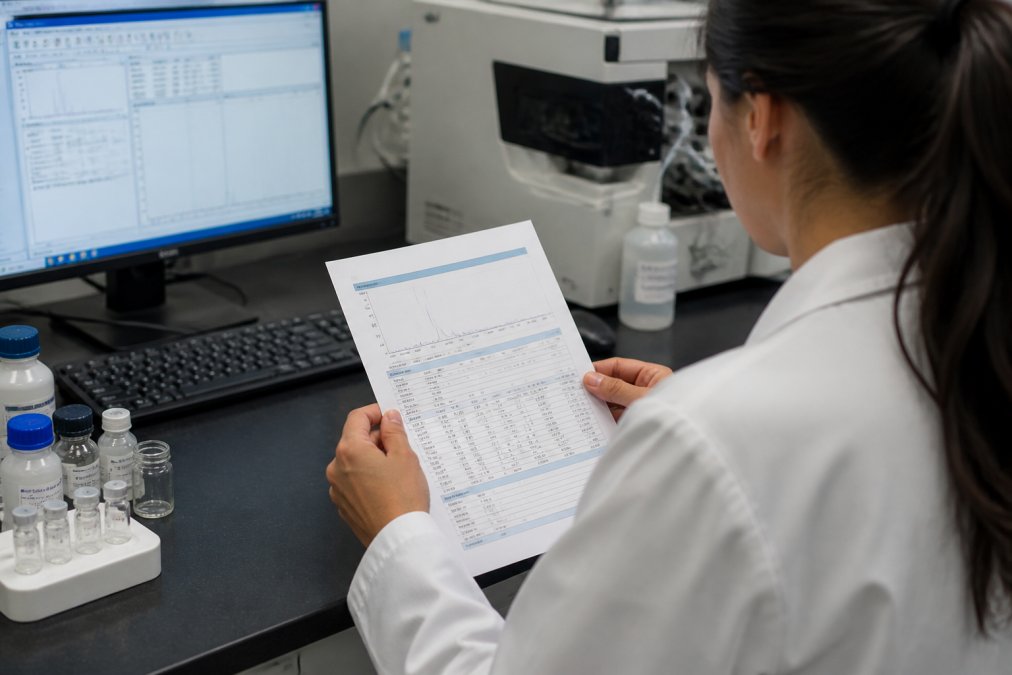
The chromatogram interpretation is where many researchers get lost. The chromatogram is a graph with time on the x-axis and signal intensity on the y-axis. Your target peptide appears as the largest peak. Smaller peaks are impurities or byproducts. The purity percentage is calculated by dividing the area under your peptide’s peak by the total area of all peaks. A clean chromatogram shows one dominant peak with minimal noise. A messy one shows multiple significant peaks, indicating lower purity.
Pay attention to what contaminants are listed. Some CoAs note specific impurities like "residual acetate" or "synthesis byproduct." Others simply list the total impurity percentage without naming them. If you’re using the peptide for a sensitive application, like animal studies or clinical work, knowing what the impurities are matters more than just knowing the total percentage.
Lab accreditation and method validation also appear on the CoA. Look for statements like "Methods validated to USP guidelines" or "ISO 17025 accredited." These indicate the lab follows standardized procedures and has external oversight. When Vanguard Laboratory issues a CoA, their ISO/IEC 17025:2017 accreditation is documented on the report, meaning their methods are independently verified.
Lab accreditation is your assurance that the testing was done correctly. The most relevant standard for peptide testing is ISO/IEC 17025, which covers general requirements for the competence of testing and calibration laboratories (iso.org). A lab holding this accreditation has demonstrated that its methods are validated, its equipment is properly calibrated, and its personnel are trained.
In the peptide testing space, several labs hold formal accreditation. Vanguard Laboratory is ISO/IEC 17025:2017 accredited, meaning their testing methods meet international standards. ILS Laboratories also holds ISO 17025 accreditation and offers a dedicated research-peptide program. Prodigy Labs is pursuing ISO 17025 accreditation, they’re not yet fully accredited but are working toward it, which is a positive signal of their commitment to standards.
Accreditation matters because it’s independently verified. A lab can’t simply claim ISO 17025 status, they must pass a rigorous audit by an accreditation body. This audit confirms that their analytical methods are validated, their equipment is properly maintained, and their quality systems are documented. When you see "ISO 17025 accredited" on a CoA, you’re looking at a lab that’s passed external scrutiny.
Method validation is another key standard. Most peptide labs validate their HPLC and mass spectrometry methods to either USP (United States Pharmacopeia) or ICH (International Council for Harmonisation) guidelines (usp.org). These validation standards ensure the method produces accurate, reproducible results. ACS Peptide Testing Labs explicitly validates their methods to ICH and USP guidelines, which means their purity percentages are defensible in regulatory contexts.
How do you verify a lab’s accreditation? Ask for their scope of accreditation document, which lists exactly what testing they’re accredited for. Not all labs are accredited for peptide testing specifically, some hold accreditation for pharmaceutical testing but not research peptides. Legitimate labs will provide this documentation without hesitation. Rejuvenation Wellness Solutions LLC partners with WHO/GMP and ISO-certified manufacturers and 503B compounding pharmacies, ensuring your peptides meet pharmaceutical-grade standards before they even reach independent testing.
Turnaround time varies significantly across labs, ranging from same-day fulfillment to several weeks depending on the lab and the complexity of testing. Prodigy Labs offers fast turnaround, 5-7 business days for standard identity and purity testing. Apollo Analytical offers rush service for faster results, though standard turnaround varies by workload. Vanguard Laboratory and ILS Laboratories typically take approximately one week for multi-assay panels.
Rejuvenation Wellness Solutions LLC stands out by offering same-day order fulfillment and UPS 2-day air shipping, so your peptides reach you quickly. The independent lab testing is already included with your order, so you receive your product with the Certificate of Analysis already in hand, no waiting for results after delivery.
Sample submission protocols differ by lab. Most labs accept overnight shipping via UPS or FedEx. You’ll typically need to fill out a submission form listing the peptide name, expected molecular weight, and any specific tests you want performed. Some labs have online portals for sample tracking; others require email communication. Apollo Analytical maintains a straightforward submission process with transparent pricing tiers. Prodigy Labs accepts samples from researchers nationwide and provides clear pricing on their website.
Cost depends on which analytical methods you need. Prodigy Labs starts at $195 per sample for screening-level testing. Apollo Analytical’s core package runs $300 per sample and includes HPLC purity, ESI-MS identity, endotoxin testing, and heavy metals analysis. Vanguard Laboratory and ACS Peptide Testing Labs require contacting them for quotes. Phoenix Pharmaceuticals offers peptide level determination at $20 per sample in bulk, though this is quantification rather than purity analysis.
For individual researchers, the cost-benefit calculation is straightforward: spending $200-300 on comprehensive lab testing prevents far more expensive mistakes down the line. A failed experiment due to impure peptides costs far more in time and materials than the testing fee. Rejuvenation Wellness Solutions LLC includes independent testing with every order, eliminating this decision, you get the testing whether you choose it or not.
Selecting a peptide purity testing lab comes down to three factors: accreditation standards, turnaround time, and whether you need just purity data or comprehensive analytical coverage including endotoxin and sterility testing. Vanguard Laboratory and ILS Laboratories offer formal ISO 17025 accreditation for researchers who need audit-grade results. Prodigy Labs delivers fast turnaround and transparent per-sample pricing for teams that need quick answers. Apollo Analytical provides GLP-compliant testing with flexible packages for organizations scaling from small studies to larger operations.
For individual researchers and small teams, Rejuvenation Wellness Solutions LLC simplifies the equation by including independent lab testing with every order. You receive 99%+ pure peptides with a Certificate of Analysis verifying purity, molecular weight confirmation, and batch consistency, no separate lab selection needed. Combined with same-day order fulfillment, UPS 2-day air shipping, and customer service available by text, phone, and email within hours, you get reliable, tested peptides without the complexity. Shop with Rejuvenation Wellness Solutions LLC and eliminate the guesswork from your research.
Independent third-party testing provides objective verification that your peptides meet purity and identity specifications without bias from the supplier. Third party tested research peptides offer defensible documentation for research applications, clinical trials, and regulatory submissions. An external lab's Certificate of Analysis protects your research integrity by confirming molecular weight, purity percentage, and contaminant levels through validated analytical methods like HPLC and mass spectrometry.
A Certificate of Analysis reports purity percentage (typically 95-99%+), molecular weight confirmation, and identifies any detected impurities. Look for the analytical methods used (HPLC, LC-MS), the lab's accreditation status, and the test date. The purity percentage tells you what fraction is your target peptide; the remainder consists of known or unknown impurities. Mass spectrometry confirms the peptide matched its expected molecular weight, and endotoxin/sterility results appear if those tests were performed. Always verify the lab's credentials match your research requirements.
HPLC (high-performance liquid chromatography) measures purity by separating peptide components and quantifying the main peak as a percentage of total material. Mass spectrometry confirms identity by measuring the exact molecular weight of your peptide. HPLC answers 'How pure is it?' while mass spectrometry answers 'Is this the right peptide?' Most labs use both methods: HPLC for purity percentage and LC-MS (liquid chromatography-mass spectrometry) for identity confirmation. Together, they provide comprehensive analytical accuracy.
A reliable lab holds ISO/IEC 17025:2017 accreditation or demonstrates validated methods aligned with USP (United States Pharmacopeia) or ICH (International Council for Harmonisation) guidelines. It should offer transparent turnaround times, provide detailed Certificates of Analysis with methodology explanations, and accept samples from independent researchers. Verify the lab's credentials, ask about their specific peptide testing experience, and confirm they use validated instrumentation like HPLC-UV and mass spectrometry for both purity and identity analysis.
Check the lab's ISO 17025 accreditation status through ILAC (International Laboratory Accreditation Cooperation) or your state's accreditation body. Request references from other researchers or institutions. Review their Certificate of Analysis format, authentic reports include methodology details, analyst initials, accreditation numbers, and QR codes for digital verification. Ask the lab about their quality assurance protocols and whether they participate in proficiency testing programs. Rejuvenation Wellness Solutions partners with WHO/GMP and ISO-certified manufacturers, ensuring their independent lab testing meets pharmaceutical-grade standards.
This article was written using GrandRanker








