
Last Updated: August 27, 2026
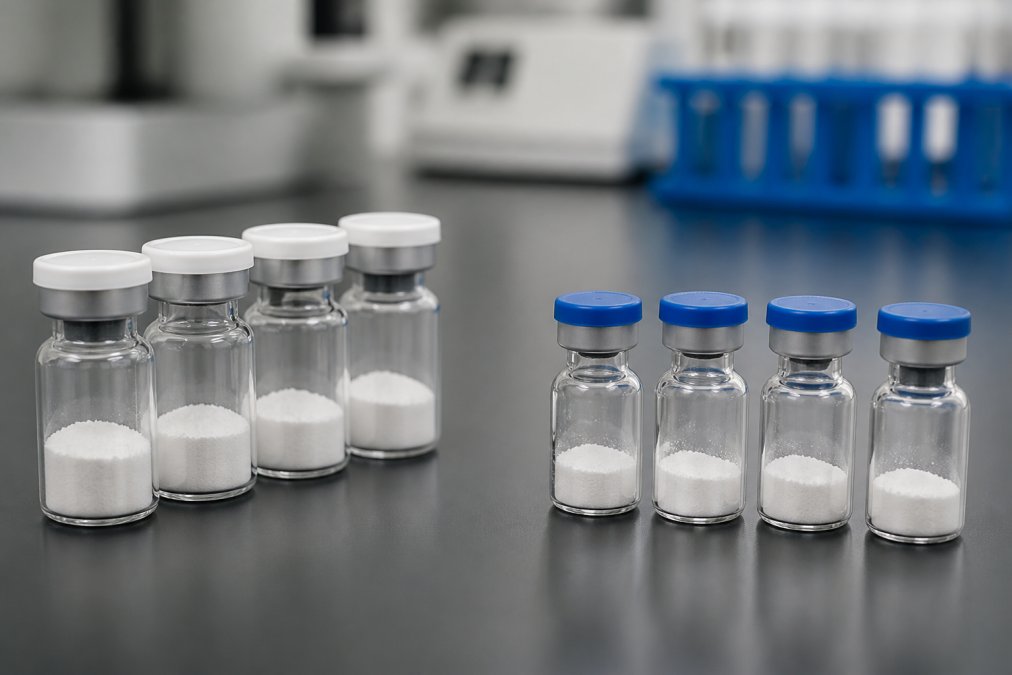
Custom peptide synthesis creates peptides tailored to your exact specifications, you define the amino acid sequence, choose modifications, and set purity requirements. Off-the-shelf peptides come pre-made from established catalogs, ready to ship within days. The core trade-off is straightforward: custom synthesis offers unlimited design possibilities at the cost of longer timelines, while off-the-shelf options sacrifice flexibility for speed and lower per-unit costs.
Your choice depends on your research timeline, budget constraints, sequence complexity, and whether your target peptide already exists in a vendor’s catalog. At Rejuvenation Wellness Solutions LLC, we work with researchers who need both approaches. Knowing when to use each one separates efficient research programs from ones that waste months on poor vendor choices.
| Factor | Custom Peptide Synthesis | Off-the-Shelf Peptides |
|---|---|---|
| Turnaround Time | 2-8 weeks typical | 3-7 business days |
| Sequence Flexibility | Unlimited, any amino acid sequence | Limited to catalog inventory |
| Modifications Available | 300+ options (N-terminal, C-terminal, labels, etc.) | Pre-selected modifications only |
| Purity Levels | Crude to >98% (you choose) | Typically >95% standardized |
| Cost Per Unit | Higher upfront; scales down with volume | Lower per-unit cost |
| Quality Assurance | HPLC, mass spectrometry per batch | Standardized testing, CoA included |
| Best For | Novel sequences, complex modifications, SAR studies | Established targets, quick validation, budget constraints |
| Batch Consistency | Depends on synthesis provider | Highly consistent (catalog standard) |
A Certificate of Analysis (CoA) is your proof that a peptide meets stated purity and identity specifications. It’s the foundation of experimental reproducibility.
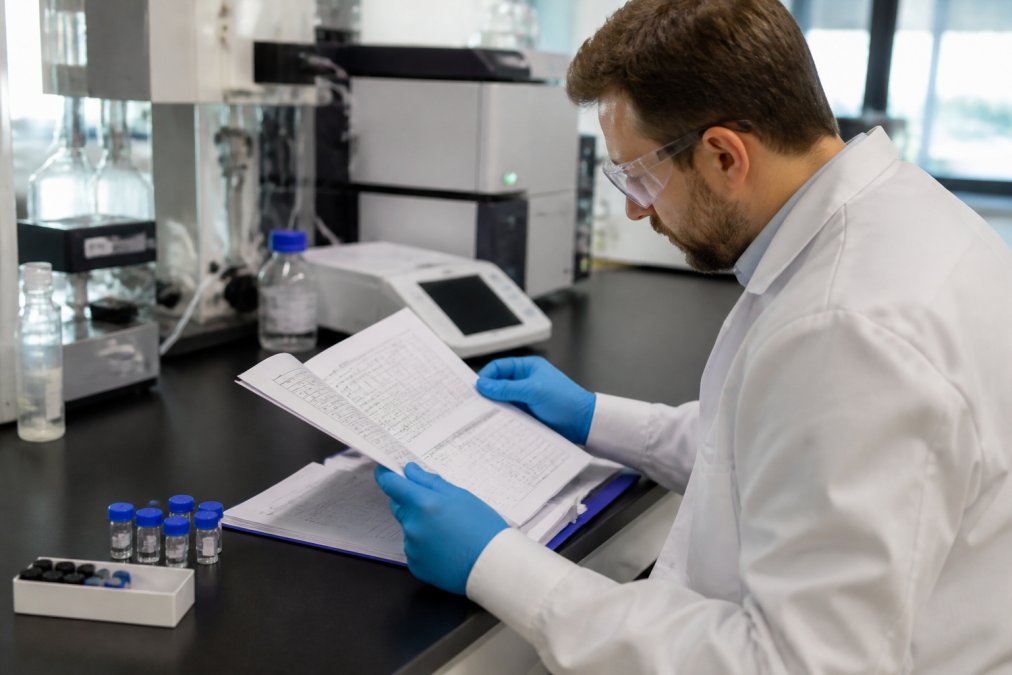
A valid CoA includes HPLC chromatography data showing purity percentage and mass spectrometry results confirming molecular weight (the FDA). HPLC separates peptide components by size and hydrophobicity. Mass spectrometry confirms exact molecular weight, catching synthesis errors or contamination that HPLC alone might miss.
The CoA should specify the testing date, batch number, and methodology used. Testing standards vary, a peptide claimed to be 95% pure via HPLC might be 88% pure via a different method. Reputable providers list their exact analytical protocols, allowing you to compare across vendors.
Request CoAs before committing to large orders. A CoA from a provider using HPLC combined with mass spectrometry carries more weight than basic HPLC alone. Rejuvenation Wellness Solutions LLC provides independent lab testing with a Certificate of Analysis for every product, ensuring documented proof of purity and identity before your research depends on it.
Turnaround time for custom peptide synthesis typically ranges from 2 to 8 weeks, depending on sequence length, complexity, and purity requirements (peer-reviewed research). Simpler peptides with standard modifications can ship in 2-3 weeks. Longer sequences or complex modifications often require 4-8 weeks.
Sequence length directly impacts synthesis duration. A 10-amino-acid peptide synthesizes faster than a 50-amino-acid sequence because each amino acid coupling step adds time. Difficult sequences with hydrophobic regions, branching, or bulky modifications require extra cycles to ensure complete coupling.
Purity level also affects timeline. Crude peptides (typically 70-80% pure) require minimal post-synthesis work and ship quickly. HPLC-purified peptides (>95% pure) need additional purification and analytical testing, adding 1-2 weeks.
Most custom synthesis providers offer expedited services at premium pricing. Rush synthesis can compress timelines to 5-7 days for simple peptides, but expect to pay 30-50% more. Shipping adds 2-5 business days depending on your location. Off-the-shelf peptides typically ship within 3-7 business days from order, making them the faster choice when you need results immediately.
Buying research peptides online requires evaluating vendor credibility, product documentation, and delivery reliability.
Start by verifying the vendor’s quality certifications. Look for WHO/GMP certification and ISO standards, indicating pharmaceutical-grade manufacturing practices. A vendor partnering with 503B compounding pharmacies or certified manufacturers has undergone third-party audits. Rejuvenation Wellness Solutions LLC partners with WHO/GMP and ISO-certified manufacturers, ensuring every product meets rigorous purity standards.
Request a Certificate of Analysis before ordering. A legitimate vendor provides CoAs without hesitation. Review the HPLC and mass spectrometry data. If a vendor refuses to share testing data, move on.
Confirm the peptide’s amino acid sequence matches your specifications. Transcription errors happen. A simple verification prevents weeks of wasted research.
Check shipping and storage protocols. Research peptides require proper handling. Verify the vendor ships via temperature-controlled methods (UPS 2-day air is standard). Ask about storage recommendations, most peptides remain stable at -20°C or lower. Rejuvenation Wellness Solutions LLC offers same-day order fulfillment with UPS 2-day air shipping, ensuring peptides arrive quickly and in optimal condition.
Review the vendor’s customer support responsiveness. Vendors reachable by text, phone, and email within hours demonstrate commitment to researcher success.
Compare pricing carefully, but don’t let cost alone drive the decision. A peptide 20% cheaper from an untested vendor costs far more if it fails your assay.
Selecting the right provider determines whether your research progresses smoothly or stalls.
Synthesis Yield and Success Rate. Peptide synthesis fails sometimes. Hydrophobic sequences, those rich in leucine, isoleucine, phenylalanine, or tryptophan, are notorious for incomplete coupling during synthesis (peer-reviewed research). Sequences longer than 50 amino acids face compounding failure risk. Bulky modifications like fluorescent labels increase failure likelihood because they sterically hinder subsequent coupling reactions.
Ask prospective vendors for their success rate specifically for your sequence type, not a blanket percentage. Realistic vendors segment their data: "We achieve 98% success on sequences under 30 amino acids with standard modifications, 94% on 30-50 amino acid sequences, and 88% on sequences over 50 amino acids with complex modifications."
Ask what happens when synthesis fails. Do they re-synthesize at no charge? Vendors that re-synthesize failed batches without charge absorb the risk, a sign they’re confident in their process. Request a "feasibility assessment" from your vendor. Experienced providers flag high-risk features and suggest alternatives, preventing failures entirely.
Analytical Validation Methods. Not all purity testing is equal. Vendors using HPLC alone provide basic confirmation, but HPLC cannot distinguish between your target peptide and a truncated peptide of similar size. Mass spectrometry solves this by measuring exact molecular weight. Vendors combining HPLC with mass spectrometry catch synthesis errors HPLC alone misses.
Request sample CoAs from prospective vendors and compare their analytical protocols. A comprehensive CoA includes HPLC chromatogram images, mass spectrometry spectrum showing the molecular ion peak, batch number, testing date, and methodology details.
Modification Capabilities. If your research requires N-terminal acetylation, C-terminal amidation, fluorescent labels, biotin tags, phosphorylation, or other modifications, confirm the vendor offers them. Some providers support 300+ modifications. Others offer only basics.
Beyond availability, ask about modification success rates. A vendor can offer N-terminal acetylation, but if their success rate is 85%, you’re taking on risk. Experienced vendors know which modifications couple reliably and will tell you upfront.
Batch Consistency and Reproducibility. Custom synthesis introduces batch-to-batch variability. Ask whether they perform process validation, a formal study where they synthesize your peptide multiple times under controlled conditions and document that results are consistent. This matters if you’re planning repeat experiments or scaling from research to clinical grade.
Scalability. Choose a provider capable of scaling with your program. A vendor limited to research-grade synthesis (typically up to 5-10 grams per batch) cannot support your project if it advances to clinical trials.
Ask about their scale-up process. Do they use the same synthesis chemistry at all scales? Consistency across scales matters. Ask for data: "Show me CoAs for your peptide at 100 mg, 1 gram, and 5 gram scales." If purity degrades significantly, that’s a red flag.
Rejuvenation Wellness Solutions LLC works with individual researchers and scales to institutional orders, supporting projects from initial discovery through development while maintaining consistent analytical standards across all scales.
The answer depends entirely on your research stage, constraints, and the financial return you expect from your peptide investment.
The Cost-Benefit Framework. Off-the-shelf peptides cost less per unit but offer zero flexibility. Custom synthesis costs more upfront but enables unlimited design iterations. The break-even point depends on how many sequence variants you need, how much research value each variant generates, and your total research budget.
Calculate the research value per peptide. If each peptide variant could generate a publication, advance a grant application, or enable a new research direction, assign it high value. High-value peptides justify custom synthesis costs. Low-value peptides favor off-the-shelf speed and cost.
Calculate the timeline cost. If your research timeline is fixed, waiting 6 weeks for custom synthesis might mean missing your deadline entirely. That delay has a cost: lost data, missed publication window, or failed grant milestone. If your timeline is flexible, custom synthesis’s longer lead time becomes less costly.
Calculate the modification cost. Some modifications are available off-the-shelf; others require custom synthesis. If your research requires a modification unavailable off-the-shelf, custom synthesis is the only choice.
Choose off-the-shelf when: Your target peptide already exists in a vendor’s catalog, your timeline is tight (under 2 weeks), you’re validating an established assay with low research value per peptide, or budget is the primary constraint. Off-the-shelf peptides work for control peptides, positive controls, and well-characterized sequences. If your research uses commonly studied peptides, growth factors like EGF or VEGF, hormones like insulin or glucagon, catalog options likely exist.
Choose custom synthesis when: Your sequence is novel, you need specific modifications not available off-the-shelf, you’re conducting structure-activity relationship (SAR) studies requiring multiple sequence variants, you need pharmaceutical-grade purity and batch documentation for regulatory submissions, or peptide design is central to your research question. The higher cost is justified when each peptide variant generates significant research value.
The hybrid approach maximizes research efficiency. Many research programs use both. Off-the-shelf peptides serve as controls, reference standards, and positive controls. Custom synthesis handles experimental variants and novel targets. This combination balances cost, timeline, and flexibility.
Common mistakes in the decision process:
Choosing based on price alone. A 40% cheaper peptide from an unknown vendor isn’t a bargain if it fails your assay or contains undocumented impurities. Mid-range pricing from a credible provider typically delivers better value than extremes at either end.
Underestimating timeline costs. If custom synthesis delays your experiment by 6 weeks and that delay pushes your publication past a conference deadline or grant review cycle, the timeline cost is enormous. Factor timeline risk into your decision.
Overestimating catalog availability. Always search multiple vendor catalogs before committing to custom synthesis. But recognize that "close enough" variants in catalogs might not work for your research.
Ignoring batch-to-batch variability. Off-the-shelf peptides are consistent because they’re manufactured at scale with standardized processes. Custom peptides can vary between batches if your vendor doesn’t maintain strict process controls. If you need multiple batches of the same custom peptide, confirm your vendor can reproduce it with documented consistency.
When you’re ready to order, prioritize vendors offering same-day fulfillment, rapid shipping, and responsive support. For off-the-shelf orders, expect 3-7 business days from order to delivery. For custom synthesis, expect 2-8 weeks depending on sequence complexity, plus 2-5 days for shipping. Plan accordingly.
Custom peptide synthesis creates peptides tailored to your exact specifications, including specific amino acid sequences, modifications, and purity levels. Off-the-shelf peptides are pre-made catalog products available immediately. Custom synthesis offers unlimited sequence flexibility and exact specifications for your research, while off-the-shelf options provide quick access to commonly used peptides. Choose custom synthesis when your research requires unique sequences, specific modifications like N-terminal or C-terminal labeling, or specialized biochemical properties. Off-the-shelf works well for established research using well-known peptides.
A Certificate of Analysis documents your peptide's purity, identity, and quality through HPLC analysis and mass spectrometry results. This verification proves the peptide meets specifications before you use it in experiments, ensuring your research results are reproducible and reliable. Independent lab testing confirms amino acid sequence accuracy, purity percentage (typically 95-99%+), and absence of contaminants. When buying research peptides online, always request the Certificate of Analysis before purchase, it's your proof of quality and essential for validating your experimental outcomes.
Custom peptide synthesis turnaround time typically ranges from 2 to 4 weeks for standard sequences under 50 amino acids. Longer sequences, complex modifications, or high-purity requirements (>98%) may extend timelines to 4-6 weeks or longer. Some providers offer expedited synthesis in 5-7 days for simpler peptides at premium pricing. Factors affecting turnaround include sequence length, number of modifications, desired purity level, and current production capacity. Confirm exact timelines with your provider before ordering, especially for time-sensitive research projects.
Verify that your provider partners with WHO/GMP and ISO-certified manufacturers, which ensures compliance with pharmaceutical manufacturing standards. Confirm they conduct independent lab testing and provide a Certificate of Analysis with every order. Check whether they work with 503B compounding pharmacies for additional quality oversight. Look for providers offering same-day order fulfillment and responsive customer service (text, phone, email support within hours). Ask about their quality assurance process, success rates for synthesis, and whether they guarantee purity levels. Avoid suppliers that cannot provide documentation or detailed technical specifications.
Choose custom synthesis when you need specific amino acid sequences not available in catalogs, require modifications like biotinylation or fluorescent labels, need exact purity levels above standard offerings, or are designing peptides for drug discovery and SAR (structure-activity relationship) studies. Custom synthesis is essential for epitope mapping, antibody development, and IND-enabling studies for clinical trials. Off-the-shelf works for established protocols using well-documented peptides. If your research requires unique specifications or regulatory compliance for clinical use, custom synthesis from a qualified provider is the appropriate choice.
This article was written using GrandRanker