
Insights, Research & Industry Updates

Identifying Fake Research Peptide Suppliers: 2026 Guide

Table of Contents

Last Updated: September 30, 2026

Red Flags That Reveal Fake Research Peptide Suppliers

Identifying fake research peptide suppliers starts with paperwork, not product. If a seller won’t show batch-specific lab results before you buy, that silence says plenty.

Packaging and Label Inconsistencies

Fake vendors slip up on the small stuff. A misspelled peptide name, missing lot number, or blurry print is a warning sign.

Check these details on every vial:

  • Peptide name spelled correctly and matched to the listing
  • A lot or batch number printed on the vial, not just the box
  • Net quantity stated in milligrams
  • Manufacturer name and contact info present
  • No sticker labels placed over older labels

Unverifiable Lab Claims and Missing Documentation

A supplier claiming “99% pure” that can’t produce a report is guessing or lying. Real vendors keep a Certificate of Analysis on file for every batch and share it on request. Ask for the COA before you pay; if the response is vague, slow, or full of excuses, move on.

How to Read a Peptide Certificate of Analysis

A peptide Certificate of Analysis reports what was tested in a specific batch, by what method, and with what result. If you don’t know how to read a peptide certificate of analysis, you can’t tell a real report from a decorated PDF.

Key Sections of a COA

Every legitimate COA contains the same core pieces:

  • Batch number matching the vial you received
  • Test method used, such as HPLC or mass spectrometry
  • Purity percentage with the exact figure
  • Molecular weight confirming the peptide identity
  • Lab name, contact info, and a report ID
  • Date of testing and the analyst’s signature

If any of these are missing, treat the document as decoration.

Watch Out
A COA without a batch number is useless. It may describe a great batch from two years ago that has nothing to do with the vial in your hand. Always match the numbers.

The Forgery Tells Most Buyers Miss

Once you have the core fields, examine how the document behaves as a document. A real COA is generated by a lab’s reporting system, which leaves fingerprints:

  • Report IDs that don’t follow a pattern. Real labs use sequential or date-coded IDs. If every COA from a vendor ends in the same suffix, or the format shifts between batches, the documents likely came from one template.
  • Metadata inconsistencies. Open the PDF properties. A file created in a word processor often shows an author name, creation date, or software tag that doesn’t match the lab.
  • Copy-paste artifacts. Identical analyst signatures, identical font kerning, or a pixel-for-pixel identical purity figure across batches signal a recycled template.
  • Missing chromatograms and spectra. A purity number without the underlying HPLC trace or mass spectrum is an assertion, not evidence.
  • Lab contact details that don’t resolve. A phone number that rings a generic answering service, or an email domain that isn’t the lab’s, is a red flag.

Matching the COA to the Vial in Your Hand

A COA only means something if it describes the exact vial you received. Three numbers must line up:

  1. The batch or lot number printed on the vial label
  2. The batch number on the COA
  3. The report ID the lab can confirm
Pro Tip
Photograph the vial label and the COA side by side before you open anything. If you later need to dispute a batch, that image is your evidence.

What a Real COA Actually Proves, and What It Doesn’t

A COA confirms that a specific batch was tested for specific attributes by a specific lab. It does not confirm that your vial came from that batch, that the supplier stored it correctly, or that the peptide is safe for any use. Treat the COA as one link in a chain, not the whole chain.

The Role of Third Party Lab Testing for Peptides

Third party lab testing for peptides means an outside lab, with no financial tie to the seller, runs the analysis. That independence is the whole point.

What “Third Party” Actually Requires

For a lab to be a true third party, three conditions have to hold:

  1. No ownership or financial relationship with the supplier, the manufacturer, or any affiliate.
  2. No incentive tied to the result. A lab paid per test, regardless of outcome, is structurally different from one paid a bonus for passing batches.
  3. The lab’s name appears on the report. If the COA says “independent lab” without naming it, you can’t verify anything.

Verifying Lab Accreditation, and Its Scope

ISO/IEC 17025 accreditation standard for testing labs sets the benchmark for labs whose results carry weight. But accreditation is not a single badge, it’s scoped. A lab can be accredited for one type of analysis and not another.

When you check a lab, confirm:

Shop →

  • The accreditation body. In the U.S., look for signatories to the ILAC Mutual Recognition Arrangement, such as A2LA or ANSI National Accreditation Board (ANAB).
  • The scope of accreditation. The certificate lists which tests the lab is accredited for. HPLC purity and mass spectrometry identification are separate scopes; a lab accredited for water testing isn’t automatically qualified for peptide purity.
  • The certificate’s validity dates. Accreditation expires, and an expired certificate is not accreditation.
  • The lab’s own website. A real lab has a physical address, a phone number that reaches a person, and services matching what the COA claims.
Key Takeaway
Accreditation is scoped, not general. A lab can be fully accredited and still not be accredited for the test on your COA. Check the scope, not just the logo.

Cross-Referencing the Report ID Directly with the Lab

This step catches forged COAs faster than anything else, and most buyers never do it.

  • That the report ID exists in their system
  • That the batch number on the report matches the batch number on your vial
  • That the test methods listed are ones the lab actually runs
  • That the issue date is consistent with the batch
Pro Tip
Call or email the testing lab directly with the report ID. Independent labs will confirm whether a report is genuine. Most fakes fall apart at this step.

Red Flags in the Testing Chain

Beyond the document itself, watch for these patterns:

  • The same lab appears on every vendor’s COA. If a lab’s name shows up across dozens of unrelated sellers with identical formatting, the documents may share a common template.
  • Purity figures that never vary. Real batches vary. If every COA reports exactly 99.1%, the numbers are likely copied.
  • No raw data. A purity percentage without an HPLC chromatogram or mass spectrum is an assertion.
  • Testing dates that predate the batch. A COA dated before the batch was manufactured is impossible.
  • A lab that won’t answer the phone. If you can’t reach a human, you can’t verify anything.

What Independent Testing Does Not Cover

Even a genuine, accredited, third-party COA only covers the attributes tested, typically identity, purity, and sometimes sterility or endotoxin. It doesn’t cover how the supplier stored the product, whether the vial was tampered with after testing, or whether the peptide suits any particular use. Testing is one layer of verification, not a substitute for inspecting the vial and the supplier’s practices.

Peptide Purity Standards for Research

Most research-grade peptides are sold at 95% purity or higher, and premium suppliers advertise 98% or above. The number matters because impurities can skew results. But a high purity claim without a lab report means nothing, the figure only counts when an independent lab confirms it for that specific batch.

Physical Inspection: Spotting Counterfeit Vials and Packaging

Counterfeit packaging often looks almost right. The giveaway is usually in details a rushed copy shop misses.
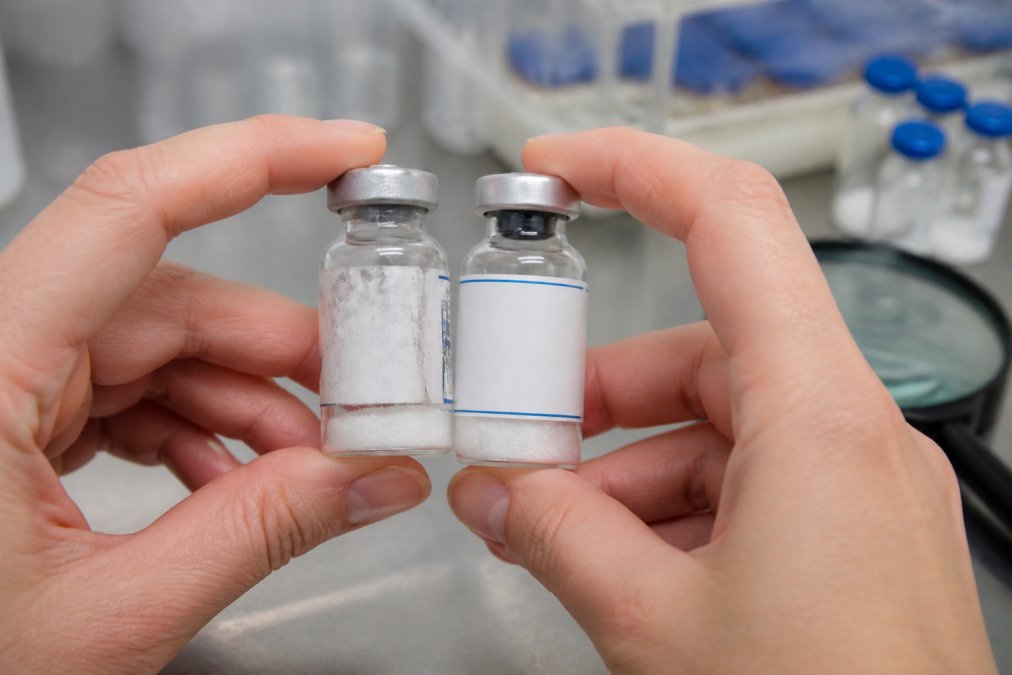
Hands comparing a smudged vial to a professional one for identifying fake research peptide suppliers

Look for:

  • Crimp caps that sit crooked or spin freely
  • Rubber stoppers that look cloudy or worn
  • Labels with mismatched fonts or colors
  • Vials that feel lighter or heavier than expected
  • Boxes with no insert, seal, or batch sticker

Cross-Referencing Lab IDs and Batch Numbers

Identifying fake research peptide suppliers comes down to this step, yet most buyers skip it. Take the batch number on your vial and the report ID on the COA, then confirm they match. Next, check the lab itself: search the lab’s name and report ID. A real lab will confirm the report exists; if it can’t, the COA is likely fabricated.

Storage and Degradation Indicators

Even a real peptide can arrive degraded. Heat, light, and moisture break peptides down, and a careless supplier won’t protect against them.

Signs of a degraded or poorly stored batch:

  • Lyophilized powder that looks clumped, wet, or discolored
  • Cloudy or discolored solution after reconstitution
  • Visible particles floating in the vial
  • A strong or unusual odor

Chemical Solubility Testing: A Practical Check

A simple solubility test can flag a bad batch. Dissolve a small sample in bacteriostatic water and watch how it behaves. A clean peptide dissolves fully and clearly; if it won’t dissolve, leaves a film, or turns cloudy, something is off. It isn’t a purity test, but it’s a fast physical check that costs nothing.

Red Flag What It Signals Your Next Step
No COA before purchase Hidden or nonexistent testing Walk away
Batch number missing on vial Report can’t be matched Request a new batch
Lab ID won’t verify Fabricated documentation Stop the order
Cloudy solution Degradation or contamination Discard the batch
Crooked crimp cap Counterfeit packaging Inspect before use

Frequently Asked Questions

What red flags indicate a peptide supplier might be selling fake products?

Common red flags include no Certificate of Analysis (COA) or a COA that lacks batch-specific data, missing lab accreditation details, prices far below market average, poor packaging with typos or inconsistent fonts, and pressure to buy quickly. Legitimate suppliers provide verifiable third-party testing results and transparent contact information. If a supplier cannot or will not share a COA for the exact batch you are purchasing, treat that as a serious warning sign.

Why is a Certificate of Analysis (COA) critical when buying research peptides?

A COA is the primary document that confirms a peptide’s identity, purity, and safety profile. It should include the test method (like HPLC or mass spectrometry), batch number, and results from an accredited third-party lab. Without a COA, you have no way to verify that the vial contains the correct peptide at the stated purity. Always request a COA that matches the batch number on your vial, not a generic sample report.

How can researchers distinguish between legitimate suppliers and unreliable vendors?

Look for suppliers that openly share third-party lab testing results, provide batch-specific COAs, and list verifiable lab accreditation. Legitimate vendors also offer clear customer service channels and do not make exaggerated claims. Cross-reference lab IDs and batch numbers with the testing lab directly when possible. If a supplier avoids questions about testing or cannot provide documentation, consider them unreliable.

What are the risks of using low-purity or mislabeled research peptides?

Low-purity or mislabeled peptides can contain contaminants, incorrect molecular weights, or degraded material that skews experimental results. Impurities may cause unexpected biological responses, and mislabeling means you could be studying the wrong compound entirely. This wastes time and resources and can compromise the integrity of your research. Always verify purity and identity through independent testing before use.

Previous
Next

Category

Top Posts

Reconstituting Lyophilized Peptides: A Step-by-Step Guide
Troubleshooting Peptide Solubility Issues for Research Success
Growth Hormone Secretagogues and Body Composition
Bulk Peptide Pricing and Discounts: 2026 Guide