

Last Updated: October 3, 2026
What separates a reliable custom peptide synthesis supplier from a risky one? Documentation, not marketing. At Rejuvenation Wellness Solutions LLC, we work with WHO/GMP and ISO-certified manufacturers and 503B compounding pharmacies, and every product ships with independent lab testing and a Certificate of Analysis.
Custom peptide synthesis services reviews should focus on six things: synthesis method, purity grade, analytical documentation, turnaround time, cost structure, and technical support.
Here is what we would check first:
Peptide synthesis cost per amino acid is the headline number most providers advertise, but it rarely reflects your final invoice.
Per-amino-acid pricing assumes a clean, average sequence, real sequences are not average. The gap between quoted rate and invoice is where most buyers get surprised.
Benchmark any quote by estimating it yourself first:
If your estimate and the quote diverge by more than the complexity multiplier explains, ask the supplier to itemize. A flat per-amino-acid rate with no complexity adjustment is either padded or a setup for surprises.
Normalize quotes before comparing numbers. The same peptide from two providers can look 40% apart until you account for what is bundled:
A quote bundling analytical data and a no-charge re-run policy can be cheaper than a lower headline rate that bills each separately.
| Cost Factor | What It Changes | Typical Impact |
|---|---|---|
| Sequence length | Coupling cycles, yield | Moderate to high |
| Hydrophobicity | Purification difficulty | High |
| Modifications | Extra synthesis steps | Moderate |
| Purity grade | Purification passes | High |
| Scale | Resin and reagent volume | High |
| Bundled analytics | Whether mass spec and HPLC are included | Moderate |
| Re-run policy | Cost of a failed synthesis | Variable |
For a standard research-scale peptide, the largest costs are synthesis, then purification, then analytical verification. Modifications and difficult sequences shift cost into synthesis and purification; scale-up shifts it into reagents and quality control. Knowing which column your project lands in tells you what to negotiate.
A Certificate of Analysis for peptides proves your batch is what the label claims. It should state the sequence, molecular weight, purity percentage, and the analytical methods used to confirm each. If any are missing, the certificate is decoration.
The useful skill is reading a CoA well enough to reject a bad batch before it enters your study. Here is the order that matters:
Purity grade is not a single standard, it is a match between the number and your assay:
Before accepting a batch, run these checks. Any single failure is grounds for a re-run or refund:
A supplier running its own in-house analysis asks you to trust the party that made the product. Third-party verification breaks that loop. When a provider claims independent testing, ask which laboratory performed it and whether you can see the lab’s report rather than a reformatted summary.
For context on analytical method standards, the FDA guidance on analytical procedures and methods validation outlines what a defensible validation package looks like.
Research peptide quality standards come down to three things: verified purity, independent testing, and auditable documentation.
Purity grade matters more than most buyers realize. Crude peptides may contain truncated sequences and deletion products that interfere with binding assays.
Documentation you should expect with every order:
For context on analytical method standards, the FDA guidance on analytical procedures and methods validation outlines what a defensible validation package looks like.
The right pick depends on your sequence, purity requirement, and timeline. We compared providers on published pricing structure, analytical reporting, and stated capabilities.
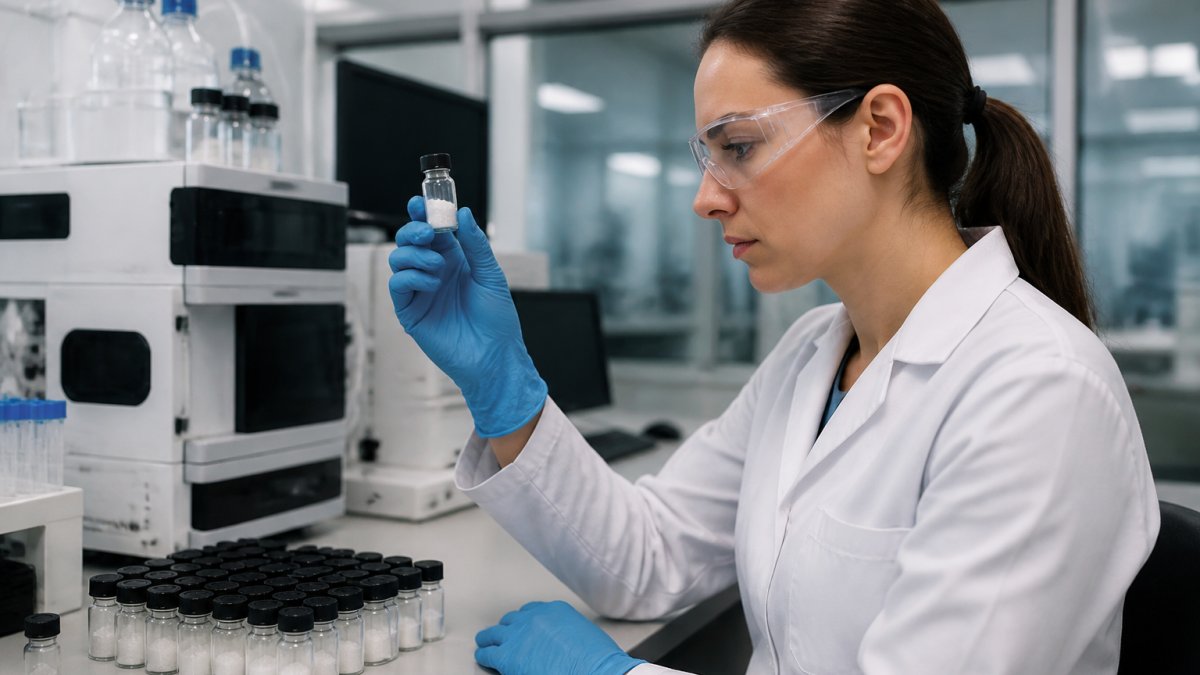
Our own service is built for individual researchers aged 21 and over who need verified purity without institutional pricing. We partner with WHO/GMP and ISO-certified manufacturers and 503B compounding pharmacies, and every product is 99%+ pure with independent lab testing and a Certificate of Analysis. Orders ship same day via UPS 2-day air, and you can reach us by text, phone, or email within hours.
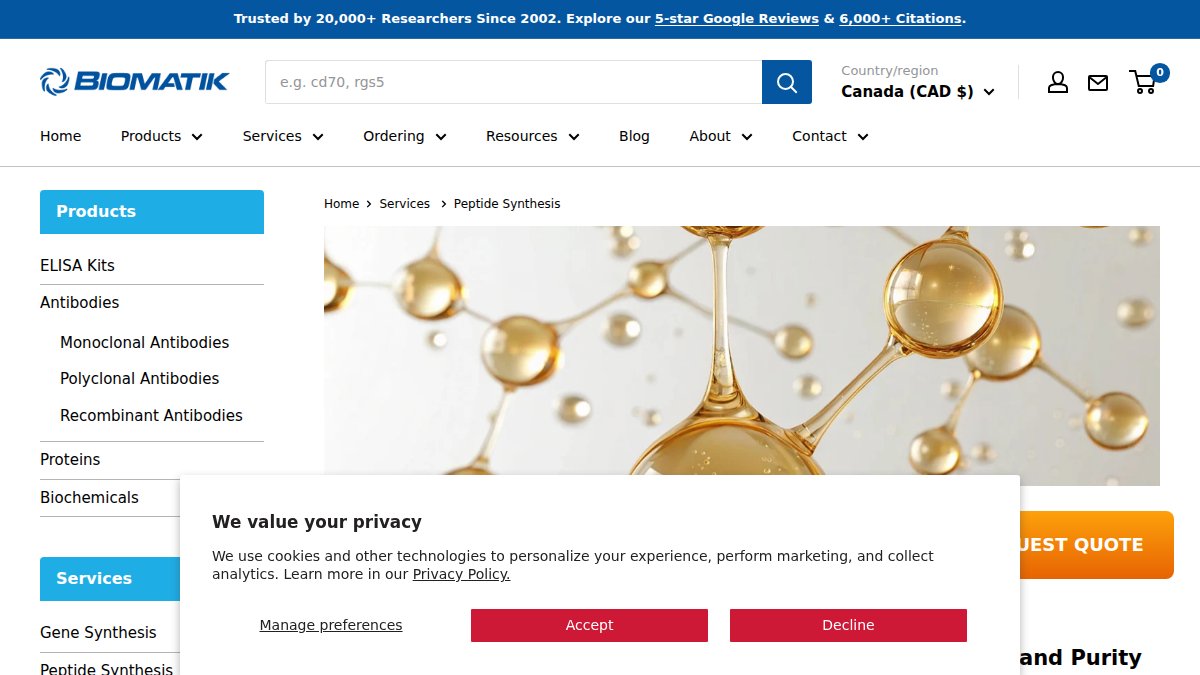
Biomatik publishes a “No Peptide, No Charge” policy and states an over 98% success rate on synthesis projects. Mass spectrometry and HPLC analysis are included.
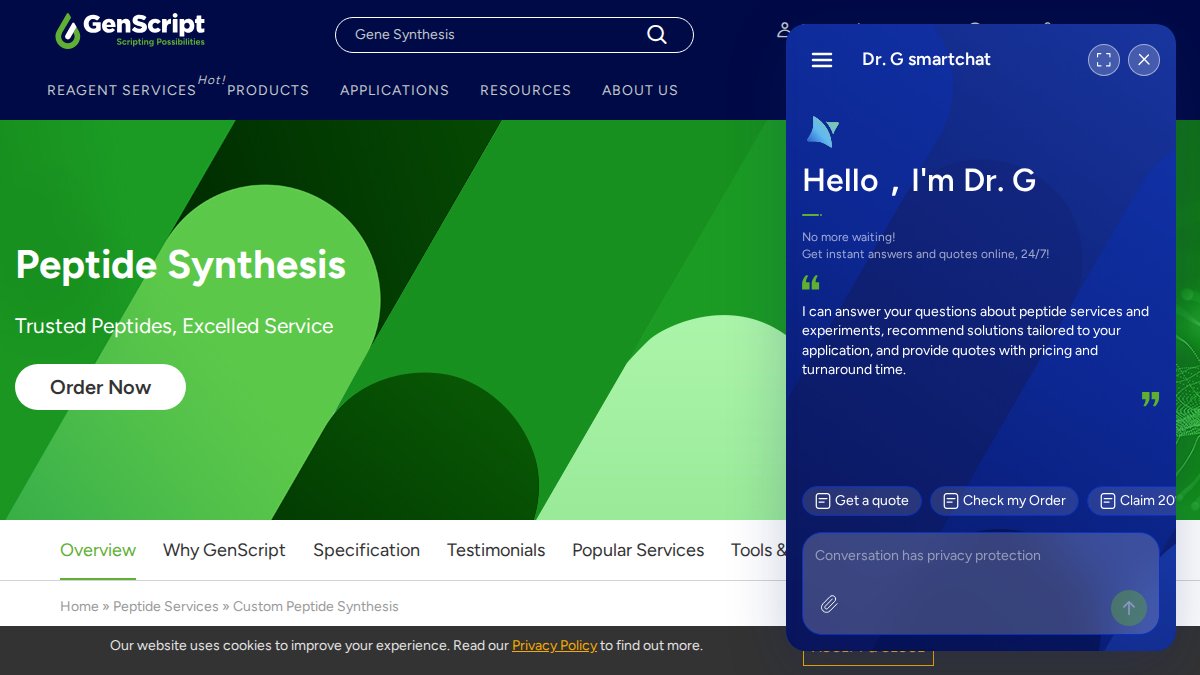
GenScript is a global biotechnology company offering rapid synthesis with a broad modification catalog and scale-up from milligram to kilogram. Pricing is quote-based rather than published.
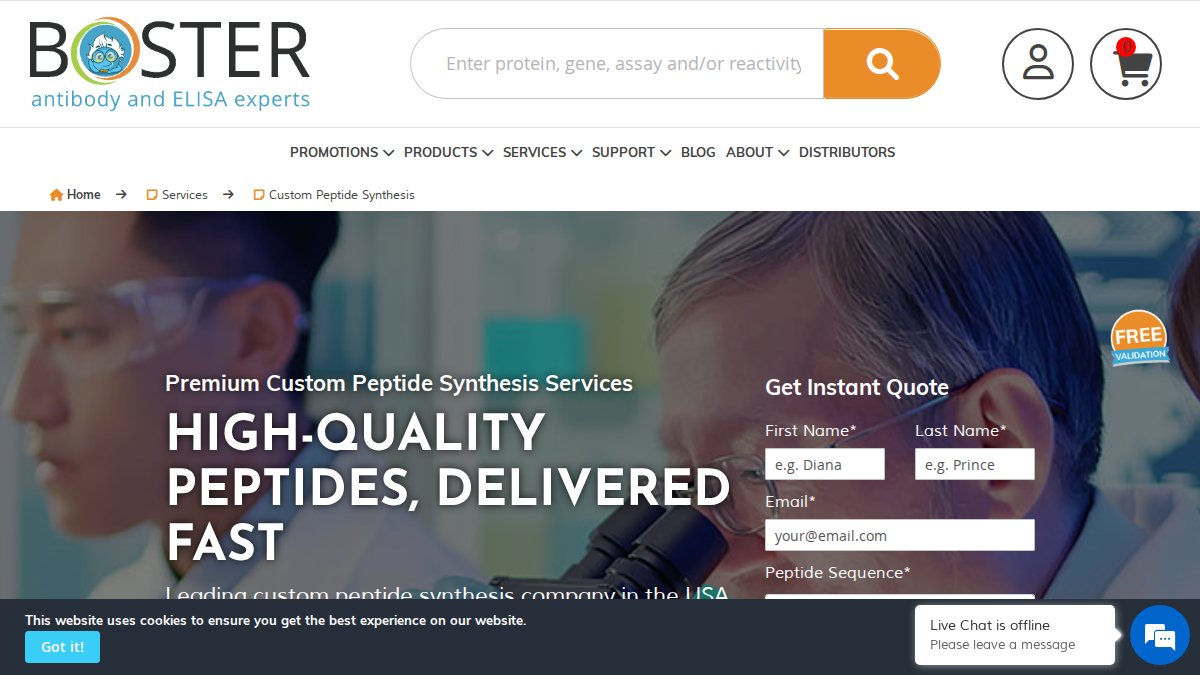
Boster Bio uses tiered purity pricing, with crude synthesis starting around $3.50 per amino acid and ultra-pure options above 98%. Mass spec and HPLC reports are included. Clear structure, but costs climb steeply at the top tier.
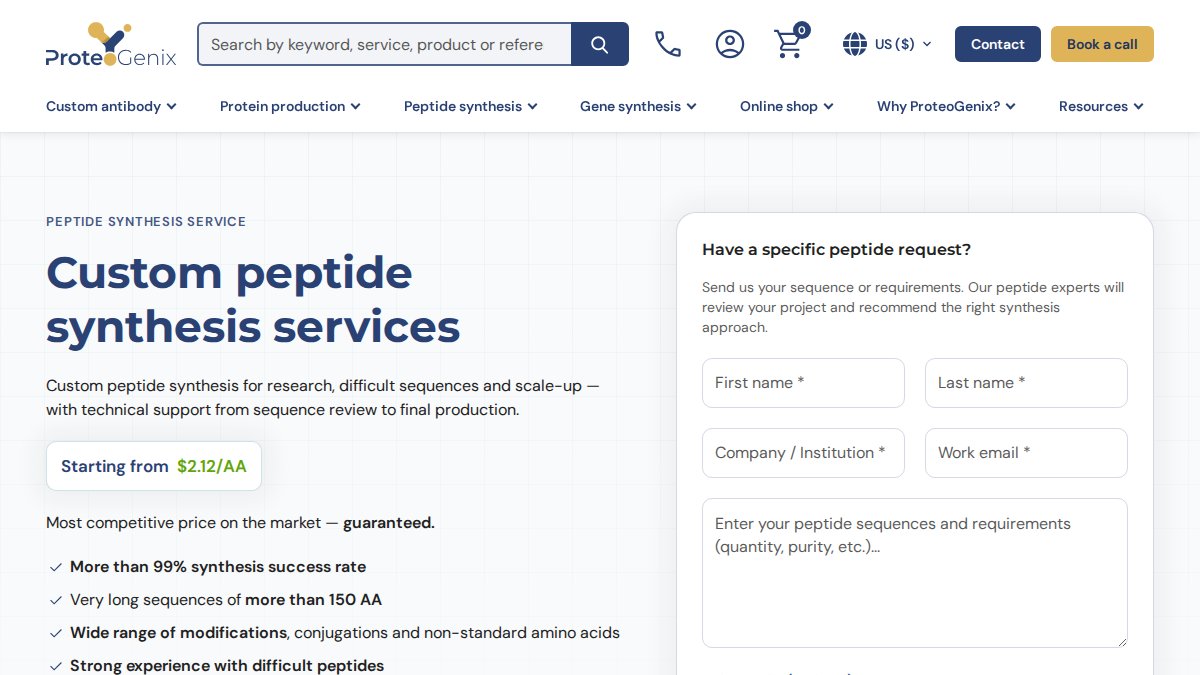
ProteoGenix advertises base pricing from $2.12 per amino acid with a price match guarantee.
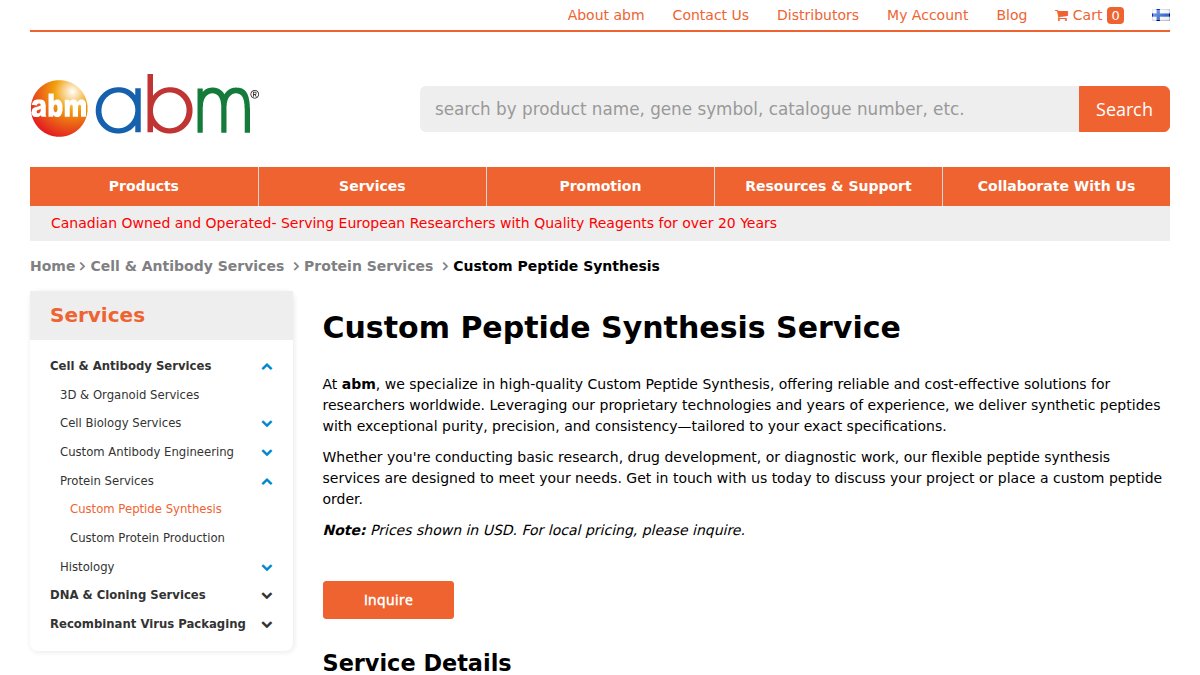
ABM bundles mass spectrum analysis and HPLC purification into the base price, with a minimum near $250 per peptide.
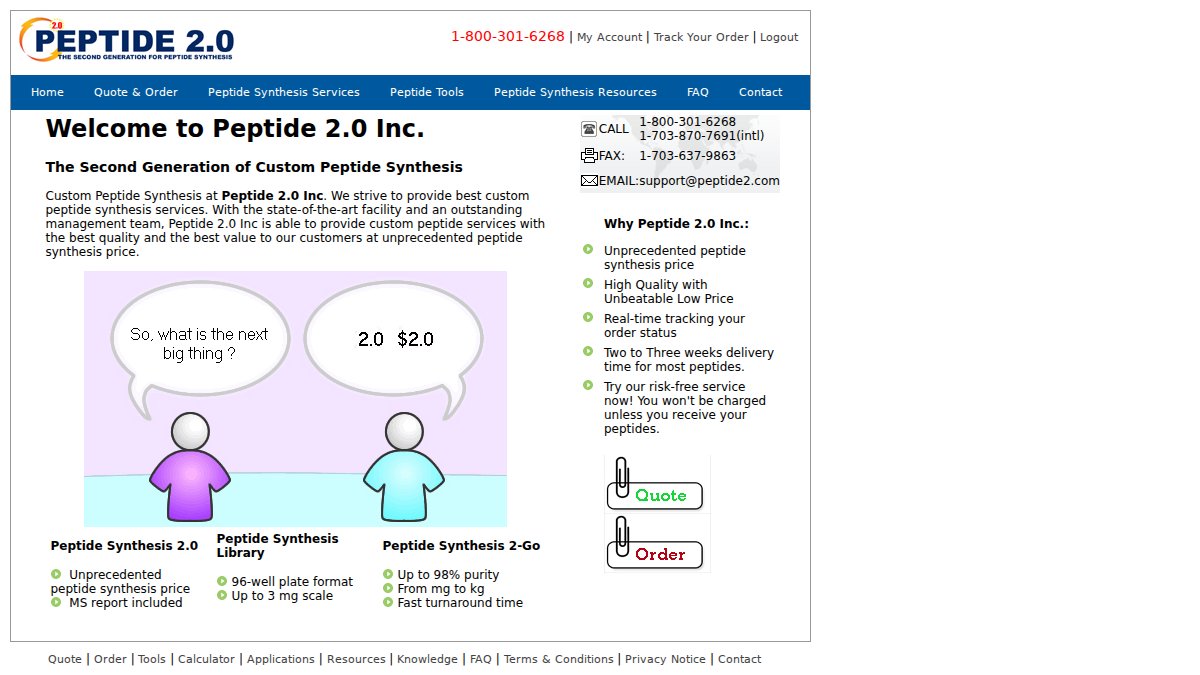
Peptide 2.0 is frequently cited in research communities for consistency and handles complex sequences. Pricing is quote-based with no public table. A reasonable long-term partner if you value reliability over published rates.
| Provider | Published Entry Price | Analytical Data Included | Best For |
|---|---|---|---|
| Rejuvenation Wellness Solutions LLC | Contact for pricing | Certificate of Analysis, independent lab testing | Individual researchers needing verified 99%+ purity |
| Biomatik | ~$3/amino acid | Mass spec, HPLC | High-success-rate projects |
| GenScript | Quote-based | Included | Fast academic and industrial work |
| Boster Bio | ~$3.50/amino acid | Mass spec, HPLC | Tiered purity selection |
| ProteoGenix | ~$2.12/amino acid | Included | Budget, high-volume work |
| ABM | ~$250/peptide minimum | Mass spec, HPLC | All-inclusive standard projects |
| Peptide 2.0 Inc. | Quote-based | Included | Long-term reliability |
Failed syntheses are normal in peptide chemistry. Most causes are sequence-related: long hydrophobic stretches, aggregation during coupling, and steric hindrance from branched residues.
When a synthesis fails, ask three questions:
For post-synthesis stability, storage is where good peptides go bad. Lyophilized powder stored cold and dry holds up far better than reconstituted solution. Once dissolved, keep it refrigerated, avoid repeated freeze-thaw cycles, and check solubility before blaming the peptide.
The hard part of comparing custom peptide synthesis services reviews is that published prices tell you almost nothing about what you will actually pay or receive. Documentation does.
Picking a synthesis partner means trusting someone with the integrity of your research. At Rejuvenation Wellness Solutions LLC, we built our service around that trust: 99%+ pure peptides from WHO/GMP and ISO-certified manufacturers and 503B compounding pharmacies, independent lab testing with a Certificate of Analysis on every product, same-day fulfillment with UPS 2-day air shipping, and customer support reachable by text, phone, or email within hours.
Look for documented purity levels (98%+ for research-grade), independent lab testing with a Certificate of Analysis, and transparent pricing. Check whether the provider uses solid-phase peptide synthesis and offers mass spectrometry and HPLC data. Verify certifications like WHO/GMP or ISO, and confirm they serve individual researchers, not just institutions. Turnaround time, batch-to-batch consistency, and responsive technical support also matter for ongoing research.
Independent labs use high-performance liquid chromatography (HPLC) to separate and quantify peptide components, and mass spectrometry to confirm molecular weight and sequence identity. A Certificate of Analysis reports the purity percentage, analytical method, and sometimes solubility testing or biophysical characterization. Reputable providers include these reports with every order so you can verify claims before using peptides in your research.
Research-grade peptides are synthesized for laboratory use and typically meet 95-98% purity with analytical documentation. Clinical-grade peptides must meet stricter regulatory standards, including GMP manufacturing, sterility, and endotoxin testing, for use in human trials or compounding. If your work involves clinical applications, choose a provider partnered with 503B compounding pharmacies or GMP-certified facilities.
Turnaround time depends on sequence length, complexity, and modifications. Standard peptides may ship in 1-2 weeks, while complex sequences with disulfide bridges or fluorescent labeling can take 3-4 weeks. Some providers offer expedited options. Always confirm lead times before ordering, especially if your research schedule is tight. Same-day fulfillment and 2-day shipping can reduce total wait time once synthesis is complete.
Yes. ISO certification covers quality management systems, while GMP (Good Manufacturing Practice) ensures consistent production and quality control. For clinical-grade peptides, 503B compounding pharmacies follow FDA oversight. Research-grade peptides may not require GMP, but providers that partner with WHO/GMP and ISO-certified manufacturers offer higher assurance. Always request a Certificate of Analysis to confirm purity and testing standards.








