

Last Updated: October 4, 2026
Peptide research for anti-aging benefits has moved from fringe labs into mainstream longevity science, but the evidence is uneven across outcomes. At Rejuvenation Wellness Solutions LLC, we supply high-purity research peptides to independent investigators and clinical labs, which means we see both the promise and the hype up close.
Peptides are short chains of amino acids, typically fewer than 50 units, that act as signaling molecules rather than structural building blocks. That distinction matters because it explains why they can influence collagen production, tissue repair, and hormone output without being consumed as protein.
Here’s what most guides get wrong: they treat “peptides” as a single category with a single answer. In practice, each peptide has its own mechanism, its own evidence base, and its own risk profile.
Peptides work by binding to specific receptors and triggering cellular signaling cascades. A growth-hormone-releasing peptide, for example, acts on the pituitary to prompt endogenous growth hormone release, while a collagen-derived peptide may signal fibroblasts to increase collagen synthesis.
The specificity is the point. Because each peptide targets particular receptors, effects tend to be narrower than those of small-molecule drugs, which is why researchers can study skin outcomes and recovery outcomes as separate questions.
Two broad research tracks dominate the literature. The first examines structural endpoints: collagen production, elastin, skin firmness, and hydration. The second examines signaling endpoints: growth hormone, insulin pathways, and cellular repair.
Investigators designing a study should decide early which track they are in, because the outcome measures differ completely. Mixing them produces data that answers neither question well.
Peptide therapy benefits vary sharply by compound and by outcome, and the honest summary is that evidence quality ranges from well-documented to preliminary. The way to make that statement useful is to grade each claim on two axes: strength of evidence (mechanism only, animal model, small human trial, large controlled trial) and relevance of outcome (surrogate marker versus clinical endpoint). Most anti-aging peptide claims sit early on that first axis.
Here is how the major research categories sort out when you apply that framework.
Signal peptides (such as the matrikine family studied for fibroblast stimulation) and carrier peptides (copper tripeptide-1 is the most studied example) have the longest topical research history. Human studies typically measure wrinkle depth via standardized photography and validated grading scales, skin hydration via corneometry, and barrier function via transepidermal water loss. Oral collagen-derived peptide research follows a similar pattern: measurable changes in skin elasticity and hydration markers, with smaller and less consistent changes in wrinkle depth.
Sermorelin, ipamorelin, and related growth-hormone secretagogues have the deepest mechanistic literature. They act on the pituitary to prompt endogenous growth hormone release, and studies reliably show increases in growth hormone and IGF-1 markers. The critical caveat: those are surrogate markers. A peptide that raises IGF-1 has not automatically been shown to change body composition, strength, or functional outcomes in a durable way. Reviews of growth-hormone-axis interventions in older adults have generally found changes in lean mass and fat mass that are smaller than marketing language implies, alongside a real side-effect profile.
Peptides studied for wound healing and tissue repair, including thymosin beta-4 fragments and certain GHK-copper formulations, have encouraging animal and in-vitro data, but human controlled trial data is thinner and often limited to specific clinical contexts (for example, topical application in dermatology settings) rather than general anti-aging use. This is the category where the gap between mechanism and clinical endpoint is widest.
GLP-1 receptor agonists are peptides, and they have the strongest large-trial evidence base of any peptide class relevant to aging-adjacent outcomes, but their approved indications are metabolic, not anti-aging. Treating GLP-1 research as interchangeable with growth-hormone peptide research is a category error; the mechanisms, endpoints, and risk profiles are entirely different.
For a broader view of how regulators assess therapeutic claims, the FDA guidance on drug development and evidence standards is worth reading before you design endpoints.
Peptides for skin aging are the most commercially visible category, and the research here focuses on collagen synthesis, elastin support, and skin barrier function. Certain signal peptides and carrier peptides are studied for their ability to support fibroblast activity, which in turn may influence skin firmness and elasticity over time.
The realistic timeline matters. Collagen remodeling is slow, and studies typically measure changes over weeks to months, not days. Anyone expecting visible change in a week is measuring the wrong thing.
Fine lines and wrinkles are the outcomes most often studied, usually via standardized photography and validated grading scales. Skin hydration and barrier function are measured separately, often with corneometry or transepidermal water loss.
Keep these endpoints distinct in your protocol. A peptide that improves hydration has not necessarily reduced wrinkle depth, and conflating the two weakens your conclusions.
A peptide serum for aging skin is a topical formulation, and topical delivery raises questions that injectable research does not. Molecular size, vehicle composition, and skin penetration all affect whether the peptide reaches its target.
If you are evaluating a serum for research purposes, check these in order:
| What to Check | Why It Matters | Red Flag |
|---|---|---|
| Peptide name and concentration | Determines whether the study is reproducible | “Peptide blend” with no amounts |
| Certificate of Analysis | Confirms purity and identity | No lab report available |
| Formulation and pH | Affects stability and penetration | Undisclosed vehicle |
| Stability testing | Predicts shelf-life performance | No data provided |
| Third-party testing | Independent verification | In-house claims only |
Peptide safety and side effects depend heavily on the compound, the dose, the route of administration, and the duration of exposure. Broad statements like “peptides are generally well tolerated” are not useful for protocol design. The practical approach is to work compound by compound and to separate what is known from what is assumed.
Growth-hormone-releasing peptides (sermorelin, ipamorelin, and related secretagogues) are associated in the literature with injection-site reactions, headache, flushing, and, because they raise growth hormone and IGF-1, fluid retention, joint discomfort, and changes in appetite or blood sugar regulation.
Copper-containing topical peptides can cause contact irritation in sensitive individuals. Oral collagen-derived peptides are generally well tolerated, with gastrointestinal upset being the most commonly reported issue.
Anyone designing a human-facing protocol should screen for the following before enrollment:
A defensible protocol includes baseline and periodic monitoring rather than a single pre-enrollment check. For GH-axis peptides, that typically means IGF-1 and fasting glucose at minimum. For GLP-1 agonists, it means the monitoring specified in the approved labeling. Any participant reporting persistent headache, visual changes, severe abdominal pain, or signs of an allergic reaction should be evaluated by a clinician rather than continued in the protocol.
Long-term safety data for most non-approved peptides is thin. Many compounds have been studied for weeks to a few months, not years, and post-marketing surveillance data does not exist for products that were never approved. That is not a reason to avoid research, it is a reason to design studies with clear stopping rules, documented adverse-event capture, and appropriate review.
Growth hormone research sits at the center of the muscle mass and body composition conversation. Growth-hormone-releasing peptides such as sermorelin stimulate endogenous release, and some research reports meaningful increases in growth hormone markers.
Muscle mass, strength, and fat loss are clinical endpoints. Hormone levels are surrogate markers. A study showing the second does not establish the first, and reviewers will say so.
GLP-1 related research has expanded the conversation around insulin signaling and fat loss, but that pathway is distinct from growth-hormone peptides and should be treated as its own line of inquiry.
Regulatory status is the angle most guides skip, and it is the one that determines whether your research is defensible.
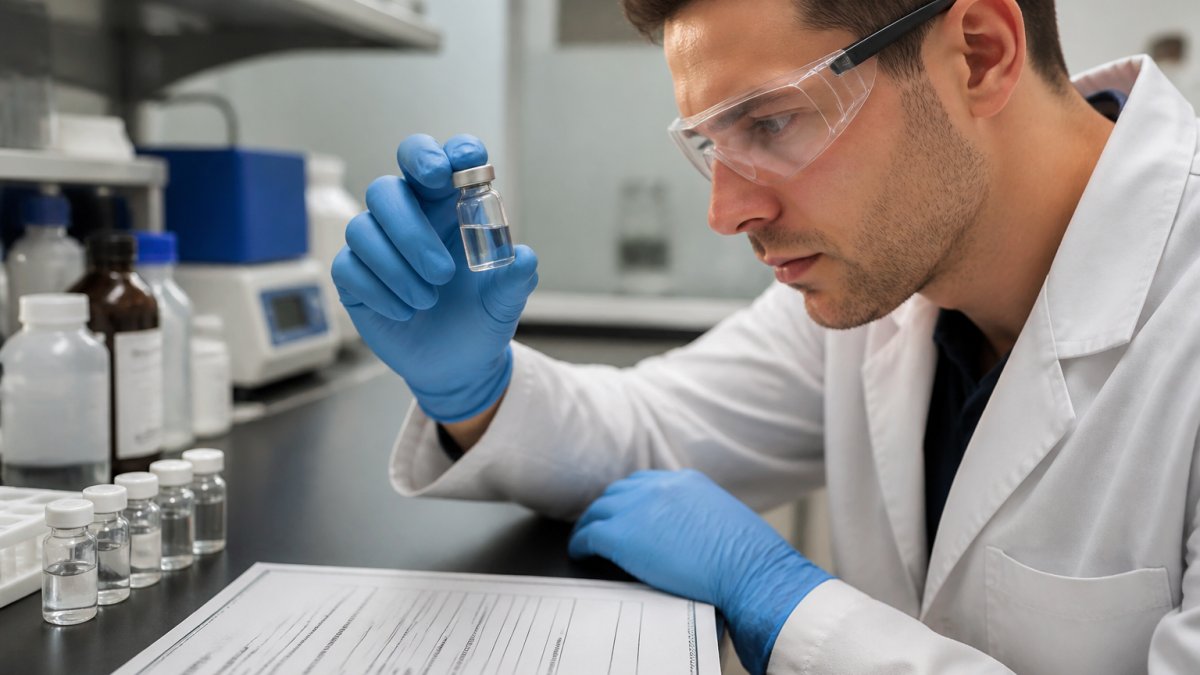
Product quality is where the practical risk lives. Independent lab testing with a Certificate of Analysis, GMP-aligned manufacturing, and clear chain-of-custody documentation separate reliable material from the rest.
For the official framework on compounding oversight, see the FDA information on 503B outsourcing facilities.
Peptide research is genuinely promising in several areas, and genuinely oversold in others. The researchers who get publishable, reproducible results are the ones who grade evidence carefully, separate surrogate markers from clinical endpoints, and verify the purity of every vial they use.
If your work depends on material you can trust, we can help. Rejuvenation Wellness Solutions LLC provides 99%+ pure research peptides with independent lab testing and a Certificate of Analysis, comprehensive kits including bacteriostatic dilution water, syringes, and alcohol swabs, and same-day fulfillment with UPS 2-day air shipping.
Studies suggest certain peptides may support collagen production, skin firmness, and cellular repair, but results vary by peptide and study design. Many trials are small or short-term. Some injectable peptides like sermorelin have shown increases in growth hormone levels, yet long-term anti-aging outcomes remain unproven. Always check whether findings come from human trials or lab dishes.
Copper peptides, matrixyl, and argireline are among the most researched for skin aging. They may support collagen synthesis and reduce fine lines. However, most studies use topical formulations, and effects are modest. Injectable peptides like BPC-157 are studied for tissue repair, not skin appearance. Evidence quality varies, so match the peptide to the specific outcome you are researching.
No. In the United States, research peptides are sold for laboratory and scientific study only, not for human consumption. The FDA has not approved most peptides for anti-aging or general wellness. Some, like GLP-1 agonists, are approved for specific conditions under prescription. Always verify the regulatory status and source before purchasing or using any peptide.
Key limitations include small sample sizes, short study durations, and a lack of standardized protocols. Many anti-aging claims rely on preliminary data or animal models. Human trials often focus on biomarkers rather than visible aging. Additionally, product purity and quality vary widely, which can affect results. More rigorous, long-term clinical research is needed before drawing firm conclusions.








