

Last Updated: July 25, 2026
Understanding the importance of certificate of analysis is critical for anyone sourcing products in regulated industries. At Rejuvenation Wellness Solutions LLC, we recognize that a Certificate of Analysis (COA) serves as definitive proof of product quality, purity, and safety. This document bridges the gap between manufacturer claims and verified reality, protecting your research, your reputation, and your bottom line.
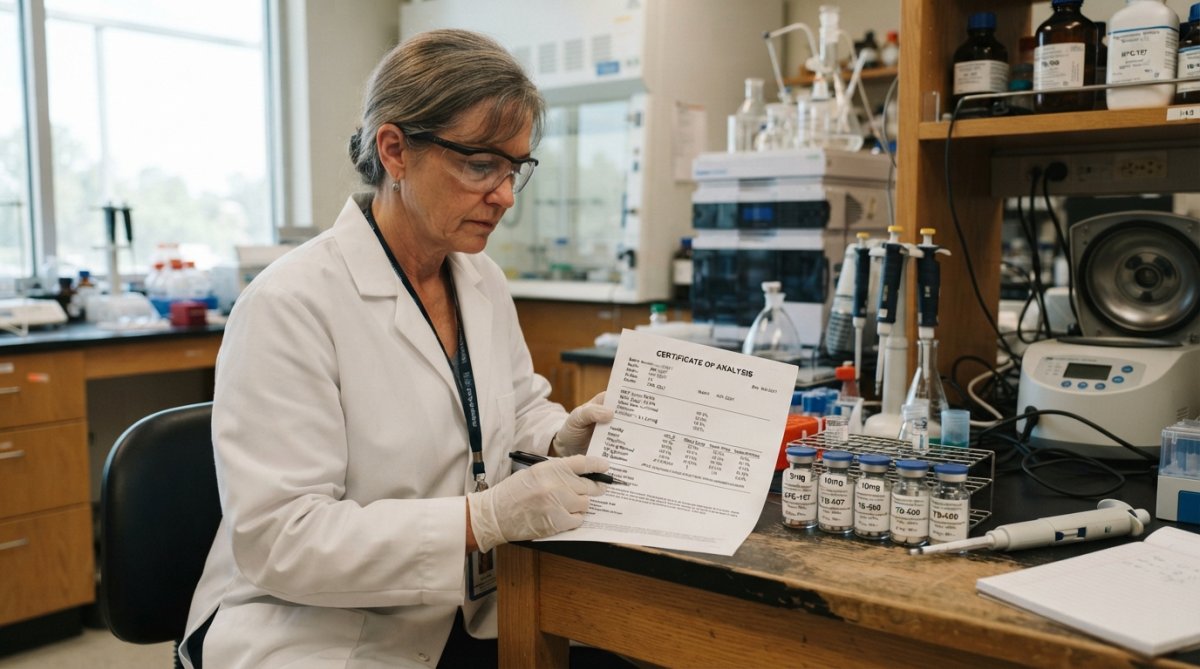
A Certificate of Analysis is an official laboratory report documenting the tested composition, purity, and safety profile of a product. It’s issued by an accredited third-party laboratory after conducting analytical methods on a specific batch. Think of it as a product’s health report: it tells you exactly what’s inside, whether it meets specifications, and whether it’s safe to use.
A COA provides independent verification that a product matches its labeled claims. A manufacturer can claim their peptide is 99% pure, but a COA backed by third-party testing proves it. This distinction matters enormously in regulated industries like pharmaceuticals, food safety, and research chemicals, where regulatory compliance depends on documented evidence.
An accredited laboratory conducts the testing and generates the report. These labs hold ISO certifications and follow strict quality control protocols. The issuing lab’s credentials, whether ISO 17025 accredited or following WHO/GMP standards, directly affect the document’s credibility.
Every legitimate COA contains specific components that create a complete quality picture. Missing or vague elements are red flags.
Product Identification and Batch Information form the foundation of traceability. The COA must clearly state the product name, batch number, and manufacturing date. This batch number ties the test results to a specific production run, allowing you to verify that the tested product matches what you received. The document should also list the expiration date and storage conditions.
Test Results and Analytical Methods comprise the heart of the COA. This section details which tests were performed, HPLC analysis, mass spectrometry, microbial testing, heavy metal screening, and the specific results. Each test method must be listed by name (e.g., "HPLC per USP <621>"). Results should show the actual measured value and how it compares to the product specification. For example, a peptide COA might state "Purity: 99.2% (Specification: ≥98%)."
Accreditation and Validation Standards appear as certifications confirming the laboratory’s authority. Look for ISO 17025 accreditation, which means the lab’s testing methods are validated and equipment properly calibrated. Some COAs reference FDA compliance or GMP adherence, adding credibility. The laboratory’s signature or digital certification verifies that a qualified analyst performed the testing.
| COA Element | What It Tells You | Red Flag If Missing |
|---|---|---|
| Batch Number | Exact production run tested | Cannot verify your shipment matches the test |
| Analytical Methods | Which tests were performed | No way to assess testing rigor |
| Test Results with Specifications | Whether product met quality standards | Cannot determine if batch passed or failed |
| Laboratory Accreditation | Lab’s credentials and authority | Questionable reliability of results |
| Expiration Date | Product shelf life and stability | Cannot assess usability timeline |
| Heavy Metal/Microbial Testing | Safety profile beyond purity | Incomplete quality picture |
Reading a COA is a learned skill. Most people scan the purity percentage and assume everything is fine. That approach misses critical information.
Step-by-Step Interpretation Guide starts with verifying the document’s authenticity. Check that the laboratory name, address, and accreditation number match publicly available records. Many laboratories now provide digital verification through QR codes or blockchain authentication. Cross-reference the batch number on the COA with the batch number on your product label, they must match exactly.
Next, examine the analytical methods section. Each test should list the specific methodology (e.g., "HPLC per USP <621>" or "GC-FID per EPA Method 8015"). These standardized references indicate the test was conducted using recognized, validated protocols.
Then review the test results against the product specifications. If the specification says "≥98% purity" and the result shows "99.2%," the batch passes. If the result is "97.5%," the batch fails. Some COAs include explicit "PASSED" or "CONFORMS TO SPECIFICATIONS" statements.
Understanding Testing Parameters and Specifications requires knowing what each test measures. Purity percentage tells you the concentration of the active ingredient. Identity testing confirms the product is what it claims to be. Microbial testing checks for bacteria, fungi, or pathogens. Heavy metal screening detects lead, mercury, cadmium, and other toxins. Water content testing ensures the product isn’t degraded or contaminated.
The specification limits are derived from regulatory standards, industry best practices, and the product’s intended use. For pharmaceutical-grade products, specifications are often tighter than for research chemicals.
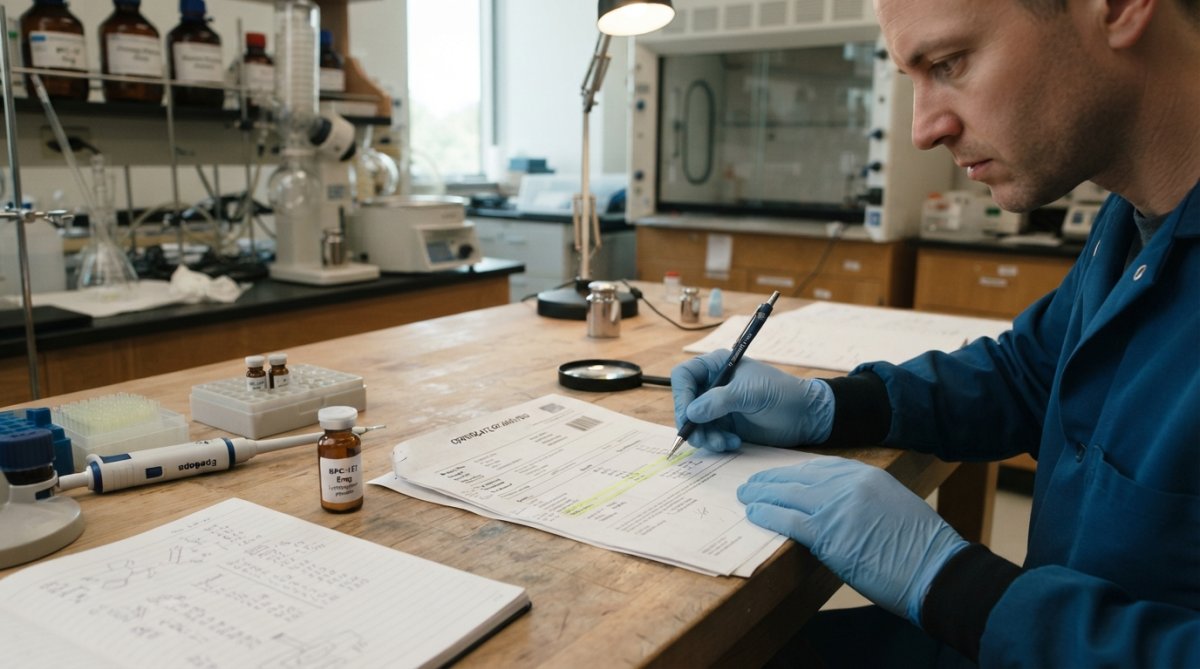
Third-party testing is the backbone of consumer confidence. When a manufacturer tests their own products, conflicts of interest arise. An independent laboratory has no incentive to falsify results, their reputation and accreditation depend on accuracy.
Why Independent Testing Builds Consumer Confidence comes down to objectivity. A third-party lab operates separately from the manufacturer with no financial stake in the product passing or failing. This independence means their results are trusted by regulators, customers, and auditors. When you see a COA from a recognized third-party lab, you know the results are credible.
Third-party COAs also provide documentation that holds up in regulatory audits and legal disputes. If a product causes harm and litigation follows, a COA from a reputable independent lab carries far more weight in court than internal testing documentation.
Accredited Laboratory Standards and ISO Certification define what makes a lab trustworthy. ISO 17025 accreditation is the global standard for laboratory competence. It requires labs to validate testing methods, calibrate equipment regularly, maintain detailed records, and participate in proficiency testing. Labs holding ISO 17025 are audited annually by accreditation bodies.
WHO/GMP standards apply primarily to manufacturers, but many labs also follow GMP principles for their own operations. A lab certified under both ISO 17025 and GMP principles represents the highest level of credibility.
Different industries have different COA requirements. Understanding your industry’s standards ensures you’re meeting legal obligations.
Pharmaceutical and Food Safety Standards impose the strictest COA requirements. The FDA requires pharmaceutical manufacturers to maintain certificates of analysis for all raw materials, in-process testing, and finished products. These COAs must document identity, purity, strength, and quality. For food products, the FDA’s Food Safety Modernization Act (FSMA) requires suppliers to provide testing documentation proving safety from pathogens and contaminants.
The USP (United States Pharmacopeia) and EP (European Pharmacopoeia) publish monographs that define acceptable testing methods and specifications for thousands of substances. If a product has a USP or EP monograph, the COA must reference it and demonstrate compliance.
Import/Export Documentation and Supply Chain Transparency add another layer of complexity. Products crossing international borders must have COAs complying with both exporting and importing country regulations. The COA becomes part of the import documentation trail, proving the product meets safety and quality standards.
A complete chain of COAs from raw material supplier through final product manufacturer creates traceability. If a contamination issue emerges, this documentation allows rapid identification of which batch is affected and which customers need notification.
Product integrity depends on documented proof of quality. A COA is that proof.
Traceability and Batch Accountability enable rapid response to quality issues. Every batch has a unique identifier. If a problem emerges, contamination, degradation, or mislabeling, the batch number allows you to identify exactly which customers received affected product. Without batch-level traceability, a quality issue could affect your entire customer base before you know there’s a problem.
Batch accountability also supports regulatory compliance audits. Inspectors ask to see COAs for products on your shelves. If you can’t produce a COA matching the batch number on the product, you’re in violation.
Legal Protection and Liability Implications extend far beyond compliance. If a customer experiences an adverse event and sues, your COA becomes critical evidence. If the COA shows the product met all specifications at the time of testing, you have strong legal protection. If you lack a COA or the COA shows the product failed testing, your liability exposure increases dramatically.
Courts treat third-party COAs as credible evidence of product quality at the time of sale. A missing or questionable COA suggests negligence. Many insurance policies also require COAs as a condition of coverage. If you lack documentation of product testing and quality, your insurance may deny claims related to product liability.
As digital technology advances, COA fraud has become a concern. Digital verification tools are changing the game.
Blockchain and Authentication Technologies enable tamper-proof COA verification. Some laboratories now issue COAs with blockchain-backed digital signatures. These signatures create an immutable record, if the COA is altered after issuance, the signature becomes invalid. Customers can verify a COA’s authenticity by checking the blockchain record.
QR codes embedded in COAs link to digital verification portals. Scanning the code takes you directly to the lab’s database, where you can confirm the batch number, test results, and laboratory credentials. This real-time verification eliminates the possibility of fake COAs.
COA Audit Checklist for Procurement and Vendor Management provides a systematic approach to COA verification. Before accepting a product shipment, procurement teams should verify:
The importance of certificate of analysis becomes clear when you see how it works in actual operations.
Quality Control in Manufacturing and Raw Materials depends entirely on COA documentation. A pharmaceutical manufacturer receiving raw materials must verify each shipment against its COA before using it in production. If the incoming material doesn’t match the COA specifications, it’s rejected and returned to the supplier.
During manufacturing, in-process testing generates additional COAs. A final COA is issued after the product is complete, documenting that the finished product meets all specifications. This multi-stage documentation creates a complete quality record.
For research peptides and specialized compounds, COAs are critical. Researchers depend on documented purity and identity to ensure their experiments are valid. A COA provides assurance that the research compound meets specifications, making results reproducible and trustworthy.
Compliance Audits and Standard Operating Procedures rely on COAs as core documentation. Regulatory inspectors ask to see COAs for products on your shelves, in storage, and in production. Your standard operating procedures should include specific requirements for COA verification, retention, and archival.
A typical SOP for COA management includes verification of authenticity upon receipt, batch matching, secure storage, regular audits of completeness, procedures for handling missing or questionable COAs, and staff training. When auditors review your operations, they evaluate whether you follow these procedures consistently.
At Rejuvenation Wellness Solutions LLC, we understand that the importance of certificate of analysis extends beyond a single document, it’s foundational to research integrity and safety. Every peptide we supply undergoes independent lab testing with a comprehensive COA. Our partnership with WHO/GMP and ISO-certified manufacturers ensures that each batch meets the highest purity and safety standards.
The gap between product claims and verified reality is where trust is built or lost. A Certificate of Analysis bridges that gap with independent, documented proof. Whether you’re sourcing raw materials for manufacturing, conducting research, or managing a supply chain, COAs protect your work, your reputation, and your customers. Rejuvenation Wellness Solutions LLC makes this commitment to quality and transparency central to every product we deliver.
FDA guidance on Certificate of Analysis requirements for pharmaceutical products
ISO 17025 accreditation standards for laboratory competence
USP monographs and testing standards for pharmaceutical substances
A certificate of analysis is a document issued by an accredited laboratory that confirms a product's chemical composition, purity, and compliance with manufacturing standards. You need to verify it because it proves the product meets quality specifications and regulatory compliance requirements. For research peptides and other high-purity products, a COA from an independent, accredited lab provides the documentation needed to ensure product integrity and safety for your research work.
Verify COA authenticity by checking: (1) the laboratory's ISO certification and accreditation status through official registries, (2) batch number traceability to your product, (3) specific test results with measurable values rather than vague claims, (4) the lab's contact information and digital verification options, and (5) whether the document includes standard operating procedures and analytical methods used. Digital COA verification through blockchain or direct lab confirmation adds an additional layer of authentication against fraud.
Focus on: batch number and manufacturing date for traceability, purity percentage and chemical composition matching product specifications, test parameters relevant to your use case (e.g., endotoxin levels, sterility, potency), the testing methodology and validation standards applied, accreditation credentials of the laboratory, and expiration or stability data. These elements confirm the product meets quality assurance standards and regulatory compliance requirements for your specific application.
Third-party lab testing provides independent, unbiased verification of product quality, whereas manufacturer testing may have inherent conflicts of interest. Independent accredited laboratories follow strict ISO certification protocols and standard operating procedures, creating accountability through external validation. This builds consumer confidence and provides legal protection for both suppliers and researchers by documenting that products truly meet claimed specifications for safety, purity, and regulatory compliance.
This article was written using GrandRanker








