

Last Updated: July 27, 2026
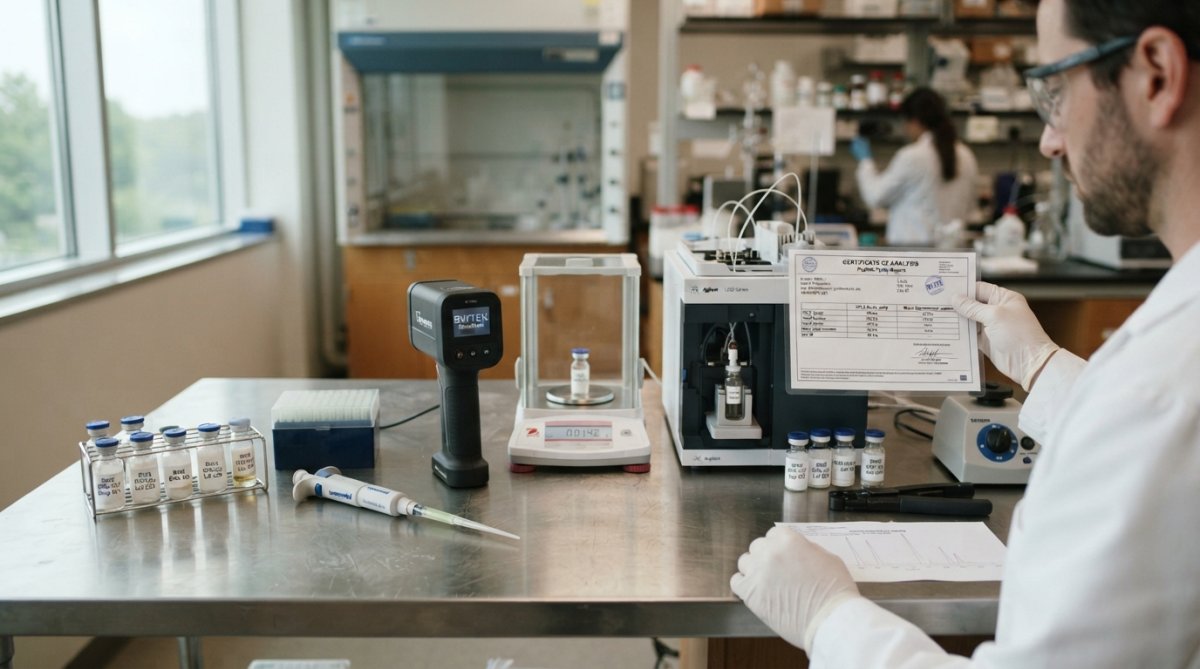
A peptide testing service for researchers provides independent laboratory analysis to verify purity, composition, and safety of peptide samples before use in clinical trials, laboratory research, and scientific innovation. Contamination or mislabeling can invalidate months of work, which is why major research institutions increasingly demand third-party verification through a Certificate of Analysis (COA) before accepting peptide shipments.
Independent testing removes the conflict of interest inherent in manufacturer-conducted analysis. When a peptide supplier tests their own products, they have financial motivation to report favorable results. An independent lab simply reports what the analysis shows. A COA from a third-party lab carries significantly more credibility than one issued by the peptide manufacturer and protects you legally, if your research results are questioned, you can point to objective third-party verification that your starting materials met stated specifications.
A Certificate of Analysis is a detailed technical report of what the lab actually found when they tested your peptide sample. A comprehensive COA includes a header identifying the sample and lot number; a methods section listing analytical techniques used; a results section with numerical data from each test; and a conclusion summarizing whether the sample meets acceptance criteria. Key data includes HPLC purity (percentage of desired peptide versus impurities), molecular weight verification (confirming peptide identity), endotoxin testing (ensuring freedom from bacterial contaminants), and heavy metals screening (identifying potential toxic elements).
Purity represents the percentage of your sample that consists of the intended peptide, with the remainder being impurities, degradation products, or residual solvents. A peptide reported as 95% pure but actually 85% pure will skew your dosing calculations and potentially invalidate your research results.
High-Performance Liquid Chromatography (HPLC) stands as the gold-standard method for peptide purity analysis. The sample is dissolved, injected into the HPLC system, and pushed through a column packed with fine particles. Different molecules move through the column at different speeds, creating separation. A detector measures the amount of material at each separation point, producing a chromatogram showing peaks where different compounds eluted. The largest peak typically represents your desired peptide, while smaller peaks represent impurities or degradation products. The software integrates the area under each peak and calculates what percentage of the total sample each component represents. HPLC offers advantages beyond simple purity percentage, the method can detect specific impurities and degradation products, providing insight into how your peptide was synthesized and stored. Turnaround time typically ranges from 5-8 business days for standard samples.
Net peptide content represents the actual amount of pure peptide in your vial, accounting for water, salts, and other non-peptide components. A vial labeled "100 mg" might contain only 75 mg of actual peptide if the remaining 25 mg is water or salt. Labs determine net peptide content through HPLC purity testing, amino acid analysis, and Karl Fischer titration to measure water content. Understanding net peptide content becomes critical when calculating doses for your research, if you assume a vial contains 100 mg of pure peptide but it actually contains only 75 mg, your dosing will be 33% off.
Mass spectrometry (MS) provides information that chromatography alone cannot deliver, it measures the exact molecular weight of your peptide and can confirm amino acid sequence through fragmentation analysis. Where HPLC tells you "this peak is 95% pure," mass spectrometry tells you "this peak contains molecules with molecular weight 1,234.5 Daltons, which matches your expected peptide structure."
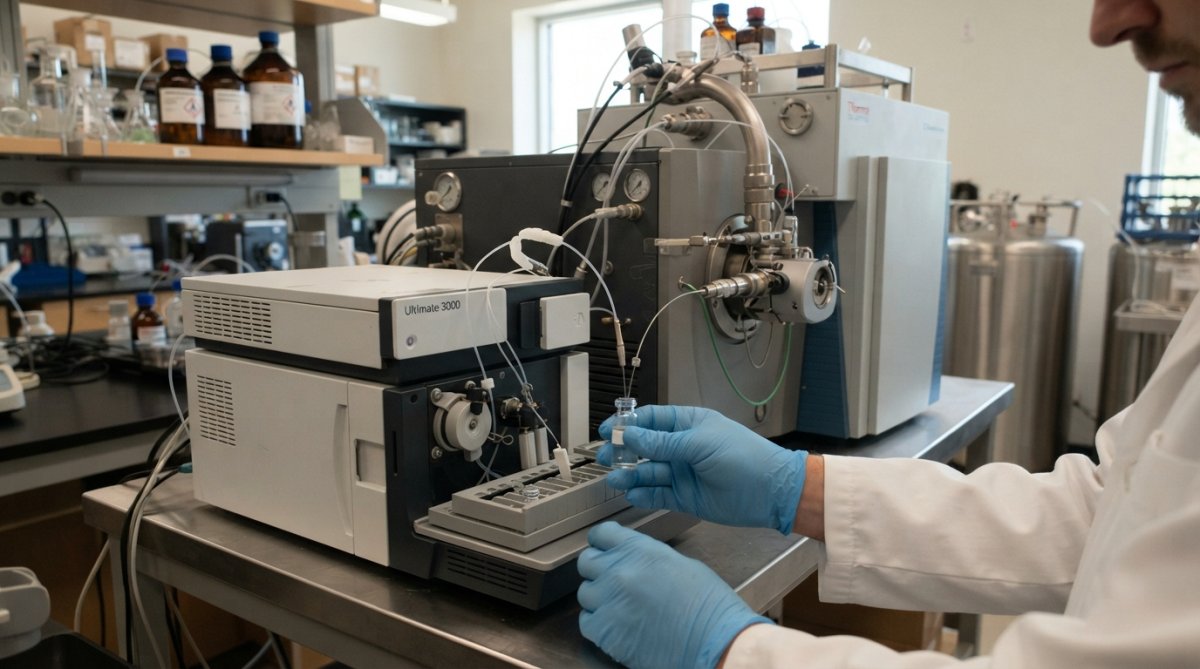
Every peptide has a theoretical molecular weight based on its amino acid sequence. Mass spectrometry measures the actual molecular weight of your sample’s components. If the measured weight matches the theoretical weight, you have confirmation that your peptide is what it claims to be. Liquid Chromatography-Mass Spectrometry (LC-MS) combines the separation power of chromatography with the identification power of mass spectrometry. For complex peptides or those with post-translational modifications, tandem MS (MS/MS) provides even more detailed information by fragmenting your peptide into smaller pieces and measuring the weight of each fragment. Molecular weight verification costs more than HPLC alone but provides irreplaceable confirmation of peptide identity.
Amino acid analysis breaks your peptide down into its component amino acids, quantifies each one, and compares the results to the theoretical composition of your expected peptide. The process involves acid hydrolysis, then separating and quantifying the resulting amino acids. By comparing the measured amino acid composition to the theoretical composition, the lab can confirm whether your sample contains the peptide you ordered. This approach provides orthogonal verification of peptide identity using a completely different analytical method.
Purity and identity tell you about the peptide itself, but additional testing reveals whether your sample is safe to use in research, particularly for in vivo studies or sensitive cell cultures.
Endotoxins are fragments of bacterial cell walls that trigger strong immune responses even in tiny quantities. A peptide sample can be 99% pure for the intended peptide but still contain endotoxins from bacterial contamination during synthesis or handling. Endotoxin testing uses the Limulus Amebocyte Lysate (LAL) assay, which detects endotoxins at concentrations as low as 0.01 EU/mL (endotoxin units per milliliter). Bioburden testing measures the total number of viable microorganisms in your sample using USP <61> methodology. Sterility testing under USP <71> involves culturing your sample to detect any viable organisms, requiring 14+ days for results.
Heavy metals like arsenic, cadmium, chromium, mercury, and lead can contaminate peptide samples during synthesis or storage. Inductively Coupled Plasma Mass Spectrometry (ICP-MS) detects heavy metals at parts-per-billion levels. Your sample is dissolved and ionized, then individual metal atoms are measured by their mass. This method can quantify multiple heavy metals simultaneously in a single test. Independent labs typically offer tiered testing packages that bundle endotoxin, bioburden, and heavy metals screening together, which costs less than purchasing each test separately.
Testing costs vary dramatically based on which analyses you include, your sample quantity, and your turnaround time requirements.
Most independent labs offer tiered packages to serve different research needs and budgets. Entry-level packages typically include HPLC purity analysis and basic identity confirmation. Mid-tier packages add molecular weight verification via MS and endotoxin testing. Premium packages include amino acid analysis, heavy metals screening, and expedited turnaround. Rejuvenation Wellness Solutions LLC ensures every product undergoes independent lab testing with a Certificate of Analysis at no additional charge to the customer, the testing cost is built into the product pricing. This approach removes the decision burden: you receive verified purity data automatically with every order.
Turnaround time ranges from 5-8 business days for basic HPLC testing to 14+ days for comprehensive packages including sterility testing. Rush testing is available at premium pricing, with some labs offering 24-48 hour results for endotoxin testing or 3-5 days for complete HPLC analysis. Peptides degrade under heat, light, and humidity. For sensitive peptides or long-distance shipments, overnight or 2-day shipping with temperature-controlled packaging is worth the cost.
Contract Research Organizations (CROs) provide comprehensive research services including peptide synthesis, testing, and regulatory support.
Independent labs excel at testing peptides you’ve already sourced. They verify what you have, provide detailed analytical data, and issue certificates of analysis. They’re cost-effective for researchers who’ve already selected their peptide supplier and simply need quality verification. CROs take a broader approach, synthesizing custom peptides, conducting testing in-house, providing regulatory guidance, and supporting clinical trial submissions. They’re ideal for research teams developing novel peptides or seeking regulatory approval where comprehensive documentation and regulatory expertise matter.
If your research might eventually support regulatory submissions, your testing approach matters. The FDA expects analytical data generated using validated methods with documented quality systems. FDA guidance documents specify analytical methods and quality standards for peptide characterization. CROs specializing in regulatory work maintain these validated methods and generate documentation suitable for FDA submission.
Evaluating testing labs requires understanding what differentiates quality providers from mediocre ones.
The analytical methods a lab uses directly impact result quality. Labs using HPLC with modern instrumentation and validated methods produce more reliable data than those using outdated equipment. Ask potential labs which specific instruments they use, when equipment was last calibrated, and whether they maintain ISO or GMP certifications. Turnaround time matters for research timelines. Credentials and certifications indicate quality commitment. ISO 17025 accreditation means the lab meets international standards for testing competence. WHO/GMP certification indicates compliance with pharmaceutical manufacturing standards.
| Testing Lab Feature | Why It Matters | What to Look For |
|---|---|---|
| HPLC Methodology | Measures purity accurately and detects impurities | Modern instrumentation, validated methods, documented procedures |
| Mass Spectrometry | Confirms peptide identity and molecular weight | LC-MS capability, MS/MS for sequence confirmation available |
| Turnaround Time | Affects your research timeline | 5-8 days for HPLC standard, expedited options available |
| ISO/GMP Certification | Indicates quality system compliance | Current certifications, documented quality procedures |
| Endotoxin Testing | Ensures sample safety for in vivo work | LAL assay capability, rapid turnaround available |
| Heavy Metals Screening | Detects contamination from synthesis | ICP-MS methodology, parts-per-billion sensitivity |
The purity percentage is straightforward, it’s the percentage of your sample that consists of the desired peptide. Values above 95% are generally considered high purity for research peptides. Values between 90-95% are acceptable for many applications but warrant investigation into what the remaining 5-10% represents. The HPLC chromatogram shows peaks representing different components in your sample. The largest peak is typically your peptide. If you see many small peaks scattered across the chromatogram, it suggests multiple byproducts from synthesis. If you see one or two larger peaks besides your main peptide peak, it might indicate a specific degradation product.
Molecular weight data appears as a measured value and a theoretical value. These should match closely, typically within 0.05 Daltons for peptides under 5,000 Daltons. Endotoxin levels appear as numerical values in EU/mL (endotoxin units per milliliter). For research-use peptides, levels below 1 EU/mL are generally acceptable. For cell culture work, levels below 0.1 EU/mL are preferred. For in vivo studies, levels below 0.01 EU/mL may be required.
Peptides degrade under heat, light, and humidity. Proper shipping requires temperature-controlled packaging and rapid transit. Standard ground shipping exposes samples to temperature fluctuations; summer heat in a delivery truck can reach 120°F, causing peptide degradation. Overnight or 2-day air shipping maintains more stable temperatures. Storage conditions before testing matter equally. Peptides should be stored at -20°C or colder until testing.
Proper sample submission ensures your testing produces reliable results.
Different testing methods require different sample quantities. HPLC purity testing typically requires 5-20 mg of peptide. Molecular weight verification via MS requires similar amounts. Amino acid analysis requires 10-50 mg depending on the peptide’s composition. Endotoxin testing requires only 1-5 mg. Heavy metals screening requires 5-20 mg. When submitting for multiple tests, provide sufficient total quantity to cover all analyses. Labs typically request 50-100 mg minimum to ensure they have adequate sample for all planned tests plus quality control. Sample should be submitted in its original, sealed container whenever possible. Documentation accompanying your sample should include peptide name or designation, expected molecular weight, lot number or synthesis date, and any known information about storage conditions since synthesis.
Maintain clear records of where your peptide came from, how it was stored, when it was submitted for testing, and what results were obtained. Chain of custody documentation tracks your sample from receipt at the lab through analysis and return. The lab should provide documentation showing when they received your sample, who handled it, what tests were performed, and when results were issued. Keep copies of all COAs with your research records. If you publish results using tested peptides, be prepared to provide COA documentation to peer reviewers upon request.
Selecting the right peptide testing service requires balancing cost, turnaround time, and analytical depth against your research needs. Rejuvenation Wellness Solutions LLC simplifies this decision by including independent lab testing with a Certificate of Analysis for every product, ensuring you receive verified 99%+ pure peptides with comprehensive analytical documentation. Rather than sourcing peptides separately and arranging testing independently, you gain immediate access to verified materials with detailed COAs backing every batch.
Peptide testing services use multiple complementary techniques. HPLC (High-Performance Liquid Chromatography) determines purity and quantitation by separating peptide components. Mass spectrometry (MS) verifies molecular weight and sequence identity through precise mass measurement. Amino acid analysis quantifies individual amino acids to confirm composition. Endotoxin testing uses USP <85> methodology, while bioburden testing follows USP <61> standards. Heavy metals screening employs ICP-MS technology. These orthogonal approaches provide comprehensive characterization and validation of research peptide samples.
Peptide testing costs vary significantly based on the scope of analysis, sample quantity, and turnaround time. Services typically operate on tiered pricing models. Entry-level packages (Level 1) may start around $250 and include basic purity analysis via HPLC. Higher tiers add endotoxin testing, heavy metals screening, and sterility testing, increasing costs substantially. Sterility testing generally requires longer turnaround (14+ days) and higher fees. Pricing depends on your specific needs, number of samples, and desired delivery speed. Contact labs directly for current quotes tailored to your research requirements.
Peptide purity measures the percentage of your sample that is the target peptide versus impurities or byproducts, typically determined via HPLC. Net peptide content goes further, it quantifies the actual mass of active peptide in your sample by accounting for water, salts, and other non-peptide components. A sample might be 99% pure by HPLC but have lower net peptide content if significant water or stabilizers are present. For research accuracy, both metrics matter: purity confirms quality, while net peptide content ensures accurate dosing and reproducible experimental results.
Choose a lab with WHO/GMP or ISO certifications and demonstrated experience in peptide analysis. Verify they offer orthogonal testing methods (HPLC, mass spectrometry, amino acid analysis) for comprehensive validation. Check turnaround times, most reputable labs deliver results in 5-8 business days for standard purity testing. Request sample Certificate of Analysis (COA) reports to evaluate clarity and detail. Confirm they test for relevant contaminants (endotoxin, heavy metals, bioburden) based on your research needs. Look for labs that work with individual researchers, not just institutional clients, and offer clear communication channels.
Request the Certificate of Analysis (COA) from an independent laboratory before purchasing. Verify the testing lab's credentials, look for ISO 17025 accreditation or GLP compliance. Cross-check the COA for specific data: HPLC purity percentages, mass spectrometry molecular weight confirmation, and endotoxin/sterility results. Legitimate suppliers like Rejuvenation Wellness Solutions partner with WHO/GMP and ISO-certified manufacturers and 503B compounding pharmacies, which you can independently verify. Be skeptical of suppliers who cannot provide detailed lab reports or claim 99%+ purity without supporting documentation.
This article was written using GrandRanker








