

Last Updated: August 10, 2026
The difference between successful research and failure often comes down to one factor: the quality of your starting materials. When working with peptides, purity directly determines whether your results are reproducible, your conclusions valid, and your time investment worthwhile.
Cutting corners on peptide purity leads to wasted experiments, contaminated data, and chasing artifacts instead of real biological effects. A crude sample containing 70% target peptide and 30% impurities produces noise in assays, masks dose-response relationships, and prevents meaningful conclusions. Even small contaminants, truncated sequences, synthetic byproducts, or residual trifluoroacetic acid, interfere with cell signaling, alter binding kinetics, or trigger unexpected immune responses in vivo.
At Rejuvenation Wellness Solutions LLC, we work with researchers who understand this reality. This guide covers the practical framework for selecting and verifying peptide purity standards that match your research needs.
Peptide synthesis generates a complex mixture of products: the target peptide plus truncated sequences, incomplete couplings, and residual reagents. The purification method determines how much contamination is removed before delivery.
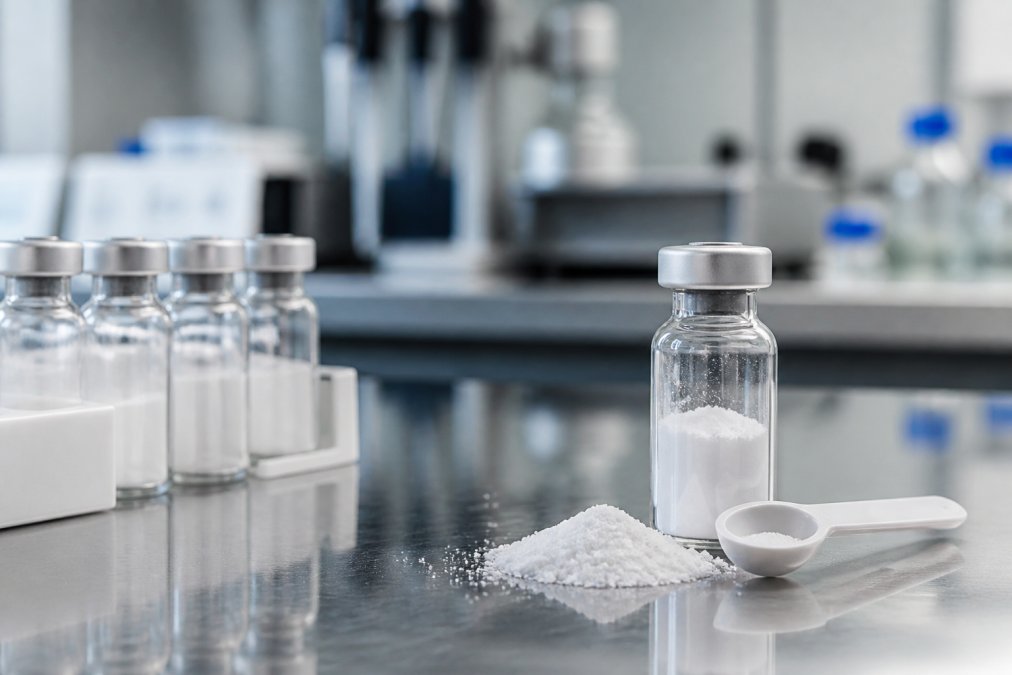
Crude peptides contain 30-50% target peptide by mass. The rest is deletion sequences, synthesis byproducts, and salt. Crude peptides are lowest cost but introduce significant experimental noise with poorly characterized impurity profiles.
Desalted peptides reach 50-70% purity by removing salts and larger impurities. This middle ground works for some cell-based assays but falls short for in vitro assays, receptor binding studies, or work requiring exact composition knowledge.
HPLC-purified peptides achieve 85-95% purity, with specialty suppliers offering 98%+ purity. This is the standard for serious research. At this level, you know what you’re testing, dose-response curves are clean, and results are reproducible across batches.
Rejuvenation Wellness Solutions LLC provides 99%+ pure peptides with independent lab testing and a Certificate of Analysis for every batch.
The appropriate purity level depends on application.
In vitro studies, cell culture assays, receptor binding assays, enzyme kinetics, demand high purity. Cells are sensitive to contaminants. Truncated peptide sequences or synthesis byproducts can activate unintended signaling pathways, interfere with binding, or trigger cytotoxic responses. For in vitro work, 90%+ HPLC-purified peptides are standard. For high-sensitivity assays like fluorescence polarization or surface plasmon resonance, consider 95%+ purity to minimize background noise.
In vivo studies, animal models, efficacy testing, pharmacokinetic studies, clinical trials, present different challenges. Living systems have built-in tolerance for some contamination through clearance mechanisms. However, impurities can cause unexpected immune responses, alter pharmacokinetics, or trigger off-target effects that confound safety and efficacy data. Truncated sequences are immunogenic and trigger antibody formation that interferes with target peptide activity. Residual trifluoroacetic acid affects peptide solubility and bioavailability. For in vivo studies, 95%+ HPLC-purified peptides are recommended, especially for regulatory work or clinical trials.
Rejuvenation Wellness Solutions LLC partners with WHO/GMP and ISO-certified manufacturers ensuring every peptide meets these standards with independent lab testing and Certificate of Analysis documentation for regulatory compliance.
A Certificate of Analysis (COA) is your proof of what you received. It documents purity, identity, and quality.
The COA structure includes the peptide header (sequence, molecular weight, lot number, analysis date), purity section (percentage of target peptide by HPLC or mass spectrometry), identity section (mass spectrometry confirmation), impurity profile (major contaminants and concentrations), and storage guidance.
HPLC purity reporting is most common. A statement like "HPLC purity: 98.5%" means the target peptide peak represented 98.5% of total peak area when detected at 214 nm (standard peptide detection wavelength). Look for detection wavelength and method; UV detection at 214 nm is standard and reliable.
Impurity identification is critical. A good COA lists major impurities by retention time and concentration: "Peak 1 (target peptide): 98.5%; Peak 2 (truncated sequence, -1 amino acid): 0.8%; Peak 3 (unknown): 0.7%." This reveals what’s present and whether contaminants matter for your application. Truncated sequences are often biologically active and interfere with results.
Mass spectrometry confirmation verifies that the peptide’s molecular weight matches the expected value. Observed and theoretical masses should match within 1-2 Da. Mismatches indicate modification or incorrect synthesis.
Amino acid analysis, sometimes included for research-grade peptides, hydrolyzes the peptide into constituent amino acids and quantifies each. It powerfully confirms correct amino acid composition and ratios. Request amino acid analysis for applications demanding absolute certainty about peptide composition.
Storage and stability information tells you how to maintain purity. Most peptides are stable for months or years at -20°C or below. The COA should specify storage conditions and handling guidance.
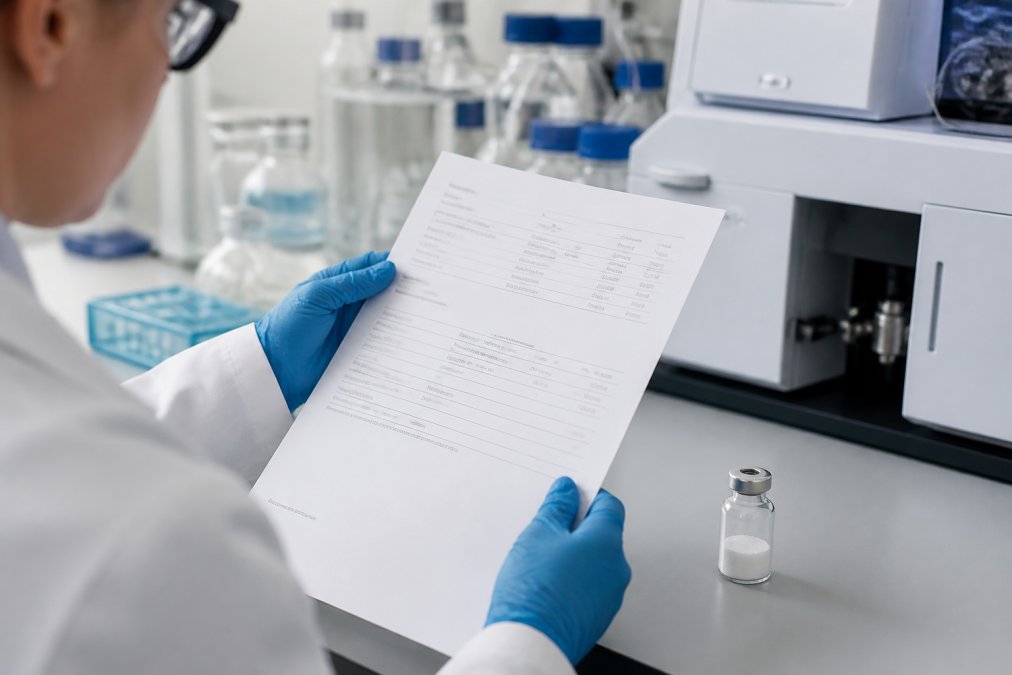
When you receive a peptide from Rejuvenation Wellness Solutions LLC, the COA includes all elements. Every batch undergoes independent lab testing with full documentation of purity, identity, and impurity profile.
Not all impurities are equal. Some are biologically inert; others are bioactive and confound data.
Truncated sequences are the most common and problematic impurities. These peptides missing one or more amino acids arise when coupling steps fail during synthesis. Truncated sequences are often biologically active, retaining some original sequence function. A peptide designed to activate a specific receptor may have a truncated version activating the same receptor with different affinity or activating off-target receptors. This creates noise in dose-response curves and prevents result interpretation.
Synthesis byproducts include deletion sequences, epimerized peptides (inverted stereochemistry), and incompletely deprotected peptides. Epimerized peptides are especially problematic because they have identical mass to the target peptide but different 3D structure, affecting binding and activity.
Residual trifluoroacetic acid (TFA) is a common counter-ion used during synthesis and purification. Residual TFA affects peptide solubility, alters assay buffer pH, and interferes with certain detection methods. Well-characterized peptides specify TFA content on the COA, typically 1-5% by weight.
Salt contamination includes residual sodium chloride or ammonium acetate from purification. Desalted peptides may contain 5-15% salt; HPLC-purified peptides typically contain less than 2%.
Oxidized methionine occurs when methionine residues oxidize to methionine sulfoxide during storage or synthesis. This post-translational modification alters peptide activity, particularly when methionine plays a critical binding or signaling role. If your peptide contains methionine, check the COA for oxidation evidence and consider storing under inert atmosphere or with antioxidants.
A high-purity peptide with well-characterized impurity profile gives confidence that results reflect target peptide activity, not background noise.
Two main analytical techniques determine peptide purity: high-performance liquid chromatography (HPLC) and mass spectrometry.
HPLC separates peptides based on physical properties, size, charge, hydrophobicity. A peptide sample is injected onto a column packed with hydrophobic silica. A liquid mobile phase is pumped through, and peptides elute at different times based on column interaction strength. A UV detector measures peptide at 214 nm. The result is a chromatogram showing peaks corresponding to different peptide species. HPLC purity is reported as the percentage of total peak area corresponding to the target peptide. HPLC’s advantage is separating impurities by physical properties. The disadvantage is that HPLC doesn’t directly identify impurities, you see peaks but don’t automatically know whether they’re truncated sequences, epimerized peptides, or other contaminants.
Mass spectrometry measures mass-to-charge ratios of peptide molecules. A peptide sample is ionized and passed through a mass analyzer separating ions by mass. For a pure peptide, you see a single dominant peak at the target mass. Impurities appear as additional peaks at different masses. Mass spectrometry directly identifies impurities because different molecules have different masses. A truncated sequence missing one amino acid has mass 1-10 Da lower than the target. Mass spectrometry’s advantage is specificity; you know exact contaminant masses.
Which method is better? For most research applications, HPLC purity is sufficient and is the industry standard. For research-grade peptides, HPLC purity of 95%+ combined with mass spectrometry confirmation is the gold standard.
Rejuvenation Wellness Solutions LLC provides both HPLC purity reporting and mass spectrometry confirmation on every batch.
Receiving a peptide with a COA is the first step. Verifying that the peptide works in your assay is the second. Before launching full research, invest time in quality verification, it’s the cheapest insurance against wasted experiments.
Visual inspection is the first check. When your peptide arrives, examine the vial. Most peptides are white or off-white powders. Unexpected colors, yellow, brown, discolored, signal degradation or contamination.
Mass verification is next. Weigh the vial and subtract the empty vial tare weight. The result should match the labeled mass within 5-10%.
Solubility testing reveals whether the peptide behaves as expected. Dissolve a small amount (1-5 mg) in your standard assay buffer and observe complete dissolution. Testing solubility takes 10 minutes and prevents surprises later.
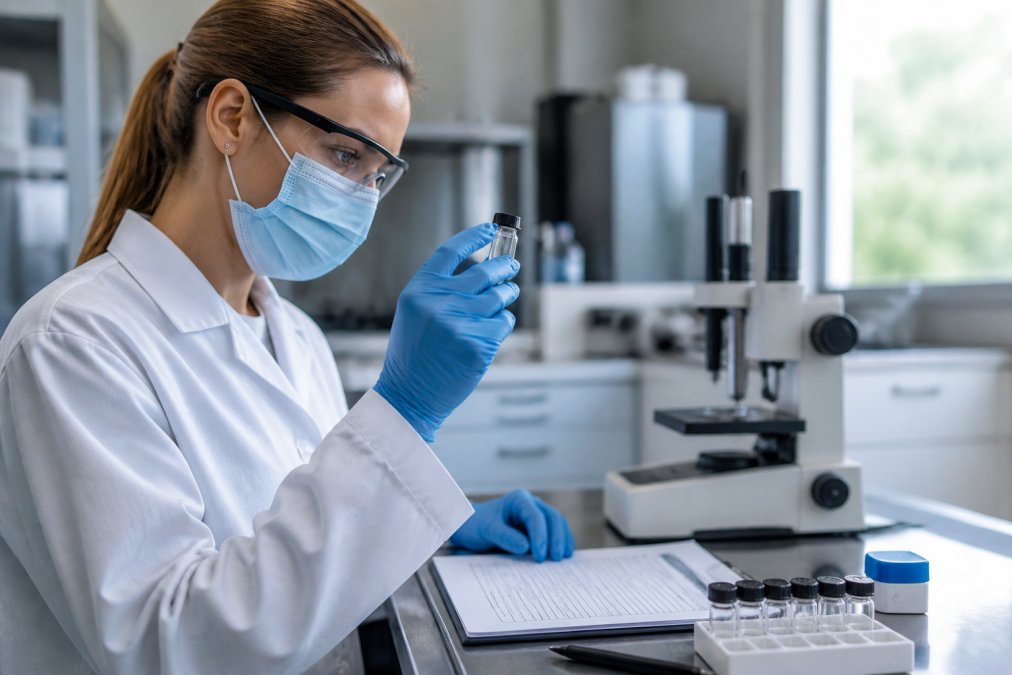
HPLC confirmation is powerful if you have access to HPLC equipment. Inject a small amount onto an HPLC system and compare the chromatogram to the COA. You should see a single dominant peak at the same retention time as the reference.
Functional assay is the gold standard. Before committing to large-scale research, test the peptide in a small pilot assay. If your research involves cell signaling, run a dose-response curve and confirm expected biological response. A pilot functional assay takes hours to days and costs far less than discovering mid-project that your peptide doesn’t work.
Batch consistency is often overlooked but critical for multi-month or multi-year studies. When ordering peptide multiple times, request the same lot number if possible. If using a new lot, compare the COA to your original. Purity, impurity profile, and mass should be similar.
Documentation and record-keeping are essential for regulatory compliance and troubleshooting. Keep copies of the COA, invoice, shipping documentation, and quality verification data. For clinical trials or regulatory submissions, this documentation is mandatory.
Rejuvenation Wellness Solutions LLC supports this verification process by providing detailed COAs, offering same-day order fulfillment, and maintaining responsive customer service via text, phone, and email.
Peptide purity standards for research directly determine whether your data is reliable and conclusions valid. Choosing the right purity level, understanding how to read a Certificate of Analysis, and verifying quality before committing to research are foundations of reproducible peptide research.
Rejuvenation Wellness Solutions LLC provides 99%+ pure research peptides with independent lab testing, detailed Certificates of Analysis, and WHO/GMP and ISO-certified manufacturing. Whether running in vitro cell assays, in vivo efficacy studies, or clinical trials, you can access high-quality peptides with transparent documentation and responsive customer support. Shop with Rejuvenation Wellness Solutions LLC and eliminate guesswork from peptide selection.
| Purity Level | Target Purity | Best For | HPLC Impurity Profile |
|---|---|---|---|
| Crude | 30-50% | Early exploratory screening only | Poorly characterized; multiple unknown peaks |
| Desalted | 50-70% | Limited cell-based assays | Some characterization; significant background |
| HPLC-Purified (90%) | 90%+ | Most in vitro research | Well-characterized; 1-2 major impurities |
| HPLC-Purified (95%+) | 95%+ | In vivo studies and regulatory work | Highly characterized; minimal impurities |
| Analytical Method | Primary Advantage | Primary Limitation | Best For |
|---|---|---|---|
| HPLC | Fast, separates impurities, industry standard | Doesn’t directly identify impurities | Routine purity verification |
| Mass Spectrometry | Direct identification of impurity masses | Requires specialized equipment | Research-grade peptides; regulatory submissions |
| Combined (HPLC + MS) | Complete characterization | Higher cost | Clinical trials; high-stakes research |
FDA guidance on peptide drug products and quality standards
USP standards for peptide pharmaceutical products
ISO 14644 cleanroom standards for pharmaceutical manufacturing
Research peptides typically range from 70% to 99%+ purity depending on application. Crude peptides start around 50-70% purity, desalted peptides reach 80-90%, and HPLC-purified peptides exceed 95-99%. For in vitro studies, 90-95% purity often suffices. In vivo research and clinical trials typically require 98-99%+ purity with comprehensive analytical testing. Your specific research needs determine the appropriate peptide purity standards for your work.
A COA shows three critical data points: peptide identity (confirmed via mass spectrometry), purity percentage (measured by HPLC), and impurity profile (listing degradation products and truncated sequences). Look for the purity value as a percentage, the analytical method used, test date, and batch number. The COA should identify the counter-ion (often trifluoroacetic acid), solubility data, and any stability study results. Independent lab testing ensures the reported values match your actual product.
Common peptide impurities include truncated sequences (incomplete peptides missing amino acids from the N-terminal or C-terminal), residual trifluoroacetic acid (TFA) from synthesis, deletion products, and oxidation byproducts. Degradation products form during storage if conditions are poor. Lyophilization incomplete or improper vialing can introduce moisture-related contaminants. Mass spectrometry and HPLC analysis reveal these impurities. Understanding your impurity profile helps predict how your peptide batch will perform in your specific research application.
Independent lab testing with a Certificate of Analysis provides third-party verification that your peptide actually meets the purity standards claimed. This protects your research investment and prevents failed experiments due to low-quality batches. Suppliers partnered with WHO/GMP and ISO-certified manufacturers and 503B compounding pharmacies maintain stricter quality control and regulatory compliance. While pricing may differ, verified 99%+ pure peptides with documented testing ensure batch consistency and reliable experimental outcomes.
This article was written using GrandRanker








