

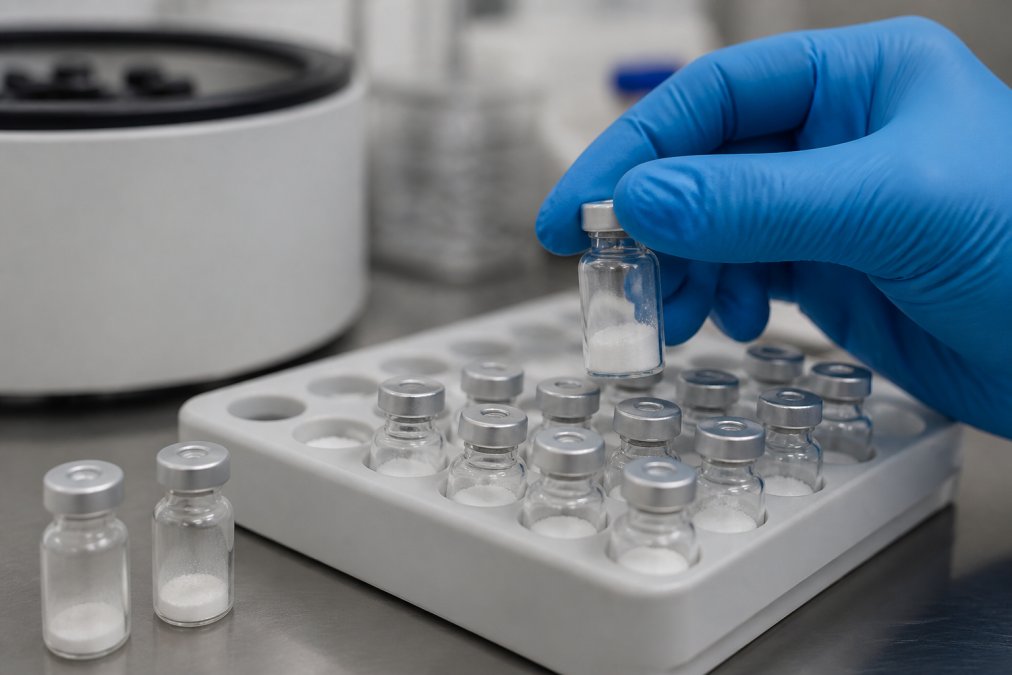
Last Updated: September 9, 2026
A Certificate of Analysis (COA) is the document that reports the results of analytical testing performed on a specific peptide batch, and it remains the single most reliable form of quality assurance available to researchers. When you purchase lyophilized peptide powder, you cannot see purity, verify the amino acid sequence, or detect contaminants by visual inspection alone. The COA bridges that gap, providing quantitative data on purity percentage, molecular weight, and the presence of byproducts or impurities. At Rejuvenation Wellness Solutions LLC, we view the COA as a foundational document because it transforms an unverifiable marketing claim into a documented, analytical result.
Understanding peptide purity certificates of analysis matters more now than ever, as the market for research peptides continues to expand. Many suppliers post a single generic document, while others share batch-specific reports that correspond to a unique lot number. The distinction is critical. A COA tied to your specific vial, verified against the batch number printed on the label, offers far stronger evidence of quality than a representative sample document that may not reflect what you actually received. Below, we will show you exactly how to read these documents, what each data point means, and how to spot the red flags that indicate a fabricated or edited report.
A standard peptide COA contains several distinct data blocks, and each answers a different question about the product. The header typically lists the product name, the batch number, the date of analysis, and the testing laboratory. The body reports the analytical methods used, the purity percentage, and the results of specific tests such as endotoxin levels, microbial analysis, and acetate content or trifluoroacetic acid (TFA) levels where applicable.
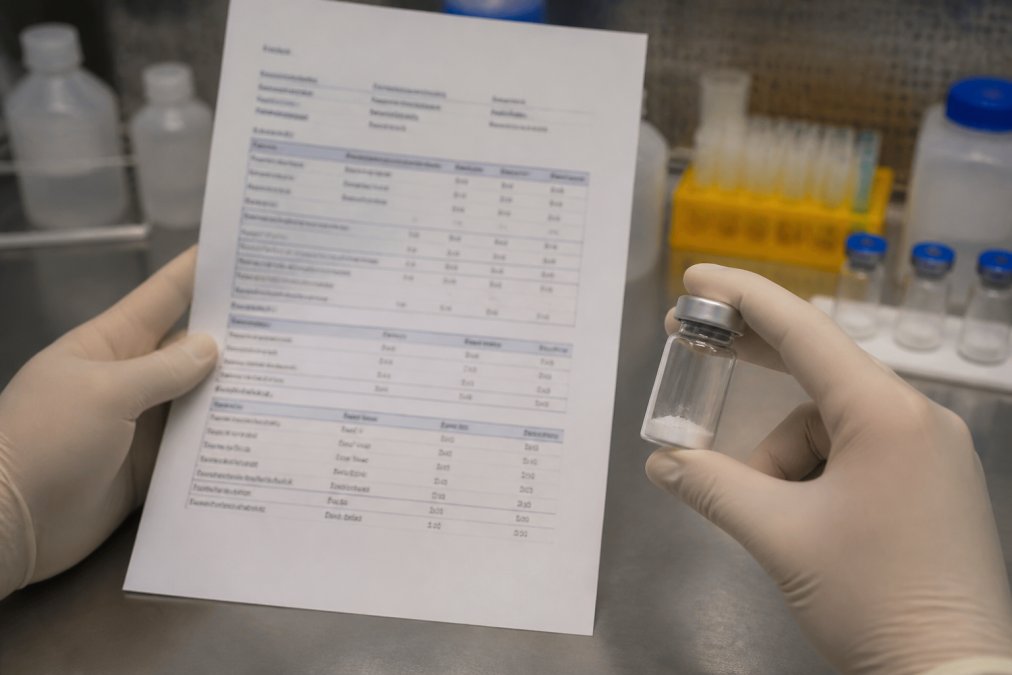
The batch number is the single most important piece of information on the document. This identifier links the COA to a specific production run, and it must match the number printed on your vial. A common mistake is accepting a COA that lists a different batch number than the product received, which means the document does not actually verify your sample. Sample integrity depends entirely on this match, along with confirmation that the document was issued by an independent third-party lab rather than the manufacturer itself.
High-Performance Liquid Chromatography (HPLC) and Mass Spectrometry (MS) answer fundamentally different questions about a peptide, and understanding the distinction is essential to interpreting your COA correctly. HPLC measures purity by separating compounds based on their chemical properties, while MS confirms the molecular weight and identity of the peptide. Neither method alone provides a complete picture, which is why reputable suppliers report results from both.
The HPLC chromatogram is a graphical representation of the separation process, showing peaks that correspond to different compounds in the sample. The main peptide peak appears at a specific retention time, and the purity percentage is calculated by comparing the area of that main peak to the total area of all peaks detected. A purity reading of 99% means the main peak accounts for 99% of the total detected signal, with the remaining 1% attributed to impurities or byproducts (PubMed). Baseline noise and peak integration quality matter here, as poor integration can inflate the reported purity percentage.
Mass Spectrometry serves a different purpose, confirming that the molecule present has the expected molecular weight for the claimed amino acid sequence. This verification ensures you received the correct peptide, not a truncated or mis-synthesized variant. However, MS does not quantify purity in the way HPLC does. A clean mass spectrum confirms identity, while the HPLC chromatogram provides the purity percentage. Both results together offer stronger evidence of product quality than either method alone.
Understanding peptide purity testing methods requires recognizing that HPLC and MS form the core of modern analytical testing, yet they leave certain gaps unaddressed. HPLC detects organic impurities that absorb UV light, and MS confirms molecular weight, but neither method fully characterizes endotoxin levels, microbial contamination, or residual solvents. Comprehensive quality assurance therefore combines chromatographic analysis with additional tests such as endotoxin testing and microbial analysis.
A purity percentage of 99% or higher indicates excellent chromatographic purity, but this figure alone does not guarantee the absence of endotoxins or other biologically relevant contaminants. A peptide can demonstrate 99% purity by HPLC while still containing endotoxin levels that compromise experimental results. The most reliable COAs report both purity and these additional safety parameters, giving you a complete picture of product quality rather than a single impressive number.
Verifying peptide quality extends beyond reading the reported numbers to critically evaluating the document itself. The most sophisticated approach to understanding peptide purity certificates of analysis includes checking whether the document is authentic, whether the lab is accredited, and whether the reported results are internally consistent.
COA forgery is a real risk in the peptide market, and several telltale signs reveal a fabricated or edited document. Check whether the reported purity percentage appears unrealistically consistent across many different batches, as genuine analytical results vary slightly between runs. Examine the chromatogram image itself for signs of editing, such as irregular peak shapes, inconsistent baseline noise, or pixelation that suggests manipulation. Verify that the document includes a standard deviation or similar statistical measure, as real analytical reports typically include these details. A legitimate COA should also list the specific analytical methods used, including instrument parameters that a forger would struggle to fabricate convincingly.
The credibility of a COA depends heavily on who performed the testing. Independent third-party labs offer stronger assurance than in-house testing because they lack the commercial incentive to report favorable results. Look for accreditation from recognized bodies that audit laboratory practices and analytical testing procedures. The ISO standards for laboratory accreditation provide a framework for evaluating whether a lab follows validated methods and maintains proper documentation. A COA from an accredited lab should reference its accreditation number, which you can verify through the accrediting body’s database. The FDA guidance on laboratory testing and quality assurance also emphasizes the importance of documented, reproducible analytical methods in regulated environments.
Every analytical method has a Limit of Detection (LOD), the lowest concentration of a substance that can be reliably distinguished from baseline noise. When a COA reports that a contaminant was “not detected,” this does not mean the substance is absent, only that it falls below the method’s detection threshold. Understanding this concept prevents overinterpretation of negative results and highlights why a COA from a lab using sensitive, validated methods offers more meaningful assurance than one using less rigorous instrumentation.
The most reliable approach to purchasing research peptides begins with a quality checklist that you apply to every supplier before committing. Confirm that the COA is batch-specific and matches the lot number on your vial. Verify that the document reports both HPLC purity and Mass Spectrometry results. Check for additional safety testing including endotoxin and microbial analysis. Confirm the testing was performed by an accredited third-party lab. And critically, evaluate the document itself for signs of forgery or editing.
At Rejuvenation Wellness Solutions LLC, every product undergoes independent lab testing with a Certificate of Analysis for safety and purity, and we partner exclusively with WHO/GMP and ISO-certified manufacturers and 503B compounding pharmacies. We stand behind our 99%+ purity claim because it is documented, not marketed. When you are ready to source peptides with verified quality documentation, explore our catalog of independently tested research peptides and see the difference that transparent quality assurance makes.
Getting peptide purity right is not about trusting a supplier’s word or a single impressive number on a page. It is about learning to read the analytical evidence, verify its authenticity, and demand documentation that meets rigorous standards. Build the checklist we have outlined, apply it to every purchase, and you will avoid the costly mistakes that come from unverified products. Shop with Rejuvenation Wellness Solutions LLC and get peptides backed by independent lab testing, same-day order fulfillment, and customer service that can be reached by text message, phone and email within hours, not days.
Start by confirming the batch number on the COA matches the batch number printed on your peptide vial. Then focus on the HPLC section for the purity percentage, which should be 99% or higher for research-grade peptides. Check the retention time and chromatogram shape for a single dominant peak. Review the mass spectrometry result to confirm the observed molecular weight matches the theoretical weight of your peptide. Finally, scan the impurity profile and endotoxin or microbial analysis sections before using the product.
HPLC (High-Performance Liquid Chromatography) measures purity by separating peptide components and quantifying their relative amounts. It reports the purity percentage you see on the COA. Mass Spectrometry (MS) confirms the peptide’s identity by measuring its molecular weight. HPLC tells you how pure the sample is, while MS tells you whether the right peptide is actually present. A reliable COA includes both methods because HPLC alone cannot confirm the amino acid sequence.
A 99% purity rating from HPLC means the peptide sample contains 99% of the target peptide and 1% impurities. Those impurities can include truncated peptide chains, deletion sequences, acetate or TFA counterions, and residual solvents. The remaining 1% matters because certain byproducts can interfere with experimental results or trigger unintended immune responses in biological assays. Always review the impurity profile section of the COA, not just the headline purity number, to understand what that 1% contains.
Contact the third-party laboratory listed on the COA directly and ask them to confirm the batch number and test date. Legitimate labs will verify results for researchers. Check that the lab is ISO/IEC 17025 accredited, which requires documented quality standards. Look for consistent formatting, professional terminology, and complete data including chromatograms and instrument parameters. Be suspicious of COAs that show only a purity percentage without raw data, or documents that look photocopied or contain pixelated logos.








